Showing Posts From
Budgeting and saving money

 DollarLedger Team
- 03 Nov, 2026
Cash Stuffing Method: Does It Really Work in 2026?
Scroll TikTok for ten minutes and you will see it: someone sliding twenty-dollar bills into labelled envelopes. It is called cash stuffing, and the main hashtag had over 3.5 billion views by early 2026, according to SoFi. But it is not new: it is the envelope system your grandparents used, given a new name and a camera. So does it really work in 2026, in a world of online shopping and tap-to-pay? The honest answer: yes, for some people, for some spending, for a while — but it has real risks the videos rarely show.Photo: Cash stuffing is the old envelope system with a new name. (Photo: Pexels) What You Will LearnWhat cash stuffing is, and how to set it up Why it works: cash is harder to spend than cards Who it helps most The risks: lost cash, no interest, no FDIC protection A safer hybridStep 1: How cash stuffing works What to do: Understand the system before you withdraw a dollar. How: On payday, withdraw your variable spending money in cash — groceries, gas, eating out, fun — and divide it into labelled envelopes, one per category. Spend only from the envelope for that category; when it is empty, spending stops until next payday. Fixed bills stay on autopay, never in envelopes. Example: Paid every two weeks? Withdraw $400: $200 groceries, $75 gas, $75 dining out, $50 fun. Rent and bills stay in the bank. Common mistake: Stuffing every dollar, including rent money, into envelopes. Rent cannot be paid from an envelope.Illustrative diagram — How cash stuffing works. NOT a real bank screenshot. Step 2: Set up your envelopes What to do: Pick five or six categories, give each a realistic amount, and stuff them on payday. How: Look at what you actually spent last month, not what you wish you spent. Most people start with groceries, gas, dining out, fun and personal care. Use real numbers: if you spent $450 on groceries last month, do not stuff $200 and expect a miracle. Six to eight categories is enough — more becomes a chore. Example: Stuff $800 for the month: groceries $400, gas $150, dining out $100, fun $100, personal $50. If groceries run out, cook what is in the kitchen — do not borrow from gas. Common mistake: Making twenty envelopes on day one — a binder of tiny categories takes an hour to stuff and a week to abandon.Photo: Withdraw only your variable spending money, not your whole paycheck. (Photo: Pexels)Illustrative diagram — Example: $800 of variable spending, stuffed. NOT a real bank screenshot. Step 3: Why it works — and who it helps What to do: Use the psychology on purpose — and check whether it helps you. How: Cash stuffing works because of the "pain of paying": handing over physical money feels like a loss in a way tapping a card does not. You see the envelope getting thinner, so you stop. The empty envelope is a hard stop: no swiping past the limit, no overdraft fee, no credit card interest. It helps most if you overspend without noticing. Example: Jasmine Taylor, a Texas woman profiled by FOX Business, paid off $70,000 of debt in about two years using cash stuffing. Her story is real, not a promise. Common mistake: Thinking cash stuffing fixes a budget that does not exist. If rent and bills already take your whole paycheck, envelopes cannot create money.Illustrative diagram — What cash stuffing fixes, and what it does not. NOT a real bank screenshot. Step 4: Know the risks What to do: Before you keep hundreds of dollars at home, understand what you give up. How: Cash at home has no FDIC protection. Money in an FDIC-insured bank is protected up to $250,000 per depositor, per bank, per ownership category. Cash stolen, lost or destroyed is usually gone forever, and most home insurance covers only a small amount of stolen cash, often around $200. Cash also earns nothing: $1,000 in an envelope earns $0 in a year, while the same $1,000 in a high-yield account at 4.40% APY earns about $44. Cash also misses card rewards and purchase protection, and cannot pay online. Example: You keep a $2,000 emergency fund in cash because it feels safer to see it. In a year it earns $0 instead of about $88 in a high-yield account — and a break-in may cost you all but $200 of it. Common mistake: Keeping your whole emergency fund in cash. Cash stuffing is a spending tool, not a savings tool — your emergency fund belongs in the bank. Our guide to how a high-yield savings account works explains why.Photo: Cash has no paper trail. A bank account gives records, protection and interest. (Photo: Pexels)Illustrative diagram — $1,000 for one year: envelope vs high-yield account. NOT a real bank screenshot. Step 5: Use sinking funds What to do: Give irregular bills their own envelopes, so they never surprise you. How: A sinking fund is an envelope for a bill you know is coming but do not pay every month: car insurance, registration, holiday gifts, a yearly subscription. Divide the yearly total by 12 and stuff that much monthly. When the bill arrives, the money is there — surprises become plans. Example: Car insurance $600 a year: stuff $50 a month. Car registration $300 a year: $25 a month. Holiday gifts $240 a year: $20 a month. That is $95 a month — and no more surprise bills. Common mistake: Stuffing sinking funds in cash and forgetting them for a year. Money in an envelope for eleven months earns nothing and can be lost.Illustrative diagram — Sinking funds: small monthly amounts, no surprises. NOT a real bank screenshot. Step 6: Try the safer hybrid What to do: Keep the discipline of envelopes, but keep most money where it is safe and growing. How: Let your paycheck arrive by direct deposit. Keep fixed bills on autopay. Send savings straight to a high-yield savings account — the best accounts pay around 4% APY or more in 2026, and your money is FDIC-insured. Withdraw cash for spending only, one week at a time, so you never carry more than a few hundred dollars. If you overspend in one envelope, move money from another — in the open — instead of quietly swiping a card. Example: On $3,000 a month take-home, Maya sends $600 to her high-yield account on payday, pays $1,800 of bills by autopay, and withdraws $150 a week for groceries and fun. After three months she has $1,800 saved, earning interest. Common mistake: Treating the hybrid as a failure of "real" cash stuffing. Videos show full binders because binders look good on camera — your goal is spending less than you earn, without risking your savings.Illustrative diagram — The safer hybrid: cash for spending, bank for savings. NOT a real bank screenshot. ChecklistI know last month's real spending before stuffing anything I started with five or six envelopes, not twenty Rent and fixed bills stay on autopay — never in envelopes I never keep more than a week or two of cash at home My emergency fund is in an FDIC-insured bank account I will review after one month and drop what does not workFAQ Does cash stuffing really work?It can work for flexible costs like groceries, dining out and fun — the empty envelope is a hard limit cards do not give you. It does not work for online shopping or autopay bills, and no study shows it saves a set amount for everyone. How much cash should I stuff each month?Only variable spending — groceries, gas, dining out and fun. Most beginners stuff $200 to $500 a week. Never stuff rent money or your emergency fund. If unsure, start with groceries for one month. Is cash stuffing safe?It carries real risk: cash at home can be stolen, lost or destroyed, with no FDIC protection and only small insurance cover, often around $200. Keep only a week or two of spending cash at home. Can I do cash stuffing without cash?Yes — that is digital envelope budgeting. Apps let you set the same category limits on cards and accounts. You lose the "pain of paying" feeling, but you keep the limits, records and FDIC protection. Is cash stuffing better than the 50/30/20 rule?They do different jobs. The 50/30/20 rule decides how much goes to needs, wants and savings; cash stuffing controls spending inside those buckets. Use both: 50/30/20 for the plan, envelopes for the spending. SourcesSoFi, "Cash Stuffing: What Is It and Why Is It So Popular?" — #cashstuffing over 3.5 billion views as of early 2026: https://www.sofi.com/learn/content/cash-stuffing/ CNBC Select, "Cash Stuffing: What's Wrong with TikTok's Viral Budgeting Trend" — benefits and trade-offs: https://www.cnbc.com/select/cash-stuffing-whats-wrong-with-tiktoks-viral-budgeting-trend/ FDIC, Deposit Insurance at a Glance — $250,000 per depositor, per bank, per ownership category: https://www.fdic.gov/consumer-resource-center/deposit-insurance-glanceJasmine Taylor is a FOX Business profile — one person's story, not a guarantee. The 4.40% APY figure is from our guide to the best high-yield savings accounts in 2026, checked November 2, 2026. Disclaimer: This article is for education only, not financial advice. Cash stuffing is not right for everyone — keep savings in an FDIC-insured account.

- DollarLedger Team
- 03 Nov, 2026
How Much Does It Cost to Live in Texas in 2026? Real Monthly Breakdown
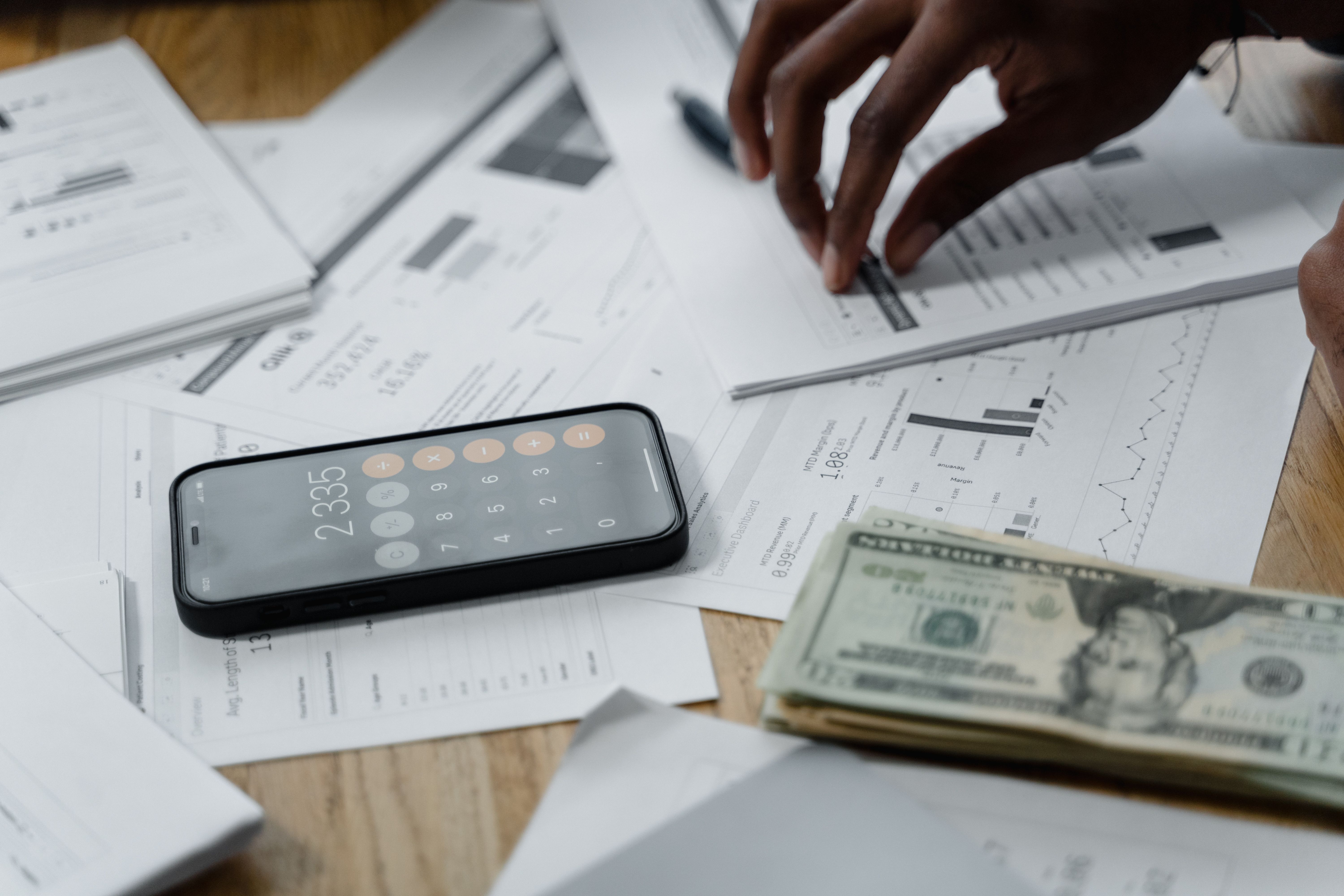
Texas is one of the cheaper big states, with no state income tax — but "cheap Texas" is not the same price everywhere. A one-bedroom costs about $957 a month in San Antonio and about $1,209 in Dallas, a gap of about $3,000 a year. This guide gives a real monthly breakdown for one single person in Texas in 2026. Every number is a range from a named source, checked in November 2026.Photo: Austin is the priciest of the big four Texas cities. (Photo: Pexels) What You Will LearnOne-bedroom rents in Houston, Dallas, Austin and San Antonio A full monthly budget for one person, in ranges Texas taxes: no income tax, but higher sales and property taxes The wage needed to cover the basics Fitting Texas costs into a 50/30/20 budgetStep 1: Start with rent What to do: Find the median one-bedroom rent in your city first. How: Apartment List's September 2026 figures put the median one-bedroom rent at $957 a month in San Antonio, $1,120 in Houston, $1,174 in Austin and $1,209 in Dallas. Statewide, the median is $1,230 across all sizes and $1,091 for a one-bedroom. Example: Same salary, same apartment size: about $957 a month in San Antonio, about $1,209 in Dallas — about $3,000 more a year. Common mistake: Budgeting with a statewide average — rents in Texas cities are hundreds of dollars apart.Illustrative diagram — One-bedroom rent: same state, different city. NOT a real bank screenshot. Step 2: Add up everything else What to do: Price the five costs after rent, in ranges, not single guesses. How: Groceries: the USDA's September 2026 food plans put a home-cooked diet for one adult at about $305–$383 a month (Thrifty) or $404–$478 (Moderate), after the 20% adjustment for living alone — budget $300 to $480. Utilities and internet: $150 to $250 a month; Numbeo lists basic utilities for a Houston apartment at about $197. Transport: $200 to $400 a month driving, or a transit pass at about $75 in Houston and $126 in Dallas. Health insurance varies most: about $120 a month for the average worker's share of employer cover (KFF data), or about $625 for a benchmark marketplace silver plan for a 40-year-old, before subsidies. Add $150 to $300 for phone, clothes and fun. Example: Take the middle of each range — rent $1,091, groceries $400, utilities $200, transport $300, health cover $300, phone and fun $225. That is about $2,516 a month, before taxes. Common mistake: Forgetting the small bills: a $60 phone plan, a $40 streaming bundle and a $50 gym membership add $150 a month.Illustrative diagram — Monthly budget in Texas: ranges, not exact prices. NOT a real bank screenshot. Step 3: Understand the Texas tax trade-off What to do: Work out what "no state income tax" saves you — and what Texas charges instead. How: Texas charges 0% state income tax on wages, so your paycheck is bigger than in a high-tax state. But Texas makes up the difference: state sales tax is 6.25%, and with local taxes the average total is around 8.2%. Property taxes are high too, around 1.6% of a home's value a year. Federal income tax still applies everywhere — Texas only skips the state part. Example: You earn $60,000 a year. A 5% state income tax would cost about $3,000 a year; in Texas you pay $0. But a $350,000 house carries about $5,600 a year in property tax at around 1.6%. Common mistake: Thinking "no income tax" means "low tax". Texas is usually cheaper for a middle-income renter — but for a homeowner in an expensive house, property tax can wipe out the saving.Illustrative diagram — The Texas tax trade-off. NOT a real bank screenshot.Photo: Rent is your biggest bill — and the easiest to change by choosing your city. (Photo: Pexels) Step 4: Check the wage you need What to do: Compare your pay with the living wage — the hourly rate covering basics for one adult. How: The MIT Living Wage Calculator, updated in February 2026, puts the living wage for a single adult in Texas at $21.77 an hour — about $45,282 a year full-time. In the Austin metro area it is $23.71 an hour. The Texas minimum wage is $7.25 an hour, about $15,080 a year — far below the living wage, which covers basics only. Example: At $18 an hour full-time, about $37,440 a year before tax, you are above the minimum wage but below the living wage — so the Step 2 budget will feel tight, especially in Dallas or Austin. Common mistake: Judging a salary by the number alone: $50,000 a year means something different in San Antonio than in Austin.Illustrative diagram — What it takes to cover the basics in Texas. NOT a real bank screenshot. Step 5: Fit it into a 50/30/20 budget What to do: Split your take-home pay into needs, wants and savings. How: The 50/30/20 rule puts 50% of take-home pay on needs (rent, groceries, utilities, transport, insurance), 30% on wants and 20% on savings. On $3,500 a month take-home, that is $1,750 for needs, $1,050 for wants and $700 for savings. Our mid-range Texas budget from Step 2 is about $2,516 a month — so needs take about 60%, not 50%. That is normal in an expensive city: aim for 60/25/15 instead. Example: Maya takes home $3,500 a month in Houston. Rent, groceries, utilities, transport and health cover come to $2,140 — 61% on needs. She keeps wants at $660 and still saves $700 a month by cooking at home. Common mistake: Forcing the split when rent alone breaks it. If needs take 65%, cut a want instead — or look for cheaper rent.Photo: Groceries are your second-biggest flexible cost. (Photo: Pexels)Illustrative diagram — Try the 50/30/20 rule on $3,500 a month. Example only. NOT a real bank screenshot. Step 6: Build your budget and a safety net What to do: Turn these ranges into your budget, then save one month of expenses. How: Write down your real numbers: the rent you would actually pay, last month's grocery spending, your car or transit cost, and your health insurance premium. Add them up, add federal tax, and compare with your take-home pay. Then save one month of expenses first — about $2,500 on our mid-range budget — in a high-yield savings account, where it earns around 4% APY instead of almost nothing. Our emergency-fund guide shows how to grow it to three, then six, months. Example: You move to Houston on $4,000 a month take-home. Rent, groceries, utilities, transport, health cover, phone and fun come to $2,365. Save $700 a month, and your one-month buffer is built in under four months. Common mistake: Building the budget once and never looking at it again. A $100 rent rise or a summer electricity bill can break a budget that was fine in January.Illustrative diagram — Build your Texas budget in 5 steps. NOT a real bank screenshot. ChecklistI priced rent in my city, not the Texas average. I added up groceries, utilities, transport, health cover and phone. I know the total range: roughly $1,900 to $3,300 a month before taxes. I checked the Texas tax trade-off: renter or buyer. I compared my pay with the $21.77-an-hour living wage. I have a one-month buffer saved, in a high-yield account.FAQ How much does a single person need to live in Texas in 2026?Roughly $1,900 to $3,300 a month before taxes. A typical mid-range budget is about $2,500. Is Texas cheaper than other states?Yes, mostly: no state income tax, and the Texas median rent is about 11.5% below the US median (Apartment List). But property taxes are high and summer electricity bills can spike. What salary do you need to live comfortably in Texas?The MIT living wage is $21.77 an hour, about $45,282 a year, and covers basics only. For comfort plus real savings, most single people need roughly $55,000 to $65,000 a year in Houston or San Antonio, and more in Austin or Dallas. Why is rent so different between Texas cities?Jobs and demand. Dallas and Austin have strong job markets, so rents are higher; San Antonio and Houston have more housing supply, so rents are lower. Do I pay state income tax if I work remotely for a company in another state?No. If you live and work in Texas you pay no state income tax on wages, wherever your employer is based. You still pay federal income tax. SourcesMIT Living Wage Calculator, Texas — single adult $21.77/hour, Austin metro $23.71/hour, updated February 15, 2026: http://livingwage.mit.edu/states/48 Apartment List, Cost of Living in Texas (2026) — statewide median rent $1,230, one-bedroom $1,091: https://www.apartmentlist.com/renter-life/cost-of-living-texas USDA, Official Food Plans, September 2026 — Thrifty and Moderate plans, one-person +20% adjustment: https://fns-prod.azureedge.us/sites/default/files/resource-files/CostofFoodSep2026LowModLib.pdf Numbeo, Cost of Living in Dallas — utilities, transit, gasoline: https://www.numbeo.com/cost-of-living/in/DallasAll figures checked November 2, 2026. Confirm current figures before signing a lease or choosing a plan. Disclaimer: This article is for education only, not financial advice. Costs vary by city, neighbourhood and lifestyle — confirm current prices before making a decision.
- DollarLedger Team
- 03 Nov, 2026
Best Budgeting Apps in USA 2026: Free vs Paid
The best budgeting app is not the one with the most features. It is the one you will actually open every week — at a price you are happy to pay. That choice got harder in 2024, when Intuit shut down Mint, the free app millions of Americans used. Today the best-known apps cost $75 to $109 a year, but free plans still exist. This guide compares them, with prices checked November 2, 2026.Photo: A budgeting app should make the weekly check faster — not more expensive. (Photo: Pexels) What You Will LearnWhat the best apps cost per year, free vs paid Why paying month by month costs $70 to $136 more a year The two kinds of apps — planners and trackers What happened to Mint, and what replaced it Which app fits your style, and how to try it freeStep 1: Look at the yearly price first What to do: Compare what each app costs for a full year, not one month. How: Monthly prices hide the real cost. Yearly prices, checked November 2, 2026: YNAB $109 ($14.99 a month). Goodbudget Premium $80 ($10 a month). EveryDollar Premium $79.99 ($17.99 a month). PocketGuard Plus $74.99 ($12.99 a month), or $149.99 once for life. Rocket Money Premium: you choose $7–14 a month ($84–168 a year). Free plans cost $0: Rocket Money, Goodbudget and EveryDollar. Example: YNAB costs $109 a year; PocketGuard Plus $74.99 — about $34 less. But the cheaper app is not better if you never open it. Common mistake: Comparing monthly prices only. $14.99 a month sounds small; $179.88 a year — what twelve payments really cost — does not.Illustrative diagram — What the best budgeting apps cost per year. NOT a real bank screenshot. Step 2: Never pay month by month What to do: If you pay for an app, pay yearly — monthly billing is the most expensive way to subscribe. How: Monthly billing costs far more than the yearly plan. YNAB: $14.99 a month is $179.88 a year, $70.88 more than the $109 annual plan. EveryDollar Premium: $17.99 a month is $215.88 a year, $135.89 more than the $79.99 annual plan. PocketGuard Plus: $12.99 a month is $155.88 a year, $80.89 more than the $74.99 annual plan. Goodbudget Premium: $10 a month is $120 a year, $40 more than the $80 annual plan. Example: Sara, from our $1,000-in-30-days example, tries YNAB for a month at $14.99, likes it, and switches to annual: $109 instead of $179.88, saving $70.88. Common mistake: Staying on monthly billing "just for now" and forgetting it. Twelve payments quietly pass, and you have paid $70 to $136 extra for nothing. Switch to annual on day one.Illustrative diagram — Monthly billing costs much more than annual billing. NOT a real bank screenshot. Step 3: Know the two kinds of budgeting apps What to do: Learn the two kinds of apps, then pick the kind that matches you. How: Planners make you decide where every dollar goes before you spend it: YNAB and EveryDollar use zero-based budgeting, where every dollar gets a job; Goodbudget uses digital envelopes — one for groceries, one for fun. Trackers watch your spending: Rocket Money and PocketGuard link to your bank and sort it, and PocketGuard shows one "safe to spend" number. Rocket Money also finds forgotten subscriptions. Neither kind is better. A simple split is the 50/30/20 rule: 50% needs, 30% wants, 20% saving — any of these apps can track it. Example: Priya plans every dollar on Sunday night, so she picks YNAB. Her brother just wants to know if he can afford lunch, so he picks PocketGuard. Common mistake: Picking the app with the most features. Features do not matter if you stop opening the app after two weeks. Pick the kind you will use.Illustrative diagram — Two kinds of budgeting apps. NOT a real bank screenshot.Photo: Ten minutes a week is enough — if the app matches how you think. (Photo: Pexels) Step 4: Do not go looking for Mint What to do: If an old guide tells you to download Mint, ignore it — Mint is gone. How: Intuit shut down Mint on March 23, 2024, after 17 years, and moved users to Credit Karma. Credit Karma tracks spending and credit, but it is not a full budgeting app — it has no category budgets like Mint did. Mint's budgets and history were deleted. The closest dashboard replacement is Monarch Money ($99.99 a year), but it has no free plan. Example: A 2023 article calling Mint "the best free budgeting app" is out of date. The free options that still work are Rocket Money, Goodbudget and EveryDollar (Step 5). Common mistake: Downloading an app called "Mint" from an app store in 2026. It is not the real Mint. Only download from official websites or app stores, and check the developer name.Illustrative diagram — Mint shut down on March 23, 2024. NOT a real bank screenshot. Step 5: Pick the app that fits your style What to do: Match the app to your style, not to someone else's top-ten list. How: To plan every dollar, try YNAB ($109 a year, 34-day trial, no free plan) or EveryDollar (free for manual entry; Premium $79.99 a year adds bank sync). For envelopes with no bank linking, try Goodbudget (free, 20 envelopes; Premium $80 a year). For one "safe to spend" number, try PocketGuard Plus ($74.99 a year, 7-day trial). To cancel forgotten subscriptions, try Rocket Money (free plan; Premium $7–14 a month). YNAB covers up to six people on one plan. Example: A couple could share YNAB Together on one $109 plan. A student could use Goodbudget free or EveryDollar free and pay nothing. Five forgotten subscriptions could cost more than any paid app. Common mistake: Paying before trying the free plan or trial. Every paid app here has one. Use it for two full weeks — including one payday — before you spend a dollar.Illustrative diagram — Pick the app that fits your style. NOT a real bank screenshot.Photo: The app is only a tool — the saving is still done by you. (Photo: Pexels) Step 6: Try before you pay — and set a cancel reminder What to do: Use the free trial properly, and set a reminder. How: Trials are short, so use them well: YNAB gives 34 days free with no card required on its website; EveryDollar Premium 14 days; PocketGuard Plus 7 days. Goodbudget and Rocket Money have free plans with no end date. Link your bank, set up categories, and use the app for two full weeks, including one payday. Then decide. Set a phone reminder for the day before the trial ends, so a forgotten trial never becomes a charge you did not want. Example: Mark starts YNAB on the 1st, sets a reminder for the 30th, and uses it daily. On the 30th he checks: did it change how he spends? If yes, he pays $109 for the year. If no, he cancels and tries Goodbudget free. The reminder is what makes the trial free — without it, it is just a delayed bill. Common mistake: Starting a trial, opening the app twice, and forgetting it. If you have not opened it in two weeks, cancel it.Illustrative diagram — Try before you pay. NOT a real bank screenshot. ChecklistI know the yearly price of every app I am considering. I know if I want a planner or a tracker. I did not download Mint — it shut down March 23, 2024. I picked one app that fits my style and know its trial length. I will use it two full weeks, including one payday, before paying. I set a reminder for the day before any trial ends.FAQ Is a paid budgeting app worth $109 a year?Only if you use it. YNAB at $109 a year is about $9 a month. If it helps you save $30 a month you would otherwise have spent, it pays for itself. If you open it twice and forget it, it is $109 wasted. Can I budget for free in 2026?Yes. Rocket Money, Goodbudget and EveryDollar all have free plans with no end date. A spreadsheet also costs nothing. Paying buys convenience — bank syncing and sorting — not the budget itself. Do budgeting apps move my money?No. These apps use read-only bank connections: they can see balances and transactions, but cannot move money or make payments. Which app is best for couples or families?YNAB covers up to six people on one $109 plan. Goodbudget Premium covers five devices. If you share money, pick an app that shares too. What happened to Mint?Intuit shut down Mint on March 23, 2024, after 17 years, and moved users to Credit Karma — which tracks spending and credit, but is not a full budgeting app. SourcesThe Modern Wallet, "Best Budgeting Apps of 2026" — prices and free plans for all five apps: https://www.themodernwallet.com/roundup/best-budgeting-apps/ FinanceFeeds, "Best Budgeting Apps 2026" — prices checked on each provider's own site, September 7, 2026: https://financefeeds.com/the-best-budgeting-apps-of-2026/ Consumer Financial Protection Bureau, "Budgeting: How to create a budget and stick with it": https://www.consumerfinance.gov/archive/blog/budgeting-how-to-create-a-budget-and-stick-with-it/ DollarLedger USA, Best High-Yield Savings Accounts in USA 2026 — where to keep the money you save: </blog/best-high-yield-savings-accounts-in-usa>Prices checked November 2, 2026; they change — confirm the current price on the app's own website before you subscribe. Disclaimer: This article is for education only, not financial advice. Prices change often — confirm the current price on the app's own website before you subscribe.
- DollarLedger Team
- 03 Nov, 2026
How I Saved $1,000 in 30 Days in USA — Real Breakdown
Saving $1,000 in 30 days sounds impossible on a normal salary. It is not — if you break it into small pieces and write the math down. This guide shows a worked example, not a real person's story. Meet Sara, a made-up example: 28, rents an apartment, takes home $3,200 a month after tax. In 30 days she saves $1,000 — $710 from spending cuts and $290 from extra income. Copy the steps with your own numbers.Photo: A savings jar is a good start — a written plan fills it in 30 days. (Photo: Pexels) What You Will LearnHow $1,000 in 30 days breaks into $250 a week How to audit one month of spending The seven cuts that add to exactly $1,000 How to earn $290 extra in a month without a second job Where to keep the $1,000Step 1: Set the weekly number — $250 a week What to do: Turn the big goal into a small weekly target. How: Divide $1,000 by 4 weeks: $250 a week. Sara is paid every two weeks, so she moves $500 from each paycheck. A weekly target works because one bad day costs $20, not the whole month. Example: Sara writes "$250 a week" on a sticky note on her fridge. Week 1 she saves $260, week 2 $240 — still on track, because the target is weekly, not daily. Common mistake: Never dividing the goal up. "1,000 in a month" feels huge; "250 this week" is the same goal, and it feels doable.Illustrative diagram — $250 a week, four weeks, $1,000. NOT a real bank screenshot. Step 2: Audit one month of spending and find the money What to do: Before you cut anything, see where last month's money went. How: Open your bank app and sort last month's spending into two lists: fixed costs (rent, utilities, car, phone, insurance) and flexible spending (food, fun, subscriptions, rides). The Consumer Financial Protection Bureau suggests the same first move: track spending before you budget. Example: Fixed costs, $1,625 a month: rent $1,100, utilities $140, car $220, phone $55, insurance $110. Flexible spending, $1,385: groceries $480, eating out $320, coffee and snacks $140, subscriptions $95, shopping and fun $220, rideshare and delivery $130. Total: $3,010 out of $3,200 take-home pay. The $1,000 comes from that $1,385, plus a little extra income. Common mistake: Trying to cut fixed costs. Rent and the car payment cannot change this month — the flexible $1,385 is where the money hides.Illustrative diagram — $710 in cuts plus $290 extra income equals $1,000. NOT a real bank screenshot. Step 3: Cook at home — the biggest single cut What to do: Cut eating out first: the biggest flexible cost, and the easiest to replace. How: Sara spent $320 a month eating out — about four restaurant meals a week. For 30 days she eats out once a week and cooks the rest: five simple dinners, one weekly shop with a list, store brands. Her grocery bill drops from $480 to $400, because planned shopping wastes less food. Example: Eating out falls from $320 to $90 (saves $230); groceries from $480 to $400 (saves $80). Together: $310 — almost a third of the $1,000. Common mistake: Cooking every meal from scratch on day one and quitting by Wednesday. Cook five simple dinners, repeat them, keep one takeout night a week.Photo: Cooking at home is the biggest single cut — $310 of the $1,000. (Photo: Pexels)Illustrative diagram — Eating out: $320 down to $90. NOT a real bank screenshot. Step 4: Pause the small leaks — subscriptions, coffee, shopping, rides What to do: Cut the four smaller leaks: small alone, $400 together. How: Subscriptions: $95 to $25 (saves $70). Coffee at home: $140 to $40 (saves $100). Fun shopping capped at $70, not $220 (saves $150). Walking short trips, no delivery fees: $130 to $50 (saves $80). None of this is forever — it is 30 days. Example: $70 + $100 + $150 + $80 = $400. With Step 3's $310, cuts total $710. Spending falls from $3,010 to $2,300, with $190 of slack left. Common mistake: Cancelling a subscription you will just rejoin next month. Pause it instead, where the app allows it, and set a reminder for the day the pause ends.Illustrative diagram — Spending falls by $710 in one month. NOT a real bank screenshot. Step 5: Add $290 of extra income and move the money on payday What to do: Cuts alone give Sara $710. She earns the other $290, then moves the money before she can spend it. How: Sara sells three unused things — old phone $90, bike $50, clothes $30 — $170. One Saturday helping a neighbour move and gig work earns $120. Total: $290. Then the key move: on each payday she transfers $500 to a separate savings account the same day the pay arrives. Example: $710 in cuts plus $290 in extra income is exactly $1,000. Sara's two paychecks are $1,600 each: $500 moves to savings on payday, $1,100 stays for bills and spending. Common mistake: Waiting until month-end to "save what is left." There is never anything left. Pay yourself first — move the money on payday.Photo: Every dollar moved on payday is a dollar that cannot be spent by accident. (Photo: Pexels)Illustrative diagram — Move the money the same day you get paid. NOT a real bank screenshot. Step 6: Day 30 — count it, park it where it earns, and keep going What to do: On day 30, count the money and move it somewhere it earns interest. How: Sara checks her savings account: $1,000. She moves it into a high-yield account paying around 4.40% APY, where it earns about $44 in a year. At the national average of 0.38% APY it earns about $3.80. Same money, same safety, about $40 more a year. Example: Compare current rates in our guide to the best high-yield savings accounts in the USA for 2026, and read how a high-yield savings account works if the idea is new to you. Common mistake: Leaving the $1,000 in checking and slowly spending it. Move it the day you count it.Illustrative diagram — Same $1,000, about $40 more a year. NOT a real bank screenshot. ChecklistI wrote down my weekly target: $250 a week. I audited last month: fixed costs vs flexible spending. I listed my cuts with dollar amounts. I set up a payday transfer so the money moves first. I found my extra income: items to sell or hours of work. On day 30, I counted the money and moved it to a high-yield account.FAQ Is saving $1,000 in 30 days realistic on a $3,200 monthly income? Yes — $710 from cutting flexible spending, $290 from extra income, not from skipping rent or bills. On a lower income, allow more time: $500 in 30 days, or $1,000 in 60 days. Do I have to cut everything fun for a whole month? No. Sara keeps one streaming service, one takeout night a week, and a $70 fun-shopping limit. Cutting everything usually ends in a blowout weekend. What if I cannot earn extra income this month? Save what the cuts alone give you — $710 here — and call that the win. Or stretch the plan to 45 days. Should I pay off debt before saving $1,000? Paying down high-interest debt, such as a credit card, usually saves you more than a savings account earns. Many people do both: save a $500 starter cushion first, then attack the debt. Where should I keep the $1,000? In a separate high-yield savings account, away from everyday checking. At around 4.40% APY it earns about $44 a year, versus about $3.80 at the 0.38% national average. Confirm the bank is FDIC-insured. SourcesConsumer Financial Protection Bureau, "Budgeting: How to create a budget and stick with it": https://www.consumerfinance.gov/archive/blog/budgeting-how-to-create-a-budget-and-stick-with-it/ Motley Fool, "Best High-Yield Savings Accounts Today, Nov. 2, 2026" — 4.40% APY top rate, 0.38% national average: https://www.fool.com/money/banks/articles/top-savings-account-rates-today-nov-2-2026/ FDIC, Deposit Insurance at a Glance — $250,000 per depositor, per bank: https://www.fdic.gov/consumer-resource-center/deposit-insurance-glance DollarLedger USA, Best High-Yield Savings Accounts in USA 2026: </blog/best-high-yield-savings-accounts-in-usa>Rates checked November 2, 2026; they change — confirm the current rate with the bank. The Sara example uses made-up numbers. Disclaimer: This article is for education only, not financial advice. Confirm the current rate with the bank before opening an account.

- DollarLedger Team
- 03 Nov, 2026
How to Budget on a Low Income in USA: 50/30/20 Rule Explained
Budgeting on a low income feels impossible when money runs out before the month does. The problem is usually not that you are bad with money — nobody gave you a simple plan. The 50/30/20 rule is that plan: 50% of take-home pay for needs, 30% for wants, 20% for savings and extra debt payments. This guide explains it in plain English, works it out on a real paycheck, and shows how to adapt it when 50% for needs is not enough — which, on a low income, it often is not.Photo: A budget starts with a notebook and one honest month of spending. (Photo: Pexels) What You Will LearnWhat the 50/30/20 rule is, and where it comes from How to sort your spending into needs, wants, and savings A worked example on $2,800 take-home How to adapt it to 60/25/15 when money is tight A low-income example on $2,200 a month, and a routine to keep it goingStep 1: Understand the three buckets What to do: Learn the rule first. How: The rule was popularised by Elizabeth Warren and Amelia Warren Tyagi in "All Your Worth" (2005). It is a rule of thumb, not a law, and it works on after-tax income — your take-home pay. The buckets: 50% needs, what you must pay to live and work; 30% wants, what makes life enjoyable; 20% savings and extra debt payments — emergency fund, retirement, payments above the minimums. Minimum debt payments count as needs. Example: Maya takes home $2,800 a month: $1,400 needs, $840 wants, $560 savings. Every dollar has a job before the month starts. Common mistake: Doing the maths on gross salary. On a $40,000 salary, gross pay is $3,333 a month — but take-home is about $2,860.Illustrative diagram — The 50/30/20 rule: three buckets. NOT a real bank screenshot. Step 2: Sort every expense into needs or wants What to do: Take one real month of statements — not memory — and put every expense into a bucket. How: Needs: rent, groceries, utilities, phone, transport, insurance, childcare, minimum debt payments. Wants: eating out, streaming, holidays, concerts, hobbies, gifts, extra clothes. Savings: emergency fund, retirement, extra debt payments. The tricky part: the same item can sit in either bucket — basic groceries are a need, lobster is a want. Example: Maya's statements show needs $1,800, wants $565, savings $350. Needs are 64% of her $2,800 take-home — needs are eating the savings bucket. Common mistake: Calling everything a need. If you could pause it for three months without losing your home, your health, or your credit rating, it is a want.Photo: Groceries are a need — a list keeps them in the needs bucket. (Photo: Pexels)Illustrative diagram — Needs vs wants: sort every expense. NOT a real bank screenshot. Step 3: Work the rule out on your own pay What to do: Multiply your take-home pay by 50%, 30%, and 20%. How: Start with monthly take-home pay. Paid every two weeks? Add up a full year and divide by 12 — two months a year have three paychecks. Then multiply: on $2,800, needs 50% ($1,400), wants 30% ($840), savings 20% ($560). Check: $1,400 + $840 + $560 = $2,800. Example: Maya's needs are $1,800 against a $1,400 limit — a $400 gap. Wants ($565) and savings ($350) are under their limits. Her fixed costs are too high, not her fun spending. Common mistake: Forcing your spending to fit on day one. If your needs are over 50%, do not pretend otherwise — adapt the rule instead.Illustrative diagram — Worked example: $2,800 a month. NOT a real bank screenshot. Step 4: Adapt the rule when 50% is not enough What to do: If your needs are over 50% of take-home pay, change the percentages — do not abandon the budget. How: When rent and bills take more than half your pay, try 60/25/15: 60% needs, 25% wants, 15% savings. This is our adaptation — NerdWallet notes the percentages can be changed to fit. On $2,800: $1,680 needs, $700 wants, $420 savings. Smaller, but not zero — $420 a month still builds a $1,000 starter fund in under three months. Example: Maya switches to 60/25/15. Her $1,800 of needs is above the $1,680 limit, but the gap is now $120. She drops one streaming service and cooks two more dinners a week, saving $110 — and the budget balances. Common mistake: Keeping 50/30/20 numbers while your life needs 60/25/15. A budget you can keep beats a perfect budget you quit.Photo: Thirty minutes with your statements shows where the money goes. (Photo: Pexels)Illustrative diagram — The 60/25/15 adaptation for tight budgets. NOT a real bank screenshot. Step 5: See it work on a lower income What to do: Check the rule works on $2,200 take-home pay a month. How: At 60/25/15 on $2,200 take-home pay: needs $1,320, wants $550, savings $330. That $330 builds a $1,000 starter emergency fund in about three months. After that, it can go to extra debt payments or toward three months of expenses — the CFPB and NerdWallet suggest three to six months. Our emergency fund guide works through those targets with real numbers. If $330 feels out of reach, check three common leaks: forgotten subscriptions, food delivery, bank fees. Example: Jordan takes home $2,200 a month. Rent $800 with a roommate, groceries $300, utilities $110, transport $60, phone $50 — needs $1,320, exactly 60%. Wants are $550, savings are $330, and the first $1,000 goes to a high-yield savings account earning around 4% APY instead of 0.38%. Three months later, Jordan has a $1,000 cushion. Common mistake: Skipping savings "until things get better." Without a small fund, the next $300 surprise goes on a credit card. Save something, even $25 a week.Illustrative diagram — Low income example: $2,200 a month. NOT a real bank screenshot. Step 6: Automate it, then review it once a month What to do: Make the budget run itself, and check it monthly. How: Set up an automatic transfer for payday: savings moves to a separate high-yield savings account the day after payday, before you can spend it. Our guide to how a high-yield savings account works explains why it belongs there, not in checking. Once a month, ask: did needs stay inside their limit, did wants, and did the savings transfer happen? If a bucket went over, move money between buckets — or change the percentages. Example: Maya sets a $420 transfer for the day after payday, with a reminder on the first Sunday of the month. In month two, her car insurance rises $30. She moves $30 from wants to needs, and the budget still balances. Common mistake: Setting up the budget once and never looking at it again. Prices change, pay changes, life changes. A monthly review is the whole secret.Illustrative diagram — Your monthly budget routine. NOT a real bank screenshot. Checklist☐ I know my monthly take-home pay. ☐ I sorted one real month of spending. ☐ I wrote down my three numbers. ☐ I set up an automatic savings transfer for the day after payday. ☐ My savings go to a separate high-yield savings account. ☐ I set a monthly reminder to review the budget for 30 minutes.FAQ What is the 50/30/20 rule? Spend 50% of after-tax income on needs, 30% on wants, 20% on savings and extra debt payments. Popularised by Elizabeth Warren and Amelia Warren Tyagi in "All Your Worth" (2005). A rule of thumb you can adjust. Does the 50/30/20 rule work on a low income? Yes, with adaptation. On a low income, needs often take more than 50% — rent alone can do that. Use 60/25/15: 60% needs, 25% wants, 15% savings. The savings bucket is smaller, but it stays alive. What counts as a need and what counts as a want? Needs are what you must pay to live and work: rent, groceries, utilities, transport, insurance, minimum debt payments. Wants are eating out, streaming, holidays, concerts, extra clothes. The same item can be either — basic groceries are a need, lobster is a want. What should I save for first? An emergency fund. Build a $1,000 starter fund first, then three months of essential expenses, then six. It stops the next surprise from becoming credit card debt. How often should I review my budget? Once a month, for about thirty minutes. Check each bucket stayed inside its limit, move money if needed, and adjust when pay or bills change. SourcesNerdWallet, "Monthly Budget Calculator" — 50/30/20 on take-home pay: https://www.nerdwallet.com/finance/learn/nerdwallet-budget-calculator NerdWallet, "How to Make a Monthly Budget" — 50/30/20 as a guide, adjust to fit: https://www.nerdwallet.com/finance/learn/monthly-budget CFPB, "An essential guide to building an emergency fund": https://www.consumerfinance.gov/an-essential-guide-to-building-an-emergency-fund/ NerdWallet, "Emergency Fund Calculator: How Much Should I Have?": https://www.nerdwallet.com/banking/learn/emergency-fund-calculator DollarLedger USA, "How Does a High-Yield Savings Account Work? Explained for Beginners": </blog/how-does-high-yield-savings-account> DollarLedger USA, "How to Build an Emergency Fund on a $40,000 Salary in 2026": </blog/how-to-build-emergency-fund-on-40000>All figures are worked examples on stated take-home pay. Do the same maths with your own pay and bills. Disclaimer: This article is for education only, not financial advice. Rates change often — confirm the current rate with the bank before opening an account.
- DollarLedger Team
- 03 Nov, 2026
How to Build an Emergency Fund on a $40,000 Salary in 2026
One car repair can wipe out a whole month of pay. On a $40,000 salary, a $900 bill can turn into credit card debt that takes a year to pay off. An emergency fund stops that: cash set aside for unplanned expenses — car repairs, medical bills, a broken appliance, job loss. The Consumer Financial Protection Bureau (CFPB) says even a small amount set aside can provide some financial security. This guide shows how to build one in 2026, with real numbers.Photo: A piggy bank is the idea — a high-yield account is the same idea, earning interest. (Photo: Pexels) What You Will LearnWhat your $40,000 salary is worth after tax How to add up your essentials Your 3- and 6-month fund targets How much to save each month, and how long it takes Where to keep the fund so it earns interestStep 1: Work out your real take-home pay What to do: Find out what actually lands in your bank account each month. How: A $40,000 salary is $3,333 a month before tax. For a single filer in 2026, the IRS standard deduction is $16,100, so taxable income is $23,900. Federal tax is $2,620: 10% of the first $12,400 plus 12% of the rest. Payroll taxes add $2,480 (Social Security) and $580 (Medicare) — $5,680 in total. Take-home pay is $34,320 a year — $2,860 a month, $1,320 every two weeks. Example: Alex earns $40,000: gross pay looks like $3,333 a month, but the pay stub shows about $2,860. Common mistake: Budgeting from gross salary. Plan around $3,333 and every plan is about $470 short.Illustrative diagram — Your $40,000 salary, after federal tax and payroll tax. NOT a real bank screenshot. Step 2: Add up your essential monthly expenses What to do: List the bills you would still have to pay if your income stopped tomorrow. How: Add up one month of essentials from your statements: rent, utilities, groceries, transport, phone, insurance, minimum debt payments. Leave out things you could pause — eating out, streaming, holidays, new clothes. The CFPB and NerdWallet both suggest three to six months of essential expenses, not everything you spend. Example: Alex's essentials are $2,000 a month: rent $950, groceries $350, transport $200, utilities $150, insurance $120, minimum debt $170, phone $60. Alex spends about $2,860 most months, but only $2,000 is essential — counting the full $2,860 makes the six-month target $5,160 bigger than needed. Common mistake: Setting the target from income. If you lost your job, income would be gone — but rent and bills would still be there.Illustrative diagram — Essentials only: $2,000 a month. NOT a real bank screenshot. Step 3: Set your target — starter, 3 months, then 6 months What to do: Turn your essentials into three targets, one at a time. How: Multiply essentials by three and six: on $2,000, three months is $6,000, six months $12,000. Start with a $1,000 starter fund — NerdWallet suggests $500 as a first goal, and $1,000 covers more. Three months suits stable jobs; six fits single earners, the self-employed, variable income. Example: Alex writes three targets on the fridge: $1,000, then $6,000, then $12,000. The $1,000 already handles the most common emergencies. Common mistake: Staring at the six-month target and giving up. Nobody saves $12,000 in a month.Illustrative diagram — Build your emergency fund in steps. NOT a real bank screenshot. Step 4: Pick a monthly amount you can keep — then automate it What to do: Choose a fixed monthly amount, and set it to move on its own on payday. How: $250 a month is a good starting point: the $1,000 starter fund takes 4 months, the $6,000 target 24 months, the $12,000 target 48 months. Set up an automatic transfer for the day after payday — about $115 per paycheck. Our 50/30/20 budget guide shows how to find the $250 in your budget. Example: Alex sets up a $250 transfer for the day after payday. By month four the starter fund is done; by month twelve there is $3,000 in the account. Common mistake: Saving "whatever is left" at month's end. There is almost never anything left. Pay yourself first, automatically.Photo: Count your money once, set the transfer, then let payday do the work. (Photo: Pexels)Illustrative diagram — $250 a month, on autopilot. NOT a real bank screenshot. Step 5: Put the fund in a high-yield savings account What to do: Keep the fund in a separate high-yield savings account (HYSA) — safe, reachable in a day or two, and earning real interest. How: The national average savings rate is just 0.38% APY, according to the FDIC. A high-yield account pays around 4% APY or more. On $6,000, 0.38% earns about $23 a year; at 4.40% APY — a real November 2026 rate, no minimum — the same $6,000 earns about $264. On $12,000: about $46 vs about $528. Make sure it is FDIC- or NCUA-insured (up to $250,000 per depositor, per bank). Our guides to the best high-yield savings accounts in USA 2026 and how a high-yield savings account works explain them. Example: Alex moves the $1,000 starter fund from 0.38% to 4.40% APY. It is still there when the car breaks down — but while it waits, it earns about $44 a year instead of about $4. Common mistake: Keeping the fund in checking, where it gets spent, or in an old account earning almost nothing.Photo: A car repair is the classic emergency fund moment — the bill arrives with no warning. (Photo: Pexels)Illustrative diagram — Same fund, very different interest. NOT a real bank screenshot. Step 6: Set the rules — when to use it, and how to rebuild it What to do: Write down what counts as an emergency — and what does not. How: An emergency is unplanned and necessary: a car repair, a medical bill, a broken heater, a loss of income. It is not a holiday, a sale, a new phone, or concert tickets. The CFPB's advice: set guidelines, but do not be afraid to use the fund. Using it is not a failure — just rebuild it: restart the transfer, even at a smaller amount. Keep it off your credit card — the CFPB notes credit can make a one-time bill grow much larger through interest and fees. Example: Alex's car needs a $700 repair in month nine. The fund holds $2,250. Alex pays cash — then keeps the $250 transfer running and is back above $2,250 within three months. Common mistake: Treating the fund like a second checking account. Every dip for a non-emergency is a hole in the safety net.Illustrative diagram — Emergency or not? Decide before it happens. NOT a real bank screenshot. Checklist☐ I know my take-home pay (about $2,860 a month on $40,000, before state tax). ☐ I added up my essential expenses — my number, not the example's. ☐ I wrote down my three targets: $1,000 starter, then 3 months, then 6 months. ☐ I set up an automatic transfer for the day after payday. ☐ My fund is in a separate FDIC- or NCUA-insured high-yield account. ☐ I wrote my "emergency or not" rules down.FAQ How much emergency fund do I need on a $40,000 salary? It depends on your essentials, not your salary. On $2,000 a month, aim for $6,000 (3 months), then $12,000 (6 months). Start with $1,000. Is $1,000 enough for an emergency fund? It is a good start, not the finish line. It covers the most common surprises — a car repair, a medical bill, a broken appliance — without debt. Then build toward three months, then six. Where should I keep my emergency fund? In a separate high-yield savings account at an FDIC- or NCUA-insured bank or credit union — safe, reachable in one to three business days, earning around 4% APY or more instead of 0.38%. Do not invest it. What if I can only save $50 a month? Save the $50. A $1,000 starter fund takes 20 months at that rate — but $300 after six months beats nothing. Raise it whenever your pay rises or a bill ends. Should I pay off debt first or build an emergency fund first? Both, in order: build a $1,000 starter fund first, then attack high-interest debt, then build the fund to three and six months. Without the starter fund, the next surprise goes on a credit card. SourcesCFPB, "An essential guide to building an emergency fund": https://www.consumerfinance.gov/an-essential-guide-to-building-an-emergency-fund/ NerdWallet, "Emergency Fund Calculator: How Much Should I Have?": https://www.nerdwallet.com/banking/learn/emergency-fund-calculator IRS, "Tax inflation adjustments for tax year 2026" (IR-2025-103): https://www.irs.gov/newsroom/irs-releases-tax-inflation-adjustments-for-tax-year-2026-including-amendments-from-the-one-big-beautiful-bill Motley Fool, "Best High-Yield Savings Accounts, Nov. 2, 2026": https://www.fool.com/money/banks/articles/top-savings-account-rates-today-nov-2-2026/ DollarLedger USA, "Best High-Yield Savings Accounts in USA 2026": </blog/best-high-yield-savings-accounts-in-usa> DollarLedger USA, "How Does a High-Yield Savings Account Work? Explained for Beginners": </blog/how-does-high-yield-savings-account> DollarLedger USA, "How to Budget on a Low Income in USA: 50/30/20 Rule Explained": </blog/how-to-budget-on-low-income-in-usa>Rates checked November 2, 2026; confirm the current rate with the bank. The take-home example is a federal-only estimate for a single filer. Disclaimer: This article is for education only, not financial advice. Rates change often — confirm the current rate with the bank before opening an account.