Showing Posts From
Saving and banking
 DollarLedger Team
- 03 Nov, 2026
How to Build an Emergency Fund on a $40,000 Salary in 2026
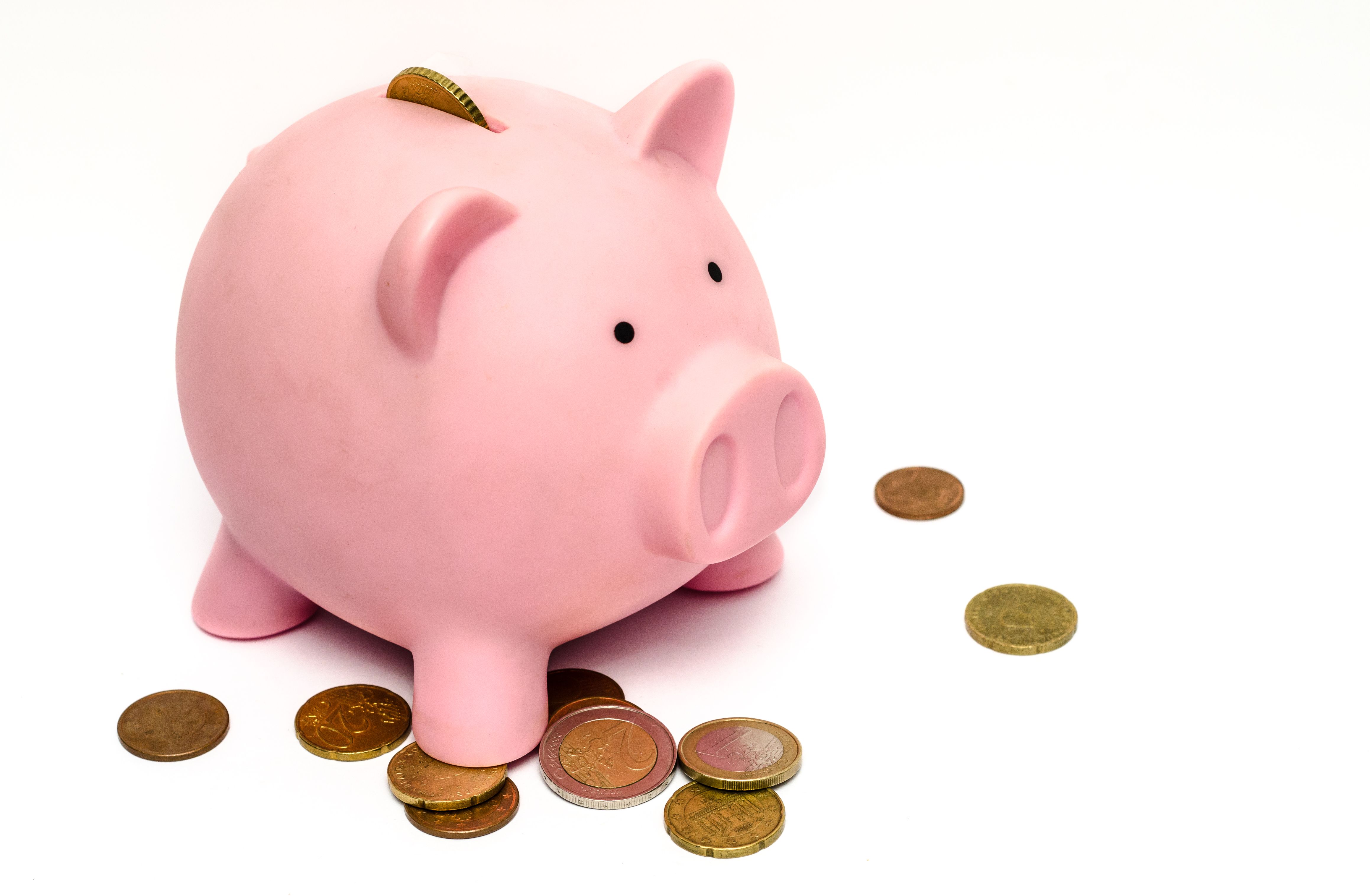
One car repair can wipe out a whole month of pay. On a $40,000 salary, a $900 bill can turn into credit card debt that takes a year to pay off. An emergency fund stops that: cash set aside for unplanned expenses — car repairs, medical bills, a broken appliance, job loss. The Consumer Financial Protection Bureau (CFPB) says even a small amount set aside can provide some financial security. This guide shows how to build one in 2026, with real numbers.Photo: A piggy bank is the idea — a high-yield account is the same idea, earning interest. (Photo: Pexels) What You Will LearnWhat your $40,000 salary is worth after tax How to add up your essentials Your 3- and 6-month fund targets How much to save each month, and how long it takes Where to keep the fund so it earns interestStep 1: Work out your real take-home pay What to do: Find out what actually lands in your bank account each month. How: A $40,000 salary is $3,333 a month before tax. For a single filer in 2026, the IRS standard deduction is $16,100, so taxable income is $23,900. Federal tax is $2,620: 10% of the first $12,400 plus 12% of the rest. Payroll taxes add $2,480 (Social Security) and $580 (Medicare) — $5,680 in total. Take-home pay is $34,320 a year — $2,860 a month, $1,320 every two weeks. Example: Alex earns $40,000: gross pay looks like $3,333 a month, but the pay stub shows about $2,860. Common mistake: Budgeting from gross salary. Plan around $3,333 and every plan is about $470 short.Illustrative diagram — Your $40,000 salary, after federal tax and payroll tax. NOT a real bank screenshot. Step 2: Add up your essential monthly expenses What to do: List the bills you would still have to pay if your income stopped tomorrow. How: Add up one month of essentials from your statements: rent, utilities, groceries, transport, phone, insurance, minimum debt payments. Leave out things you could pause — eating out, streaming, holidays, new clothes. The CFPB and NerdWallet both suggest three to six months of essential expenses, not everything you spend. Example: Alex's essentials are $2,000 a month: rent $950, groceries $350, transport $200, utilities $150, insurance $120, minimum debt $170, phone $60. Alex spends about $2,860 most months, but only $2,000 is essential — counting the full $2,860 makes the six-month target $5,160 bigger than needed. Common mistake: Setting the target from income. If you lost your job, income would be gone — but rent and bills would still be there.Illustrative diagram — Essentials only: $2,000 a month. NOT a real bank screenshot. Step 3: Set your target — starter, 3 months, then 6 months What to do: Turn your essentials into three targets, one at a time. How: Multiply essentials by three and six: on $2,000, three months is $6,000, six months $12,000. Start with a $1,000 starter fund — NerdWallet suggests $500 as a first goal, and $1,000 covers more. Three months suits stable jobs; six fits single earners, the self-employed, variable income. Example: Alex writes three targets on the fridge: $1,000, then $6,000, then $12,000. The $1,000 already handles the most common emergencies. Common mistake: Staring at the six-month target and giving up. Nobody saves $12,000 in a month.Illustrative diagram — Build your emergency fund in steps. NOT a real bank screenshot. Step 4: Pick a monthly amount you can keep — then automate it What to do: Choose a fixed monthly amount, and set it to move on its own on payday. How: $250 a month is a good starting point: the $1,000 starter fund takes 4 months, the $6,000 target 24 months, the $12,000 target 48 months. Set up an automatic transfer for the day after payday — about $115 per paycheck. Our 50/30/20 budget guide shows how to find the $250 in your budget. Example: Alex sets up a $250 transfer for the day after payday. By month four the starter fund is done; by month twelve there is $3,000 in the account. Common mistake: Saving "whatever is left" at month's end. There is almost never anything left. Pay yourself first, automatically.Photo: Count your money once, set the transfer, then let payday do the work. (Photo: Pexels)Illustrative diagram — $250 a month, on autopilot. NOT a real bank screenshot. Step 5: Put the fund in a high-yield savings account What to do: Keep the fund in a separate high-yield savings account (HYSA) — safe, reachable in a day or two, and earning real interest. How: The national average savings rate is just 0.38% APY, according to the FDIC. A high-yield account pays around 4% APY or more. On $6,000, 0.38% earns about $23 a year; at 4.40% APY — a real November 2026 rate, no minimum — the same $6,000 earns about $264. On $12,000: about $46 vs about $528. Make sure it is FDIC- or NCUA-insured (up to $250,000 per depositor, per bank). Our guides to the best high-yield savings accounts in USA 2026 and how a high-yield savings account works explain them. Example: Alex moves the $1,000 starter fund from 0.38% to 4.40% APY. It is still there when the car breaks down — but while it waits, it earns about $44 a year instead of about $4. Common mistake: Keeping the fund in checking, where it gets spent, or in an old account earning almost nothing.Photo: A car repair is the classic emergency fund moment — the bill arrives with no warning. (Photo: Pexels)Illustrative diagram — Same fund, very different interest. NOT a real bank screenshot. Step 6: Set the rules — when to use it, and how to rebuild it What to do: Write down what counts as an emergency — and what does not. How: An emergency is unplanned and necessary: a car repair, a medical bill, a broken heater, a loss of income. It is not a holiday, a sale, a new phone, or concert tickets. The CFPB's advice: set guidelines, but do not be afraid to use the fund. Using it is not a failure — just rebuild it: restart the transfer, even at a smaller amount. Keep it off your credit card — the CFPB notes credit can make a one-time bill grow much larger through interest and fees. Example: Alex's car needs a $700 repair in month nine. The fund holds $2,250. Alex pays cash — then keeps the $250 transfer running and is back above $2,250 within three months. Common mistake: Treating the fund like a second checking account. Every dip for a non-emergency is a hole in the safety net.Illustrative diagram — Emergency or not? Decide before it happens. NOT a real bank screenshot. Checklist☐ I know my take-home pay (about $2,860 a month on $40,000, before state tax). ☐ I added up my essential expenses — my number, not the example's. ☐ I wrote down my three targets: $1,000 starter, then 3 months, then 6 months. ☐ I set up an automatic transfer for the day after payday. ☐ My fund is in a separate FDIC- or NCUA-insured high-yield account. ☐ I wrote my "emergency or not" rules down.FAQ How much emergency fund do I need on a $40,000 salary? It depends on your essentials, not your salary. On $2,000 a month, aim for $6,000 (3 months), then $12,000 (6 months). Start with $1,000. Is $1,000 enough for an emergency fund? It is a good start, not the finish line. It covers the most common surprises — a car repair, a medical bill, a broken appliance — without debt. Then build toward three months, then six. Where should I keep my emergency fund? In a separate high-yield savings account at an FDIC- or NCUA-insured bank or credit union — safe, reachable in one to three business days, earning around 4% APY or more instead of 0.38%. Do not invest it. What if I can only save $50 a month? Save the $50. A $1,000 starter fund takes 20 months at that rate — but $300 after six months beats nothing. Raise it whenever your pay rises or a bill ends. Should I pay off debt first or build an emergency fund first? Both, in order: build a $1,000 starter fund first, then attack high-interest debt, then build the fund to three and six months. Without the starter fund, the next surprise goes on a credit card. SourcesCFPB, "An essential guide to building an emergency fund": https://www.consumerfinance.gov/an-essential-guide-to-building-an-emergency-fund/ NerdWallet, "Emergency Fund Calculator: How Much Should I Have?": https://www.nerdwallet.com/banking/learn/emergency-fund-calculator IRS, "Tax inflation adjustments for tax year 2026" (IR-2025-103): https://www.irs.gov/newsroom/irs-releases-tax-inflation-adjustments-for-tax-year-2026-including-amendments-from-the-one-big-beautiful-bill Motley Fool, "Best High-Yield Savings Accounts, Nov. 2, 2026": https://www.fool.com/money/banks/articles/top-savings-account-rates-today-nov-2-2026/ DollarLedger USA, "Best High-Yield Savings Accounts in USA 2026": </blog/best-high-yield-savings-accounts-in-usa> DollarLedger USA, "How Does a High-Yield Savings Account Work? Explained for Beginners": </blog/how-does-high-yield-savings-account> DollarLedger USA, "How to Budget on a Low Income in USA: 50/30/20 Rule Explained": </blog/how-to-budget-on-low-income-in-usa>Rates checked November 2, 2026; confirm the current rate with the bank. The take-home example is a federal-only estimate for a single filer. Disclaimer: This article is for education only, not financial advice. Rates change often — confirm the current rate with the bank before opening an account.

- DollarLedger Team
- 03 Nov, 2026
HYSA vs Money Market Account vs CD — Which Is Best for You?
You have cash to save, and three accounts all promise interest: a high-yield savings account (HYSA), a money market account, and a certificate of deposit (CD). The top rates are close — HYSA 4.40% APY, money market 4.05%, 1-year CD 4.60% — so the rate alone will not decide it. What matters is access: how fast you can get your money, and what it costs to take it early. This guide compares all three, in plain English.Photo: Three accounts, three jobs. (Photo: Pexels) What You Will LearnWhat a HYSA, a money market account and a CD each do The top rate for each account, and what $10,000 earns in a year How access works: withdrawals, cards, or locked money Which account fits an emergency fund, bills, and long-term savings How to decide in 60 secondsStep 1: Meet the three accounts What to do: Learn what each account is. How: A high-yield savings account (HYSA) is a normal savings account that pays much more interest — the best pay around 4.40% APY, against a national average of 0.38% APY. You can withdraw any time, but the rate is variable. A money market account mixes savings and checking: it pays interest, and many come with a debit card and checks. The best pay around 4.05% APY, also variable. A certificate of deposit (CD) is a fixed deal: you lock money away for 1, 3 or 5 years, and the bank locks your rate. The best 1-year CD pays 4.60% APY. All three are FDIC-insured up to $250,000 per depositor. Example: A HYSA is a jar you can open any day. A money market account is a jar with a card attached. A CD is a jar with a lid that only opens on a set date. Common mistake: Mixing up a money market account with a money market fund. The account is a bank deposit, FDIC-insured. The fund is an investment, and is not FDIC-insured.Illustrative diagram — The three accounts, side by side, Nov 2, 2026. NOT a real bank screenshot. Step 2: Compare access — the real difference What to do: Ask how fast you can get your money out. How: A HYSA lets you withdraw any time — transfers take 1 to 3 business days. A money market account adds a debit card and checks, so you can pay a bill straight from the account. A CD locks your money until the term ends, and taking it out early costs a penalty. The CD pays the highest rate, but only if you can leave the money alone. Example: Your car breaks down: a $900 repair. From a HYSA or money market account, you move the money the same day. From a CD, you pay a penalty to break it early. Common mistake: Picking the CD for the highest rate, then needing the money early — the penalty can wipe out months of extra interest.Illustrative diagram — Access vs return: what you give up for the extra rate. NOT a real bank screenshot. Step 3: Compare what $10,000 earns in one year What to do: Turn each rate into dollars. How: At the top rate for each account, checked November 2, 2026, $10,000 earns in one year: HYSA 4.40% APY, about $440; money market 4.05% APY, about $405; 1-year CD 4.60% APY, about $460. The gap is $55 a year — real money, but small next to access. Averages are far lower: savings 0.38%, 1-year CD 2.11%. Example: Sarah keeps $10,000 as her emergency fund in a HYSA at 4.40% and earns about $440 in a year. A 1-year CD at 4.60% would pay about $20 more — but lock the money away for a year. Common mistake: Chasing a $20 or $55 difference while ignoring minimums: Bank5 Connect pays 4.00% APY with a $100 minimum; Zynlo Bank pays 4.05% APY with no minimum.Photo: Plan first, then pick. (Photo: Pexels)Illustrative diagram — $10,000 for one year: what each account pays. NOT a real bank screenshot. Step 4: Match each account to its job What to do: Give each pile of money the account that fits its job. How: An emergency fund — three to six months of expenses — belongs in a HYSA: a strong rate, reachable any day. Bills and spending money belong in a money market account: the debit card and checks let you pay from it directly while it earns interest. Money you will not touch for a year or more — a house deposit, a car, a wedding — belongs in a CD, where the locked rate pays extra. See our guides to the best high-yield savings accounts and how a HYSA works. Example: James keeps $9,000 in a HYSA as his emergency fund, $2,000 in a money market account for bills, and $5,000 in a CD for a car in 18 months. Common mistake: Keeping everything in one account. One account means one trade-off for all your money.Illustrative diagram — Who is each account for? NOT a real bank screenshot. Step 5: Know how each rate can change What to do: Understand variable versus fixed rates. How: HYSA and money market rates are variable — they usually follow the Federal Reserve's benchmark rate (3.75% to 4.00% in September 2026). When the Fed cuts rates, HYSA and money market rates usually fall too. A CD rate is fixed for the whole term. So a CD wins when you think rates will fall, and a HYSA wins when you think they will rise. Re-check every six months — a 1% gap on $10,000 is $100 a year. Example: If the Fed cuts rates again, a HYSA paying 4.40% today might pay 4.00% next year, while a 1-year CD keeps paying 4.60% until it matures. Common mistake: Opening a HYSA and never looking at it again. Last year's best rate may be this year's average rate.Photo: Each goal gets the account that fits it. (Photo: Pexels)Illustrative diagram — Variable vs fixed: what happens when rates move. NOT a real bank screenshot. Step 6: Decide in 60 seconds What to do: Answer four questions in order. How: 1. Might you need this money any day? Yes — a HYSA: your emergency fund. 2. Do you want to spend from the account with checks or a debit card? Yes — a money market account. 3. Will you not touch it for a year or more? Yes — a CD, and pick the term that matches the date. 4. Not sure? Split it: part in a HYSA for flexibility, part in a CD for the locked rate. Open the account with a photo ID and your Social Security number, and check the bank is FDIC- or NCUA-insured. Example: Maria has $15,000: $5,000 she might need any day in a HYSA, $3,000 for bills in a money market account, $7,000 for a house deposit in a CD. Common mistake: Treating the choice as permanent. You can move money any time a better rate appears — the only cost is the CD penalty.Illustrative diagram — Pick in 60 seconds: four questions. NOT a real bank screenshot. Checklist☐ I know what each pile of money is for, and when I need it. ☐ I compared the top rate for each account. ☐ I checked minimums, fees, and the debit card. ☐ I checked the CD's penalty before locking money away. ☐ I checked every bank is FDIC- or NCUA-insured. ☐ I set a reminder to re-check rates in 6 months.FAQ Which is best: HYSA, money market account, or CD? There is no single best account — only the best one for your money's job. A HYSA wins for emergency money, a money market account for spending money, and a CD for money you will not touch for a year or more. Many people use all three. Is a money market account safe? Yes, if it is a bank deposit account at an FDIC-insured bank: deposits are protected up to $250,000 per depositor, per bank, per ownership category. Can I lose money in a money market account or HYSA? No. Both are deposit accounts, not investments, so your balance never drops with the market. A CD can only lose money through its early-withdrawal penalty. Do money market accounts have monthly fees? Some do, some do not. The best right now have no monthly fees — Zynlo Bank's money market account at 4.05% APY has no minimum and no monthly fee. Check the fee and minimum first. Which pays the most interest right now? As of November 2, 2026: top 1-year CD 4.60% APY, top HYSA 4.40% APY, top money market account 4.05% APY. But the CD locks your money too, while the other two let you withdraw any time. SourcesBankrate, "Best Money Market Account Rates of November 2026 — Up to 4.05%" — Zynlo Bank 4.05%, Bank5 Connect 4.00%, Ally 3.20%: https://www.bankrate.com/banking/money-market/rates/ Bankrate, "Best CD Rates of November 2026 — Up to 5.00%" — top 1-year CD 4.60% APY, Nov 2, 2026: https://www.bankrate.com/banking/cds/cd-rates/ FDIC, Deposit Insurance at a Glance — $250,000 per depositor, per bank, per ownership category: https://www.fdic.gov/consumer-resource-center/deposit-insurance-glance Motley Fool, "Best High-Yield Savings Accounts Today, Nov. 2, 2026" — top HYSA rates, national average 0.38% APY: https://www.fool.com/money/banks/articles/top-savings-account-rates-today-nov-2-2026/All rates checked November 2, 2026. Disclaimer: This article is for education only, not financial advice. Rates change often — confirm the current rate with the bank before opening an account.
- DollarLedger Team
- 03 Nov, 2026
Best CD Rates in 2026: 1-Year, 3-Year and 5-Year Compared
A certificate of deposit, or CD, is the simplest deal in banking: you lend money to a bank for a fixed time, and the bank pays you a fixed rate. The best CD rates in the USA right now reach 4.60% APY for one year, 4.85% for three years, and 5.00% for five years. The catch: your money is locked away for the term. This guide compares the best 1-year, 3-year and 5-year CD rates, checked November 2, 2026, and shows you how to pick your term.Photo: A CD is a fixed deal — a set rate for a set time. (Photo: Pexels) What You Will LearnWhat a CD is, and how it differs from a savings account The best 1-year, 3-year and 5-year CD rates right now What $10,000 earns in each term What an early-withdrawal penalty costs, in real dollars How to pick your term, and how a CD ladder worksStep 1: Understand what a CD is What to do: Learn the deal before you compare rates. How: A CD is a deposit account with a fixed term — usually three months to five years — and a fixed rate. You deposit once, and withdrawing early costs a penalty. The rate is locked: even if the Federal Reserve cuts rates, your CD keeps paying the same APY until it matures. CDs at FDIC-insured banks are insured up to $250,000 per depositor, per bank, per ownership category; credit union CDs are covered by the NCUA. Example: You open a 1-year CD at 4.60% APY with $10,000 and know in advance you will earn about $460. Common mistake: Thinking a CD is an investment. It is not — your balance cannot drop, but it cannot grow faster than the rate you locked in.Illustrative diagram — How a CD works: four steps, one locked rate. NOT a real bank screenshot. Step 2: Compare the best rates by term What to do: Compare the top rate for each term with the national average. How: The best CD rates in the USA, checked November 2, 2026. Rates are fixed for the term; averages are from Bankrate's survey, also as of November 2, 2026.1-year CD — best 4.60% APY (Popular Direct); E*TRADE 4.55%, Barclays 4.50%, Quorum FCU 4.50% ($100 min), Marcus 4.40% ($500 min); average 2.11% APY. 3-year CD — best 4.85% APY (Popular Direct, $10,000 min); E*TRADE 4.80%, Sallie Mae 4.60% ($2,500 min), Bread Financial 4.60%; average 1.73% APY. 5-year CD — best 5.00% APY (Popular Direct, Sallie Mae); Synchrony 4.75%, Bread Financial 4.70%, Ally 4.50%; average 1.78% APY.Example: The best 1-year rate (4.60%) pays more than twice the average (2.11%) — about $460 instead of about $211 on $10,000. Common mistake: Taking the first rate your own bank offers. Big banks usually pay close to the average — the top rates are at online banks and credit unions.Illustrative diagram — Top CD rates vs national average, Nov 2, 2026. NOT a real bank screenshot.Photo: A CD is a trade of time for money — the longer you wait, the more you earn. (Photo: Pexels) Step 3: Work out what you actually earn What to do: Turn the APY into dollars. How: What $10,000 earns at the best rate for each term: 1-year CD at 4.60% APY, about $460 in one year. 3-year CD at 4.85% APY, about $1,527 over three years. 5-year CD at 5.00% APY, about $2,763 over five years. 1-year CD at the national average of 2.11% APY, about $211 — less than half the best rate. A high-yield savings account pays around 4.40% APY but lets you withdraw any time — see our best s and how a HYSA works. Example: Maria needs $10,000 for a house deposit in one year. A 1-year CD at 4.60% earns her about $460; a 5-year CD would lock it away too long. Common mistake: Comparing a 5-year total ($2,763) with a 1-year total ($460). Always compare the same length of time.Illustrative diagram — What $10,000 earns in a top CD. NOT a real bank screenshot. Step 4: Know the early-withdrawal penalty before you lock in What to do: Read the penalty terms before you lock in. How: Taking money out before maturity costs an early-withdrawal penalty — usually 90 to 365 days of interest, depending on the term. Longer terms carry bigger penalties: Ally Bank charges 60 days on a 1-year CD, 90 days on a 3-year CD, and 150 days on a 5-year CD. If you have not earned enough interest to cover the penalty, the bank takes the rest from your deposit. Example: You put $10,000 in a 1-year CD at 4.40% APY, then break it after three months: a 90-day penalty costs about $108 — wiping out what you earned. Common mistake: Locking away money you might need. Emergency money belongs in a .Illustrative diagram — The early-withdrawal penalty: longer term, bigger penalty. NOT a real bank screenshot. Step 5: Plan for maturity — grace periods and CD ladders What to do: Decide in advance what happens at maturity — and consider a ladder. How: At maturity, most banks give you a 7 to 10 day grace period to withdraw or change the term. Do nothing, and many auto-renew it at the current rate — which may be lower. Set a calendar reminder. A ladder fixes the locked-money problem: split $10,000 into five $2,000 CDs of 1, 2, 3, 4 and 5 years, so one matures every year. Example: James builds a $10,000 ladder with five $2,000 CDs. From year two on, a CD matures every year — he is never more than a year away from cash. Common mistake: Forgetting the maturity date and letting a CD auto-renew at a lower rate.Photo: Put the maturity date on your calendar. (Photo: Pexels)Illustrative diagram — A CD ladder: money frees up every year. NOT a real bank screenshot. Step 6: Pick your term and open the CD What to do: Match the term to the date you will need the money. How: Ask one question: when will I spend this money? Under a year — do not lock it up; use a high-yield savings account or a short CD. About one year — a 1-year CD at up to 4.60% APY. About three years — up to 4.85%. Five years or more — up to 5.00%. Not sure? Pick the shorter term, or build a ladder. Apply on the bank's website with a photo ID and your Social Security number, fund it with a transfer, and check the bank is FDIC- or NCUA-insured. Check the minimum deposit: some top rates need $10,000; E*TRADE and Barclays need none. Example: David has $5,000 for a car he will buy in about a year. He picks a 1-year CD at 4.55% APY and earns about $228. Common mistake: Chasing 5.00% with money you need in a year, or a $10,000 minimum when you only have $5,000.Illustrative diagram — Pick your term by when you need the money. NOT a real bank screenshot. Checklist☐ I picked a term matching when I need the money. ☐ I compared the top rate with the national average. ☐ I checked the minimum deposit for the rate I want. ☐ I read the early-withdrawal penalty for my term. ☐ I checked the bank is FDIC- or NCUA-insured. ☐ I set a calendar reminder for the maturity date.FAQ Is a CD better than a high-yield savings account? It depends on when you need the money. A CD locks your rate, so it wins if rates fall — but your money is locked too. A high-yield savings account pays around 4.40% APY and lets you withdraw any time, but its rate can change. For an emergency fund, a savings account usually wins. What happens when my CD matures? You get your deposit back plus all the interest. Most banks give you a 7 to 10 day grace period to withdraw or change the term; do nothing, and many auto-renew it at the current rate. Can I lose money in a CD? Almost never — your deposit is FDIC-insured up to $250,000. The only risk is the early-withdrawal penalty: break the CD before earning enough interest to cover it, and the bank takes the rest from your deposit. Are CD rates going up or down? CD rates usually follow the Federal Reserve's benchmark rate. When the Fed cuts rates, new CD rates usually fall too, which is why locking in can pay off. Check the current rate before you open a CD. Do I pay tax on CD interest? Yes — interest is taxable income in the year you earn it, even if the CD has not matured yet. Your bank sends a Form 1099-INT if you earn $10 or more in a year. Early-withdrawal penalties are tax-deductible. SourcesBankrate, "Best CD Rates of November 2026 — Up to 5.00%" — top rates, Nov 2, 2026: https://www.bankrate.com/banking/cds/cd-rates/ Bankrate, "What Is a CD (Certificate of Deposit)?" — penalties of 90 to 365 days of interest: https://www.bankrate.com/banking/cds/what-is-a-cd/ Bankrate, "Here's When an Early Withdrawal From a CD Is Worth It" — penalty examples by bank: https://www.bankrate.com/banking/cds/cd-early-withdrawal-can-come-at-a-high-price/ FDIC, Deposit Insurance at a Glance — $250,000 per depositor, per bank, per ownership category: https://www.fdic.gov/consumer-resource-center/deposit-insurance-glanceAll rates checked November 2, 2026. Disclaimer: This article is for education only, not financial advice. Rates change often — confirm the current rate with the bank before opening an account.