Showing Posts From
Credit score

 DollarLedger Team
- 14 Nov, 2026
How to Check Your Credit Score for Free in 2026 — Score vs Report
Most people check the wrong thing. They pull their free credit report, look for a number, and find none — because the report is not the score. The report is the full record: every account, every balance, every late payment. The score is a three-digit number calculated from that record, usually 300 to 850. And there is not one score — there are many, made by different companies. The good news: you can get a real score free, in about five minutes, and checking it never hurts it. All figures were checked on November 13, 2026.Caption: Photo: The report is the record, the score is the number — and both are free to check. (Photo: Pexels) What You Will LearnReport vs score — why the free report has no number Three free ways to get a real FICO Score FICO vs VantageScore — why they differ, and which one lenders use Why you need all three bureaus, not just one How to fix the report behind the score The two moves that raise your score fastestStep 1: Know the difference — report vs score What to do: Learn which document you are looking at before you chase a number. How: Your credit report is the raw file: every card, loan, balance, payment and inquiry, kept separately by Equifax, Experian and TransUnion. Each bureau's report is free every week at AnnualCreditReport.com — the only website the FTC authorises — or by calling 1-877-322-8228. But the report contains no score: the CFPB is clear the free reports do not include one. The score is a three-digit number, usually 300 to 850, calculated from the data in the report. And there is more than one: FICO and VantageScore use different formulas, and each bureau's file can differ. Example: Your Equifax report shows a $1,800 balance and one late payment; your score turns that into a number — 672, say. Common mistake: Paying for your "free report" — it is free only at AnnualCreditReport.com.Caption: Illustrative diagram - The six steps to a free credit score. NOT a real CFPB screenshot. Step 2: Get a real FICO Score for free What to do: Get the score most lenders use — free, without paying and without a card. How: The CFPB says many card companies and lenders give customers a free score, as do nonprofit credit and housing counsellors. Start with your own bank or card issuer — many show a free score in the app or on your statement. If yours does not, use a free route (reported): an Experian free account, Discover Credit Scorecard (no Discover card needed) and myFICO's free plan each give a free FICO Score 8. None asks for a credit card. If a site wants your card number first, close it — that is a lookalike. Example: Maya opens a free Experian account and sees a FICO Score 8 of 721. Common mistake: A "free trial" that becomes a monthly fee — the CFPB warns a trial may last only a set period, then you must cancel or pay.Caption: Illustrative diagram - Report vs score: two different things. NOT a real CFPB screenshot.Caption: Photo: Start with the app you already have — your bank or card issuer may show a free score. (Photo: Pexels)Caption: Illustrative diagram - FICO vs VantageScore: same data, different number. NOT a real myFICO screenshot. Step 3: Read the label — FICO or VantageScore? What to do: Read the model name on your score before you compare it with anything. How: FICO is made by the Fair Isaac Corporation and used by 90% of top lenders (myFICO). Mortgage and auto lenders check it first. VantageScore was built jointly by the three bureaus, and VantageScore 3.0 powers most free apps (reported). Both read the same report data on a 300 to 850 scale, but they weigh the factors differently, so the numbers differ. A gap of 20 to 40 points between the two is common (reported) — the formulas disagree. FICO's bands: below 580 Poor, 580 to 669 Fair, 670 to 739 Good, 740 to 799 Very Good, 800+ Exceptional. Example: Credit Karma shows 745 while Discover shows a FICO Score 8 of 712. Both are honest numbers from the same file — different models, different answers. Common mistake: Celebrating a 745 VantageScore, then being surprised when the lender's FICO number comes in lower.Caption: Illustrative diagram - FICO ranges and what drives the score. NOT a real myFICO screenshot. Step 4: Check all three bureaus What to do: Cover all three bureaus — one score is not the whole picture. How: The three bureaus keep separate files that do not always match: an account can appear on one file and be missing from another. A lender can pull any bureau's file. Pair your sources: Credit Karma gives VantageScore 3.0 from Equifax and TransUnion (reported), and a free Experian account gives a FICO Score 8 (reported) — together they cover all three files. Mortgage lenders often use older FICO versions — FICO 5, 4 and 2 (reported). Example: A store card appears on your Experian file but not on Equifax — same you, different files. Common mistake: Checking one bureau once and assuming the other two files say the same thing.Caption: Photo: One bureau's file is not the whole picture — check all three before you apply. (Photo: Pexels)Caption: Illustrative diagram - Where to get a free score, and which one it is. NOT a real CFPB screenshot. Step 5: Read the report behind the score — and dispute anything wrong What to do: Fix the data, and the score follows. How: The CFPB says report mistakes could hurt your credit history and your score, so check regularly. Pull all three reports free every week at AnnualCreditReport.com and look for accounts that are not yours, wrong late payments and wrong balances. If you find an error, dispute it with the credit bureau and the company that reported it. For the full report walkthrough, see our guide to checking your credit report for free in 2026. The score is calculated from the report, so fixing the data is the only way to fix the number. Example: A $400 collection account that is not yours sits on your TransUnion file — dispute it, and the score can recover. Common mistake: Trying to dispute the score itself — it is only a calculation. Dispute the wrong item in the report, and the score follows. Step 6: Move the number — on-time payments and low utilisation What to do: Use the two levers that matter most. How: MyFICO puts payment history at 35% of a FICO Score and amounts owed at 30% — together 65% of the number. The CFPB agrees: paying on time has the greatest impact, so set up autopay for at least the minimum. Then keep balances low: the CFPB advises keeping use under 30% of your limit. Our guide to improving your credit score fast in 2026 shows the faster route: pay before the statement closing date — the statement balance is what the bureaus see — and aim for under 10%. Checking your own score or report is a soft inquiry and never lowers it (CFPB). Example: One card, $1,000 limit, $450 balance — 45% utilisation. Pay $200 before the statement closes and the balance drops to $250, or 25%. Common mistake: Paying in full on the due date while the statement still shows a high balance, or closing an old card.Caption: Illustrative diagram - Six mistakes that cost you the real number. NOT a real CFPB screenshot. ChecklistReport pulled free at AnnualCreditReport.com — all three bureaus. Free FICO Score 8 in hand. Model name noted — FICO or VantageScore. All three bureau files checked, not just one. Report errors disputed with the bureau and the furnisher. Autopay on for at least the minimum, every account. Utilisation under 30% — under 10% if you can.FAQ Is checking my credit score really free? Yes. Your report is free every week at AnnualCreditReport.com, and a score is free from your bank or a bureau's free tier. A legitimate free score never asks for a card number — if it does, you are on a lookalike site. Does checking my own score lower it? No. Checking your own score or report is a soft inquiry: only you can see it, and it never lowers your score. Only a hard inquiry — when you apply for new credit — can move it. Why is my Credit Karma score different from my FICO score? Because they are different models reading the same file. Credit Karma shows VantageScore 3.0; most lenders use a FICO Score. A gap of 20 to 40 points is common (reported). Which score will a mortgage lender use? A FICO Score — often an older version, FICO 5, 4 or 2 (reported), not the FICO Score 8 you see for free. If a mortgage is in your plans, watch your FICO Score; the free FICO Score 8 is the closest free guide to it. What is a good credit score in 2026? On the FICO scale, 670 to 739 is Good, 740 to 799 Very Good, 800 and above Exceptional (myFICO). Below 580 is Poor, 580 to 669 Fair. SourcesConsumer Financial Protection Bureau, Where can I get my credit scores? (opened live November 13, 2026): https://www.consumerfinance.gov/ask-cfpb/where-can-i-get-my-credit-scores-en-316/ myFICO, What is a FICO Score and why is it important? (opened live November 13, 2026): https://www.myfico.com/credit-education/what-is-a-fico-score Consumer Financial Protection Bureau, Understand your credit score (opened live November 13, 2026): https://www.consumerfinance.gov/consumer-tools/credit-reports-and-scores/understand-your-credit-score/All figures checked November 13, 2026, against the CFPB, myFICO and the FTC. Disclaimer: For education only, not financial, tax or investment advice. Credit rules and scoring models change — confirm the current figures on consumerfinance.gov before you decide.

- DollarLedger Team
- 12 Nov, 2026
How to Check Your Credit Report for Free in 2026 — All 3 Bureaus, Every Week
Most Americans still think a free credit report is a once-a-year thing. It is not — not any more. Since October 2023, the three big credit bureaus — Equifax, Experian and TransUnion — have let you pull each report once a week, for free, and that weekly access is permanent and still live in 2026: three bureaus times 52 weeks is 156 free reports a year. The catch is the address: exactly one website is authorised by law for this, AnnualCreditReport.com, and lookalikes buy ads to sit above it.Photo: Your free credit report is weekly now, not once a year — but only from the one official site. (Photo: Pexels) What You Will LearnThe only official site — and how to spot the lookalikes How to pull all three bureau reports in one sitting, free, every week The six sections to check on every report Why your three reports disagree — and what to do about it How to dispute an error, and the 30-day clock A repeat schedule that takes about 15 minutesStep 1: Go to the only official site What to do: Type AnnualCreditReport.com into your browser yourself — do not click a search ad to get there. How: The FTC says only one website is authorised to fill orders for the free reports you are entitled to by law: AnnualCreditReport.com. Copycats put "free report" in their names, buy ads above the real site, and misspell the address hoping you mistype it. The real site never asks for a credit card, and never emails you asking for your Social Security number — the FTC warns any such message is probably a scam. Example: The top search result says "Free Credit Score + Report — Start Now". That is an ad for a paid service — close it and type the address yourself. Common mistake: Clicking the first search result and handing your Social Security number to a lookalike site.Illustrative diagram - The six steps to checking your credit report for free. NOT a real AnnualCreditReport.com screenshot. Step 2: Pull all three reports, every week if you like What to do: Request your reports from Equifax, Experian and TransUnion — one, two or all three at once, as often as weekly. How: Federal law requires each bureau to give you a free copy once every 12 months. On top of that, the bureaus permanently extended a programme that lets you check each report once a week for free at AnnualCreditReport.com — the FTC states it plainly, and the CFPB page, last reviewed October 15, 2026, says the same. Online access is immediate. By phone, call 1-877-322-8228; by mail, send the Annual Credit Report Request Form to Annual Credit Report Request Service, P.O. Box 105281, Atlanta, GA 30348-5281 — both take about 15 days. Separately, through December 31, 2026, six extra free Equifax reports a year are available at AnnualCreditReport.com or 1-866-349-5191 (CFPB). Example: Applying for a car loan next month? Pull all three this week, so errors get disputed before a lender sees your file. Common mistake: Checking only one bureau and assuming the other two match — they often do not.Illustrative diagram - Once a year was the old rule: weekly access means 156 free reports a year. NOT a real FTC screenshot.Photo: Pull all three reports in one sitting — online access is immediate. (Photo: Pexels) Step 3: Check every section of the report What to do: Read all six sections of each report, not just the first page. How: First, identity details — a wrong spelling or an address you never lived at can mean a mixed file or identity theft. Second, every account: is it yours, and is a closed account wrongly shown as open? Third, balances and limits — a wrong limit makes your card use look higher than it is. Fourth, payment history — an on-time payment shown late is an error. Fifth, hard inquiries — one from a lender you never applied to is a red flag. Sixth, collections and public records — anything not yours needs a dispute. An FTC study cited by the CFPB found one in five people had an error on at least one of their credit reports. Example: Your report shows a $2,400 store card you never opened — bureau error or identity theft, either way dispute it. Common mistake: Glancing at the top of the report and skipping the inquiries and collections sections, where the worst surprises live.Illustrative diagram - Six sections to check on every report. NOT a real Equifax screenshot. Step 4: Compare the three files side by side What to do: Line up the same account across all three reports and note where they disagree. How: The FTC is blunt: each bureau gets its information from different sources, so one bureau's report might not match the other two. One may show a balance the others miss, a paid-off loan may still show as open, and a credit limit can differ by thousands of dollars. A lender may pull any one of the three — so check each account three times: same balance, same limit, same status, same payment history. Note the bureau and the date; your dispute goes to that bureau, and tell the lender too. Example: Experian shows your card limit as $5,000, TransUnion $3,000 — on the TransUnion file your card looks far more maxed out, so dispute it there. Common mistake: Finding one clean report and assuming the other two are clean too.Illustrative diagram - Online is immediate; phone and mail take about 15 days. NOT a real CFPB screenshot.Photo: Compare the same account across all three files — they often disagree. (Photo: Pexels) Step 5: Dispute every error — in two places What to do: Dispute each error with the bureau that shows it, and also with the company that supplied the wrong information. How: Disputing costs nothing — online, by mail or by phone. The CFPB says a bureau generally must investigate within 30 days (up to 45 days in some cases) and then has five business days to tell you the results. Explain in writing what is wrong and why, with copies — never originals — of supporting documents. If the information is inaccurate or cannot be verified, it must be corrected or removed. Dispute with the furnisher too — it generally must respond within 30 days. Two limits: accurate negative information, like a late payment you really made, generally cannot be removed early, and no company can charge you to "fix" what you can dispute free yourself. Example: A $310 collection for a medical bill you already paid — dispute it with the bureau, send the furnisher your receipt, and keep the confirmation number. Common mistake: Paying a "credit repair" company to dispute for you — the dispute is free, and only you can supply the proof.Illustrative diagram - The dispute clock: 30 days to investigate, five business days to tell you. NOT a real CFPB screenshot. Step 6: Set a repeat schedule — 15 minutes, then forget it What to do: Put a repeating reminder in your calendar and check on a fixed rhythm, not when something goes wrong. How: Checking your own report never hurts your score — AnnualCreditReport.com says so directly, because your own request is a soft look, not a lender's hard inquiry, and lenders never see it. A simple rhythm: pull one bureau on the first Monday of each month, rotating Equifax, Experian, TransUnion — all three covered every quarter. Or pull all three every three months, and always before you apply for credit, a loan, insurance, housing or a job. The free report does not include a credit score — the report is the raw data; the score is a separate number calculated from it. To move that number, start with our guide to how to improve your credit score fast in 2026; with no credit history at all, start with how to build credit from scratch in 2026. Example: First Monday of the month, 15 minutes, one bureau: January Equifax, February Experian, March TransUnion, then repeat. Common mistake: Checking once, finding nothing, and never looking again — new errors and fraud can appear at any time.Illustrative diagram - Six mistakes that cost you the free report. NOT a real FTC screenshot. Checklist ☐ Typed AnnualCreditReport.com in the address bar — no search ad. ☐ Pulled all three reports: Equifax, Experian, TransUnion. ☐ Checked all six sections on each report. ☐ Compared the same accounts across all three files. ☐ Disputed every error with the bureau and the furnisher; kept confirmation numbers. ☐ Calendar reminder set: one bureau, first Monday, rotating. FAQ Is a free credit report really weekly now, not once a year? Yes. Federal law guarantees one free report per bureau every 12 months, but the bureaus permanently extended weekly online access — the FTC states it, and the CFPB page (last reviewed October 15, 2026) says you can view your reports online for free once a week. Will checking my own credit report lower my credit score? No. Your own request is a soft look, not a lender's hard inquiry. AnnualCreditReport.com states that checking your reports there will not affect your credit scores. Does the free credit report include my credit score? No — and do not let any site promise otherwise. The report is the raw data: accounts, balances, payment history, inquiries. The score is a separate number calculated from that data. Many card issuers show a free score on your monthly statement. I found an account I never opened. What do I do first? Dispute it with the bureau showing it and the company that reported it, in writing, with copies of any proof. Then place a fraud alert on your file and report the identity theft at IdentityTheft.gov, the FTC's recovery site. SourcesAnnualCreditReport.com, the official source for free credit reports (opened live November 12, 2026): https://www.annualcreditreport.com/ Federal Trade Commission, Consumer Advice: Free Credit Reports (opened live November 12, 2026): https://consumer.ftc.gov/articles/free-credit-reports Consumer Financial Protection Bureau, How do I get a free copy of my credit reports? (opened live November 12, 2026; last reviewed October 15, 2026): https://www.consumerfinance.gov/ask-cfpb/how-do-i-get-a-free-copy-of-my-credit-reports-en-5/All figures checked November 12, 2026, against AnnualCreditReport.com, the FTC and the CFPB. The six extra Equifax reports are per the CFPB's Your Money, Your Goals toolkit; the "one in five" figure is an FTC study cited by the CFPB — both reported as reported. Disclaimer: For education only, not financial, tax or investment advice.

- DollarLedger Team
- 10 Nov, 2026
How to Build Credit from Scratch in 2026 - No Score, No Problem
Having no credit score is not the same as having a bad one. A bad score means lenders have seen you miss payments; no score means they have seen nothing at all - your file is blank. The CFPB's 2015 report put the number at about 26 million Americans with no credit file at all, plus another 19 million with files too thin to score. A June 2025 CFPB update revised the no-file figure down to about 7 million as of December 2020. Either way, millions of adults start from zero. Card terms were checked November 10, 2026 - check them again before you apply.Photo: Your first card is a tool, not a spending spree - the goal is a clean payment record. (Photo: Pexels) What You Will LearnHow to check whether you really have no credit file Which secured card to open first How to add a second account that reports How much of your limit to use When your first score appears, and how to protect itStep 1: Check your starting point first What to do: Pull your free credit reports before you apply for anything. How: Go to AnnualCreditReport.com, the only site federal law authorizes for free credit reports. You can check each bureau's report - Equifax, Experian and TransUnion - once a week for free; the FTC says the program is now permanent. You will need your name, address, Social Security number and date of birth. A credit report is not a credit score: it shows the accounts behind a score, not the score itself. You can also order by phone at 1-877-322-8228. Example: Maria has never had a card or a loan - but her Equifax report shows a store card opened in her name. Common mistake: Applying for cards blind. You may have no file, a thin file, or an error on your file - and each needs a different first move.Illustrative diagram - The six steps to building credit from scratch in 2026. NOT a real CFPB screenshot. Step 2: Open one secured card that reports to all three bureaus What to do: Open one secured card that reports to all three bureaus. How: A secured card works like a normal credit card, except you put down a refundable cash deposit first, and that deposit usually becomes your credit limit. The whole point is the reporting: every on-time payment is sent to the three bureaus, so confirm it reports to all three first. The usual starting picks: Discover it Secured Cash Back and Capital One Platinum Secured both ask for a $49, $99 or $200 deposit, charge no annual fee, need no credit score to apply, and report to all three bureaus. Capital One's purchase APR is 29.24% variable, so pay in full. The Chime Card needs no deposit and no credit check, charges no annual fee and no interest, and reports to all three - but needs a Chime Checking Account. Skip any secured card charging a $75 or higher annual fee. Compare first cards here: </blog/best-first-credit-card-in-usa-2026-no> Example: James opens the Capital One Platinum Secured with a $200 deposit, giving him a $200 limit. Common mistake: Trusting old Discover advice. The original card stopped taking applications in June 2026 and relaunched that October. The old seven-month automatic upgrade review is gone - reviews are now periodic, with no set schedule.Illustrative diagram - What builds credit, and what does not. NOT a real CFPB screenshot. Step 3: Add a second tradeline What to do: Once your card is open and reporting, add one more account that reports. How: The simplest second account is a credit-builder loan from a bank or credit union. The lender holds the loan - usually a few hundred dollars to about $1,500 (reported) - in a locked savings account, and you repay it over about six to 24 months. Each payment is reported, and when you finish, the money is yours. The other option is becoming an authorized user on a trusted family member's card with a long, clean history. Treat that as a boost, not your whole plan - authorized-user-only files are weaker on their own (reported). Add one second account, not three - each new application is a hard inquiry. Example: After three months, Ana takes a $1,000 credit-builder loan over 12 months at about $85 a month, and every payment is reported. Common mistake: Paying for a service that reports rent or utility payments as your only tradeline. Those reports do not replace a card or loan that reports to all three bureaus.Photo: One card, used lightly, is enough to start - the second account comes after it is reporting. (Photo: Pexels) Step 4: Use it lightly and pay in full every month What to do: Put one small bill on the card and pay the full balance every month. How: Put one small charge you already pay - a streaming subscription or a phone bill - on the card. The CFPB's guidance is to keep usage under 30% of your limit, and some experts say under 10% is better. On a $200 limit, $20 is 10% and $60 is 30% - the ceiling, not the target. Set up autopay for the full statement balance. Never carry a balance: at 29.24% variable APR, carrying $200 for a month costs about $5 in interest. Payment history is about 35% of a FICO score and amounts owed about 30% (reported) - together about two-thirds of it. The Chime Card is the exception: it reports no utilization. Example: James puts his $15 streaming bill on his $200-limit card and autopays in full: 7.5% of his limit, no interest. Common mistake: Spending up to the limit because the deposit covers it. The deposit is the issuer's collateral. Maxing out a $200 limit means 100% usage.Illustrative diagram - The $200 secured card worked example. NOT a real CFPB screenshot. Step 5: Wait for the score - and watch it grow What to do: Keep the habits going for six months, then check whether your first score has appeared. How: A FICO score needs at least one account open for six months or more, and at least one account reported within the past six months. Your first FICO score appears after about six months of reported history - no product produces one sooner. After that, steady on-time payments and low balances can put you in the 600s to 700s within a year or two (reported). A VantageScore can appear sooner (reported) - but most lenders use FICO. While you wait, pull your reports free each week and confirm your card is reporting to all three bureaus. Example: Ana opens her secured card in November 2026. Her first FICO score appears around May 2027, six months later. Common mistake: Checking your score every week and changing strategy when it moves slowly. A new score starts low and climbs in small steps. The first year is about the payment record, not the number.Illustrative diagram - Your first two years: what to expect. NOT a real CFPB screenshot.Photo: The first year is about the payment record, not the number - patience is part of the plan. (Photo: Pexels) Step 6: Protect the file you just built What to do: Guard your payment history above everything else, and keep your first card open. How: One payment reported 30 days late can drop a score in the 700s by 60 to 110 points (reported, from FICO's own simulations), and the late mark stays on your credit report for seven years. On a brand-new file, one late mark is a large share of everything the model knows about you. So set autopay for at least the minimum on the day you open the account. Keep your first card open after you graduate - length of history is about 15% of a FICO score (reported). Do not apply for a stack of new cards once your score appears: each application is a hard inquiry. To raise it faster, see our guide to improving your credit score: </blog/how-to-improve-your-credit-score-fast> Example: James graduates after a year and gets his $200 deposit back - but he keeps the account open. Common mistake: Closing the secured card the day the deposit comes back. You lose your oldest account and your available credit.Illustrative diagram - What a FICO score is made of. NOT a real CFPB screenshot.Illustrative diagram - Six mistakes that keep beginners stuck. NOT a real CFPB screenshot. Checklist☐ I checked my free reports and know my starting point. ☐ I opened one no-fee secured card that reports to all three bureaus. ☐ I added one second tradeline. ☐ I put one small bill on the card and autopay in full. ☐ I know my first FICO score needs about six months. ☐ I will never miss a payment, and I will keep my first card open.FAQ How long does it take to build credit from scratch? About six months for your first FICO score. Reaching the 600s to 700s usually takes a year or two of steady payments and low balances (reported). Do I need a secured credit card to build credit? It is the most direct route, but not the only one. A credit-builder loan or authorized-user status also reports payments to all three bureaus. Does checking my own credit report hurt my score? No. Checking your own reports is a soft inquiry and never affects your score. Only a lender's hard inquiry can lower it slightly. What if I have no bank account yet? Open a basic checking account first. The Chime Card requires a Chime Checking Account, and the others need a bank account to fund the deposit within 35 days of approval. SourcesCFPB, Ways to start or rebuild a good credit history (Nov 10, 2026): https://www.consumerfinance.gov/ask-cfpb/what-are-some-ways-to-start-or-rebuild-a-good-credit-history-en-2155/ AnnualCreditReport.com, the only federally authorized site for free credit reports (FTC page opened live Nov 10, 2026; site returned 403): https://www.annualcreditreport.com/index.action FTC, Free Credit Reports (Nov 10, 2026): https://consumer.ftc.gov/articles/free-credit-reports DollarLedger USA, Best First Credit Card in USA 2026: </blog/best-first-credit-card-in-usa-2026-no> DollarLedger USA, How to Improve Your Credit Score Fast: </blog/how-to-improve-your-credit-score-fast>All figures checked November 10, 2026. Disclaimer: For education only, not financial advice. Confirm current terms with the issuer.
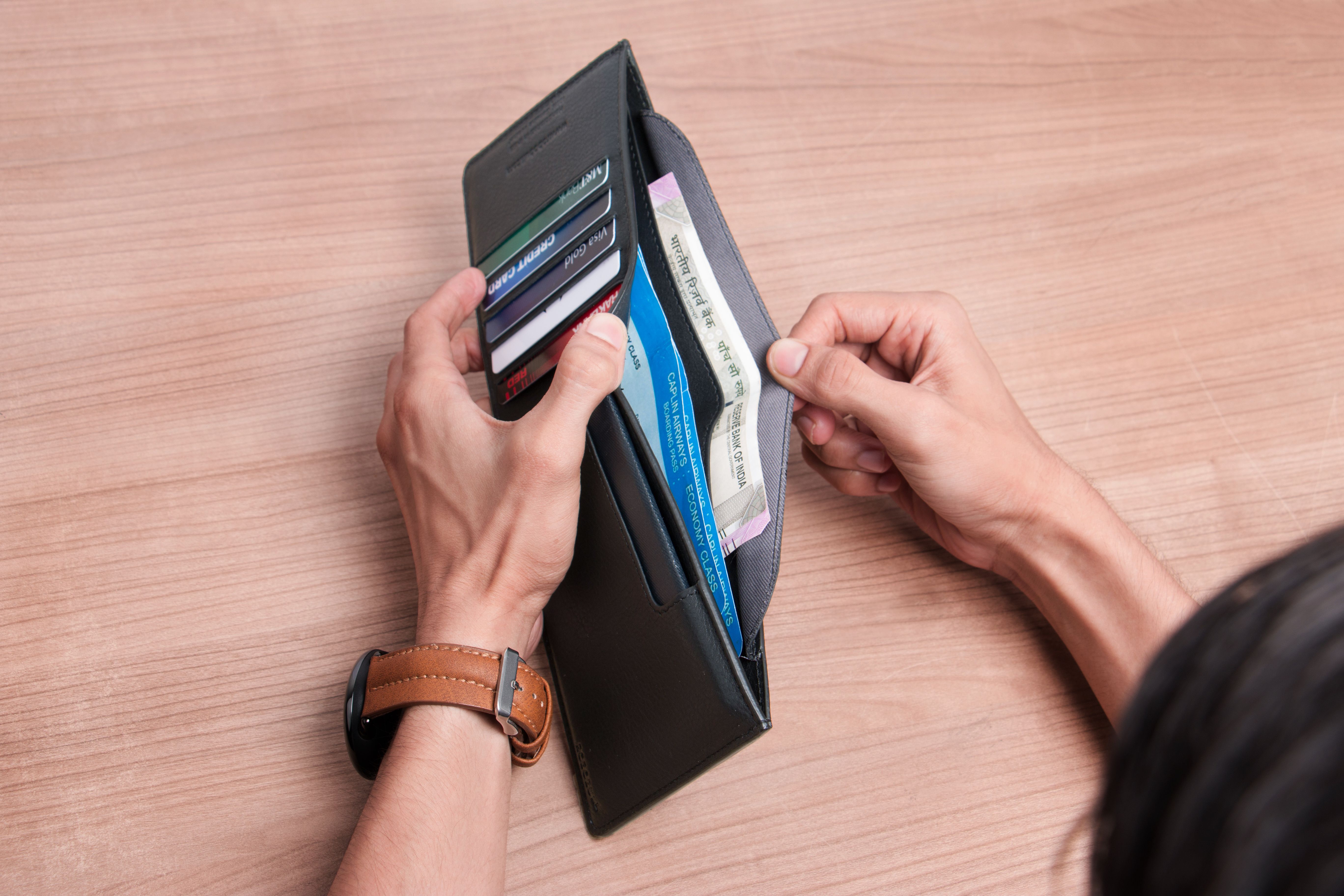
- DollarLedger Team
- 04 Nov, 2026
How to Improve Your Credit Score Fast in 2026
Your credit score decides what you pay for a car loan, a mortgage, even an apartment — a higher score means a lower rate. The fastest lever is utilization — how much of your limit you use — and the fix is to pay your card down before the statement closing date. This guide shows the six fastest steps, checked November 3, 2026.Photo: Your credit score is built by everyday habits. (Photo: Pexels) What You Will LearnWhat your FICO score is made of — and which two factors matter most The utilization trick: pay before the statement closes How to find and dispute errors on your credit reports How a higher limit can lift your score Why to keep old cards open — and when to become an authorized user A realistic 30-day plan, and what not to expectStep 1: Know what your score is made of What to do: Learn the five FICO factors before you try to fix your score. How: FICO scores come from your credit report: payment history, 35%; amounts owed, 30%; length of history, 15%; new credit, 10%; credit mix, 10%. Payment history is the largest factor; amounts owed is mostly utilization. Example: Two people both pay on time every month. One uses 8% of her credit limit; the other uses 85%. Same payment history, same on-time record — but the low-utilization borrower usually scores much higher, because amounts owed is 30% of the score. Common mistake: Chasing the small factors first. Opening a new account for "credit mix" while carrying a maxed-out card is working on the wrong end.Illustrative diagram — What makes up your FICO score. NOT a real bank screenshot. Step 2: Cut your utilization — the fastest lever What to do: Get your utilization under 30%, ideally under 10%. How: Utilization is your balance divided by your credit limit. NerdWallet's rule: use less than 30% of your limit — the highest scorers often use less than 10%. On a $1,000 limit, keep it under $300. Pay the highest-utilization card first. Example: Sara has a $2,000 limit and a $1,700 balance — 85% utilization. She pays $1,400, leaving $300 — 15%. Her score can rise. Common mistake: Thinking a $0 balance is the goal. A $0 reported balance is fine, but it is not better than a small balance — lenders like to see the card used a little. Under 10% is the sweet spot.Illustrative diagram — Utilization: the same card, a very different score. NOT a real bank screenshot. Step 3: Pay before the statement closing date What to do: Find your statement closing date — and pay before it. How: Most issuers report your balance to the bureaus at the end of your billing cycle — the statement closing date. Charge $900 on a $1,000-limit card and pay it off on the due date, and the bureaus still saw 90% utilization. Pay it down a few days before closing, and they see the low number instead. Example: Tom's statement closes on the 30th. He used to pay on his due date, the 24th — too late. Now he pays on the 27th, and his utilization dropped from 60% to under 10%. Common mistake: Paying on time but only on the due date, then wondering why the score never moves.Illustrative diagram — Pay before the statement closes, not just by the due date. NOT a real bank screenshot.Photo: Check each card's closing date — it is the date the bureaus actually see. (Photo: Pexels) Step 4: Check your reports and dispute errors What to do: Get your free credit reports and dispute anything wrong. How: Start at AnnualCreditReport.com — the only federally authorized site for free reports from Equifax, Experian and TransUnion. Look for late payments you paid on time, accounts that are not yours, and negative items that should have been removed. Dispute each error with that bureau. Bureaus have 30 to 45 days to investigate. Example: Lena found a $400 collections account on her Experian report for a medical bill her insurance had paid. She disputed it with proof, and her score rose 40 points. Common mistake: Paying a "credit repair" company to dispute accurate information. Only errors can be removed — and you can dispute them yourself.Illustrative diagram — How to dispute a credit report error. NOT a real bank screenshot. Step 5: Ask for a higher limit and keep old cards open What to do: Raise your available credit and protect your history length. How: A higher limit lowers utilization without paying down a dollar — the same balance over a bigger limit is a smaller percentage. Call your issuer and ask for an increase. Keep your oldest card open: closing it shortens your average account age and cuts your available credit. Example: David has a $500 balance on a $1,000 limit — 50% utilization. His issuer raises his limit to $2,000, so the same $500 is now 25%. Common mistake: Closing your oldest card after paying it off. It can cut your available credit and your history length.Photo: A higher limit and an older card both help — closing the old one can hurt twice. (Photo: Pexels)Illustrative diagram — A limit increase lowers utilization without paying down debt. NOT a real bank screenshot. Step 6: Build the habit — and set a realistic timeline What to do: Automate on-time payments and give it 30 days. How: Payment history is 35% of your score, so never miss a payment: set up autopay. Ask a trusted family member with a long, clean card history to add you as an authorized user. Timeline: a 100-point jump in one month is possible but uncommon — aim for 30 to 60 points in a month. If money is tight, see our budget guide. Example: Maria's score was 640. In one month she cut her $1,200 balance to $150 before the statement closed, disputed a wrong late payment, and set up autopay. Her score rose 45 points. Common mistake: Expecting a 100-point jump from one trick, or paying for a service that promises it. There is no quick fix.Illustrative diagram — Your 30-day credit score plan. NOT a real bank screenshot. Checklist☐ I know my FICO factors: payment history 35%, amounts owed 30%. ☐ My utilization is under 30% on each card — under 10% if I can. ☐ I pay before my statement closing dates. ☐ I checked all three reports at AnnualCreditReport.com. ☐ I disputed every error I found. ☐ I asked for a limit increase and kept my oldest card. ☐ Autopay is on for at least the minimum.FAQ How fast can I improve my credit score? Fixing utilization can show results within one billing cycle, and removing an error can lift your score within 30 to 45 days. What is a good credit utilization rate? Under 30% is the rule of thumb, and under 10% is better. Keep it low on each card, and watch your overall utilization too — the bureaus look at both the per-card number and the total across all your cards. Does paying my card in full help my credit score? Yes — but timing matters. Paying in full by the due date protects your payment history, but the bureaus see the balance on the statement closing date. How long do late payments stay on my credit report? Late payments can stay on your reports for seven years, but their impact fades. Pay the account current as soon as possible. Is AnnualCreditReport.com really free? Yes — it is the only site authorized by federal law for free credit reports from Equifax, Experian and TransUnion. SourcesNerdWallet, "9 Real Ways to Build Your Credit Fast" — updated Oct 7, 2026: https://www.nerdwallet.com/finance/learn/raise-credit-score-fast myFICO, "What's in your credit score?" — FICO weights (35/30/15/10/10): https://www.myfico.com/credit-education/whats-in-your-credit-score Consumer Financial Protection Bureau, "Credit reports and scores" — check reports at least once a year for errors: https://www.consumerfinance.gov/consumer-tools/credit-reports-and-scores/All facts checked November 3, 2026. This article is for education only, not financial advice. Credit scoring rules change — confirm the current process with the bureau or your lender.