How to Improve Your Credit Score Fast in 2026
 DollarLedger Team
- 04 Nov, 2026
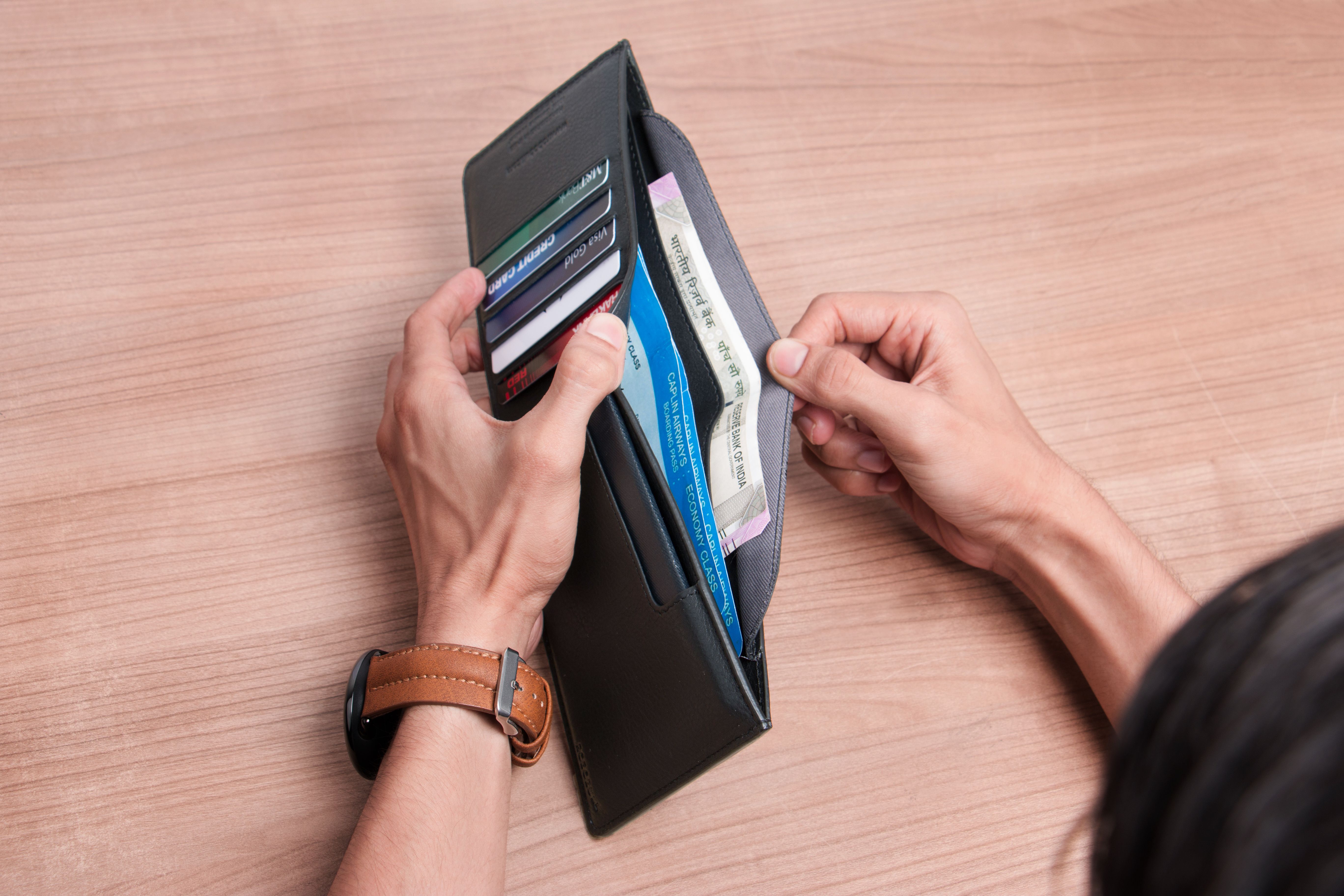
Your credit score decides what you pay for a car loan, a mortgage, even an apartment — a higher score means a lower rate. The fastest lever is utilization — how much of your limit you use — and the fix is to pay your card down before the statement closing date. This guide shows the six fastest steps, checked November 3, 2026.
Photo: Your credit score is built by everyday habits. (Photo: Pexels)
What You Will Learn
- What your FICO score is made of — and which two factors matter most
- The utilization trick: pay before the statement closes
- How to find and dispute errors on your credit reports
- How a higher limit can lift your score
- Why to keep old cards open — and when to become an authorized user
- A realistic 30-day plan, and what not to expect
Step 1: Know what your score is made of
What to do: Learn the five FICO factors before you try to fix your score.
How: FICO scores come from your credit report: payment history, 35%; amounts owed, 30%; length of history, 15%; new credit, 10%; credit mix, 10%. Payment history is the largest factor; amounts owed is mostly utilization.
Example: Two people both pay on time every month. One uses 8% of her credit limit; the other uses 85%. Same payment history, same on-time record — but the low-utilization borrower usually scores much higher, because amounts owed is 30% of the score.
Common mistake: Chasing the small factors first. Opening a new account for “credit mix” while carrying a maxed-out card is working on the wrong end.
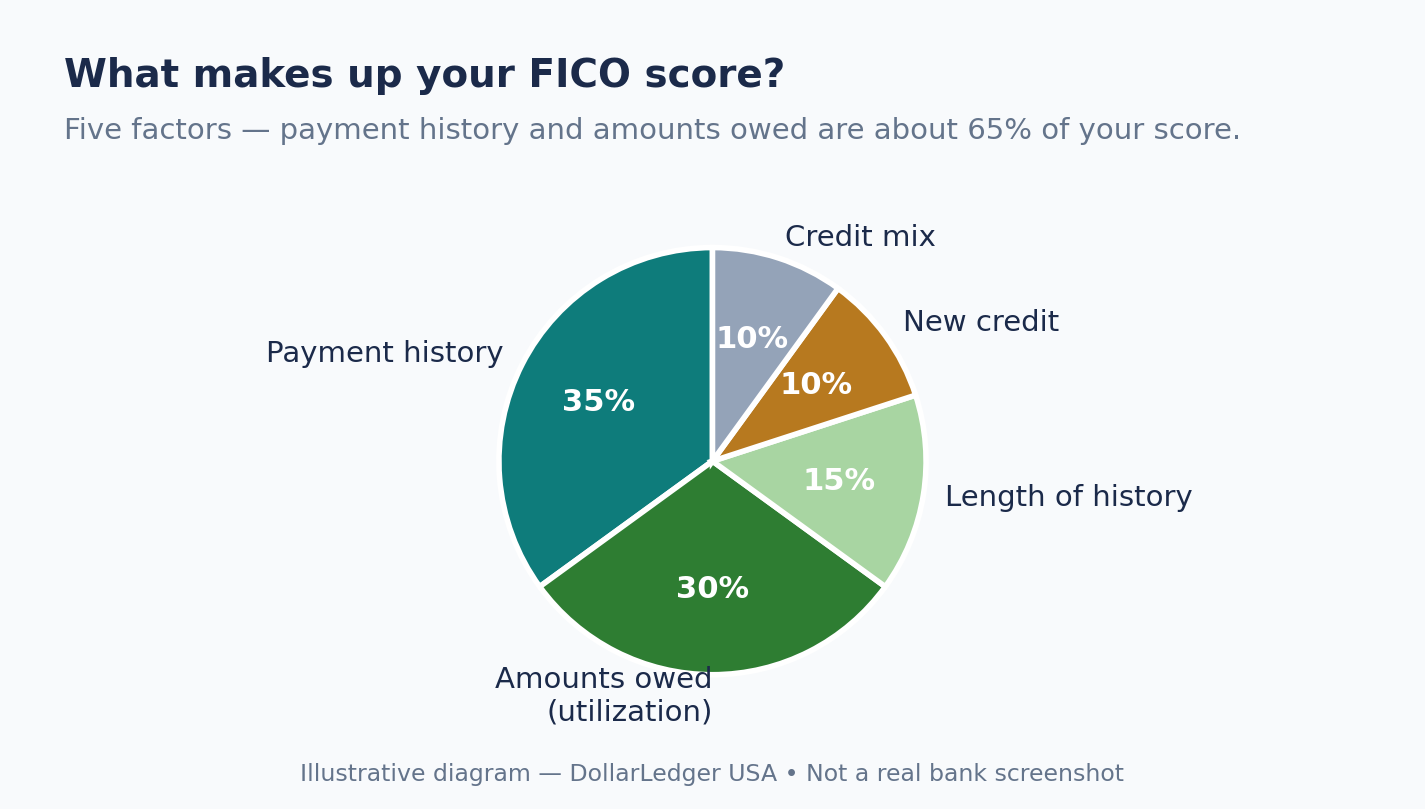
Illustrative diagram — What makes up your FICO score. NOT a real bank screenshot.
Step 2: Cut your utilization — the fastest lever
What to do: Get your utilization under 30%, ideally under 10%.
How: Utilization is your balance divided by your credit limit. NerdWallet’s rule: use less than 30% of your limit — the highest scorers often use less than 10%. On a $1,000 limit, keep it under $300. Pay the highest-utilization card first.
Example: Sara has a $2,000 limit and a $1,700 balance — 85% utilization. She pays $1,400, leaving $300 — 15%. Her score can rise.
Common mistake: Thinking a $0 balance is the goal. A $0 reported balance is fine, but it is not better than a small balance — lenders like to see the card used a little. Under 10% is the sweet spot.
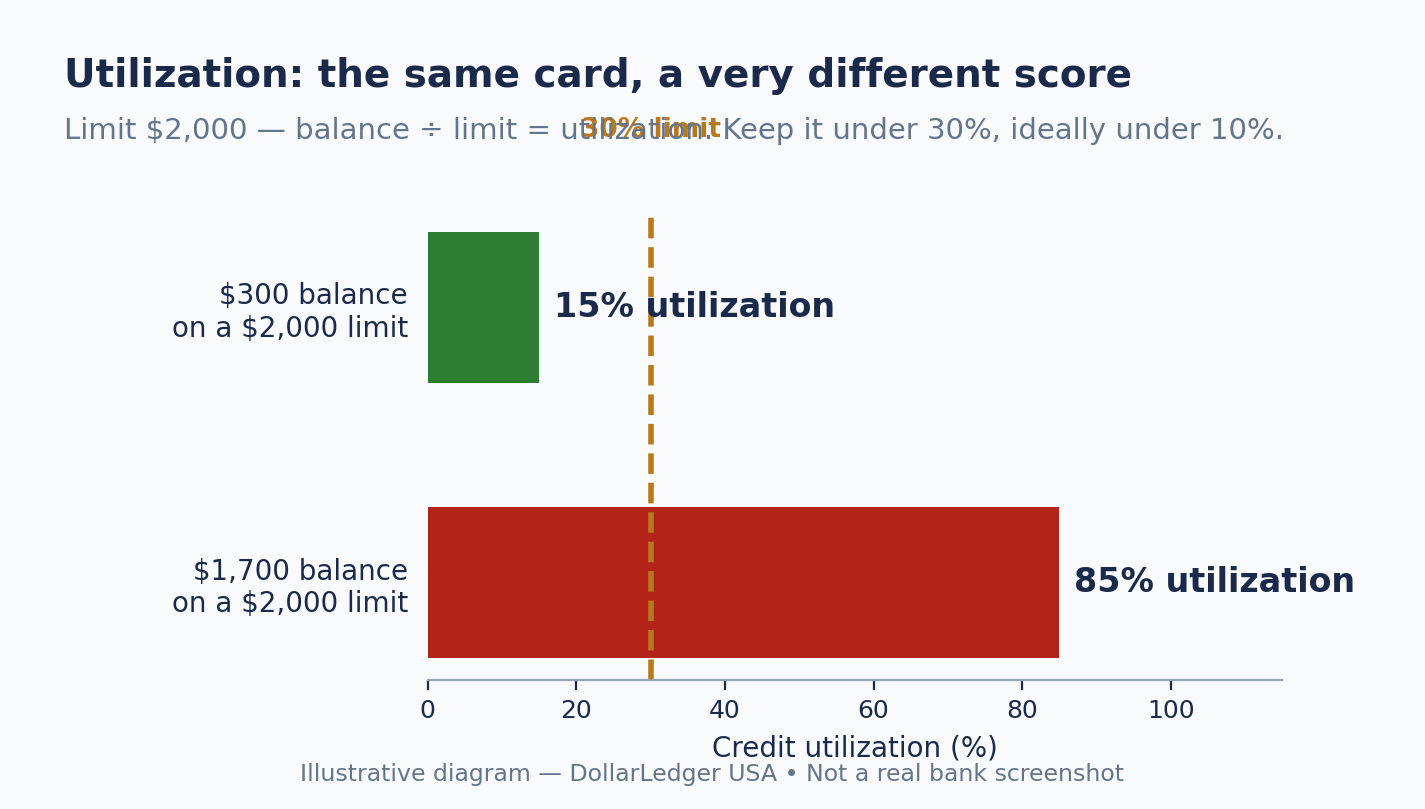
Illustrative diagram — Utilization: the same card, a very different score. NOT a real bank screenshot.
Step 3: Pay before the statement closing date
What to do: Find your statement closing date — and pay before it.
How: Most issuers report your balance to the bureaus at the end of your billing cycle — the statement closing date. Charge $900 on a $1,000-limit card and pay it off on the due date, and the bureaus still saw 90% utilization. Pay it down a few days before closing, and they see the low number instead.
Example: Tom’s statement closes on the 30th. He used to pay on his due date, the 24th — too late. Now he pays on the 27th, and his utilization dropped from 60% to under 10%.
Common mistake: Paying on time but only on the due date, then wondering why the score never moves.
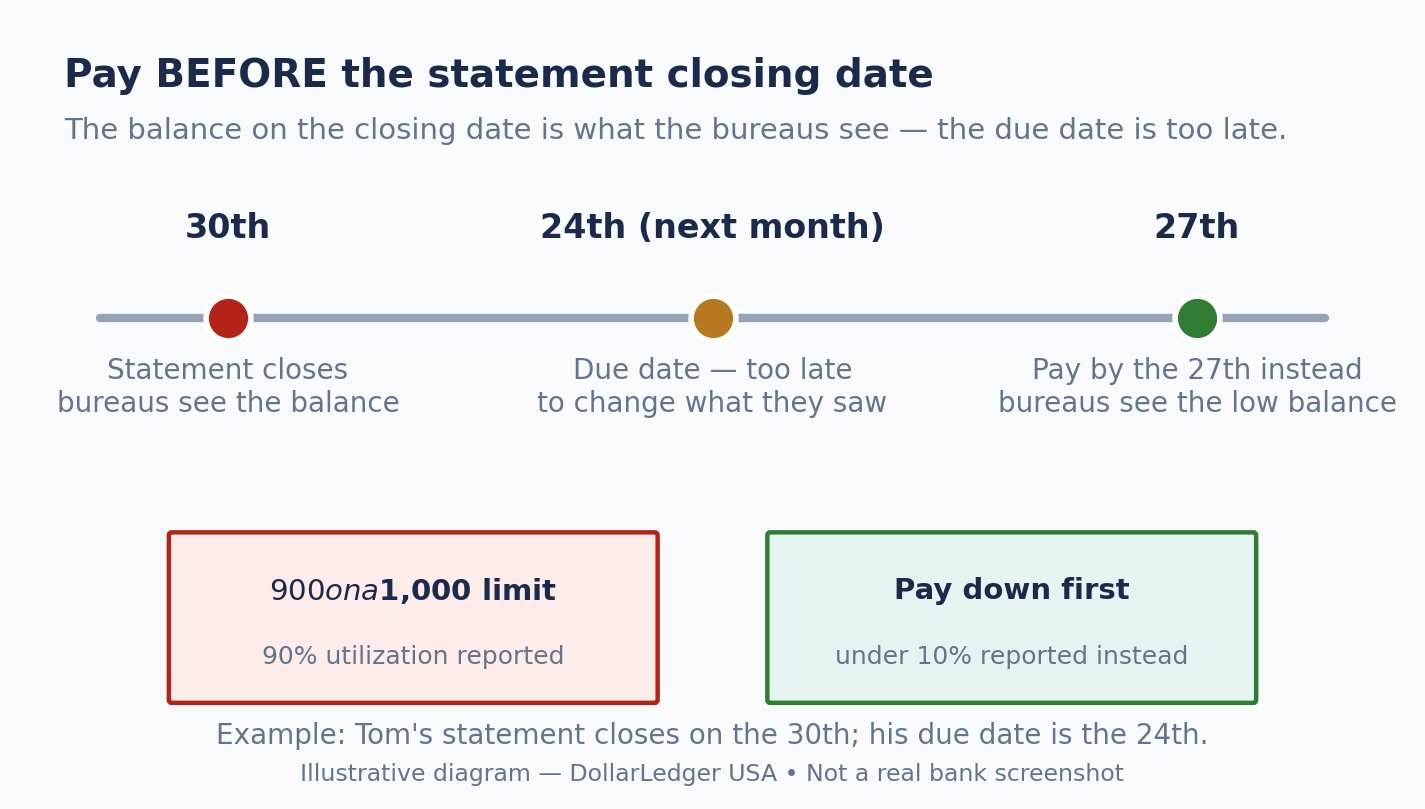
Illustrative diagram — Pay before the statement closes, not just by the due date. NOT a real bank screenshot.
Photo: Check each card’s closing date — it is the date the bureaus actually see. (Photo: Pexels)
Step 4: Check your reports and dispute errors
What to do: Get your free credit reports and dispute anything wrong.
How: Start at AnnualCreditReport.com — the only federally authorized site for free reports from Equifax, Experian and TransUnion. Look for late payments you paid on time, accounts that are not yours, and negative items that should have been removed. Dispute each error with that bureau. Bureaus have 30 to 45 days to investigate.
Example: Lena found a $400 collections account on her Experian report for a medical bill her insurance had paid. She disputed it with proof, and her score rose 40 points.
Common mistake: Paying a “credit repair” company to dispute accurate information. Only errors can be removed — and you can dispute them yourself.
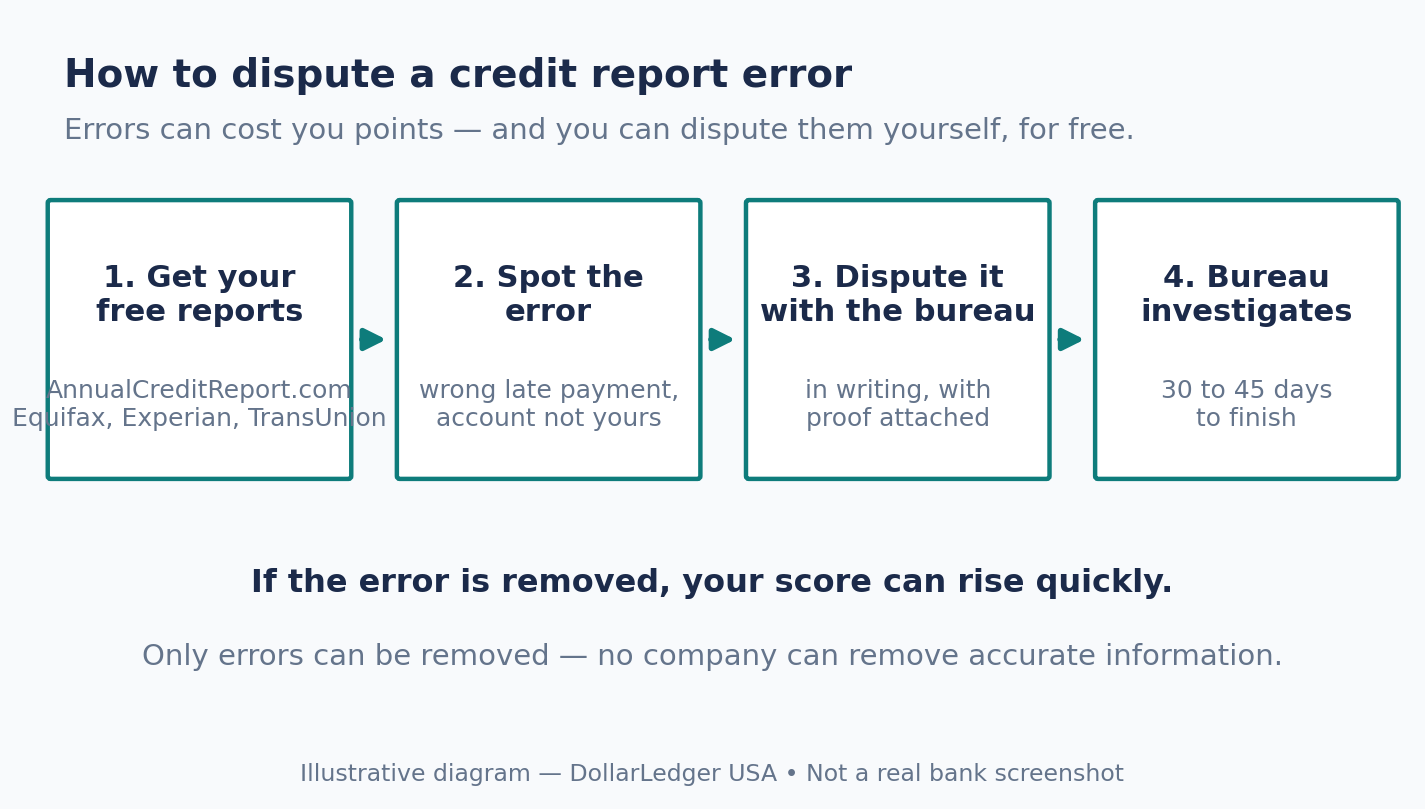
Illustrative diagram — How to dispute a credit report error. NOT a real bank screenshot.
Step 5: Ask for a higher limit and keep old cards open
What to do: Raise your available credit and protect your history length.
How: A higher limit lowers utilization without paying down a dollar — the same balance over a bigger limit is a smaller percentage. Call your issuer and ask for an increase. Keep your oldest card open: closing it shortens your average account age and cuts your available credit.
Example: David has a $500 balance on a $1,000 limit — 50% utilization. His issuer raises his limit to $2,000, so the same $500 is now 25%.
Common mistake: Closing your oldest card after paying it off. It can cut your available credit and your history length.
Photo: A higher limit and an older card both help — closing the old one can hurt twice. (Photo: Pexels)
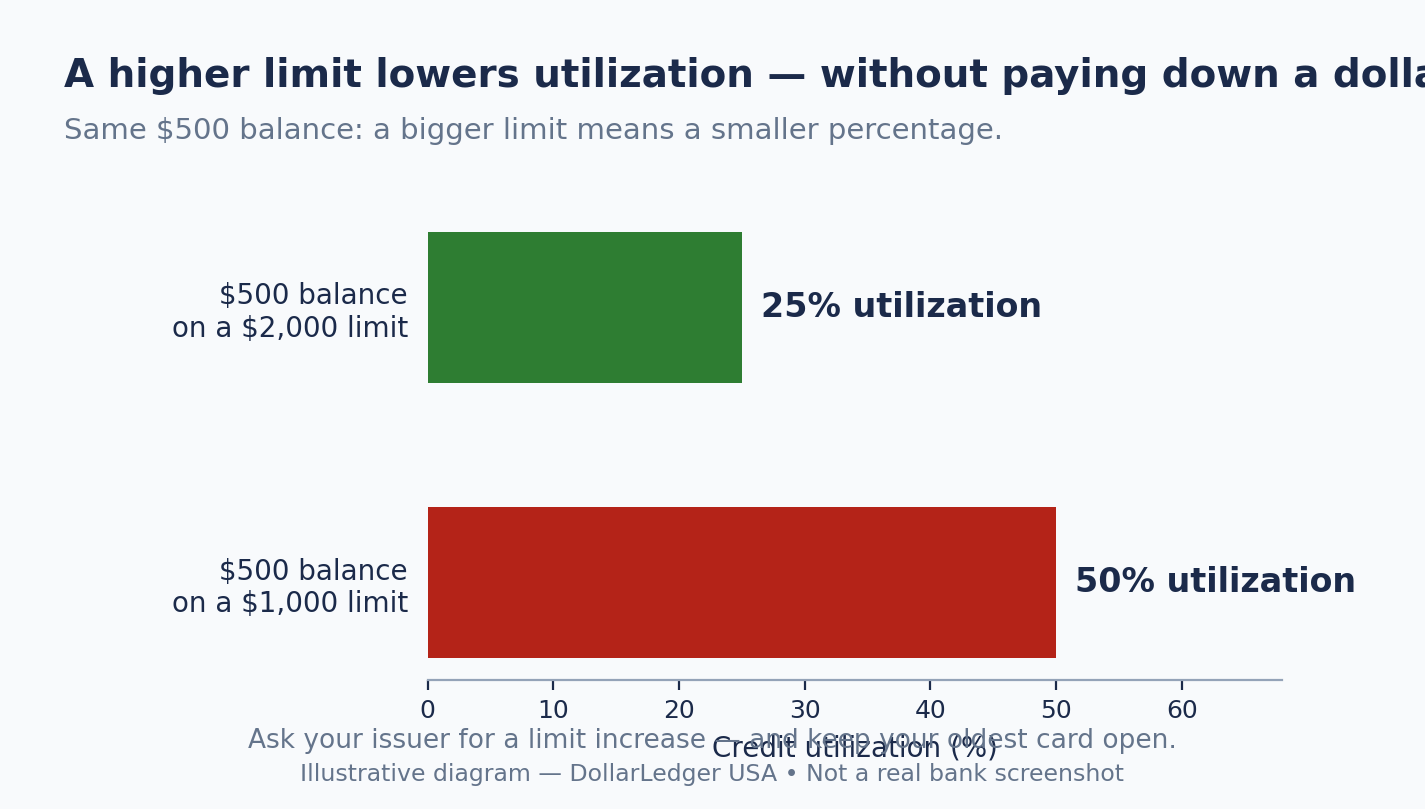
Illustrative diagram — A limit increase lowers utilization without paying down debt. NOT a real bank screenshot.
Step 6: Build the habit — and set a realistic timeline
What to do: Automate on-time payments and give it 30 days.
How: Payment history is 35% of your score, so never miss a payment: set up autopay. Ask a trusted family member with a long, clean card history to add you as an authorized user. Timeline: a 100-point jump in one month is possible but uncommon — aim for 30 to 60 points in a month. If money is tight, see our budget guide.
Example: Maria’s score was 640. In one month she cut her $1,200 balance to $150 before the statement closed, disputed a wrong late payment, and set up autopay. Her score rose 45 points.
Common mistake: Expecting a 100-point jump from one trick, or paying for a service that promises it. There is no quick fix.
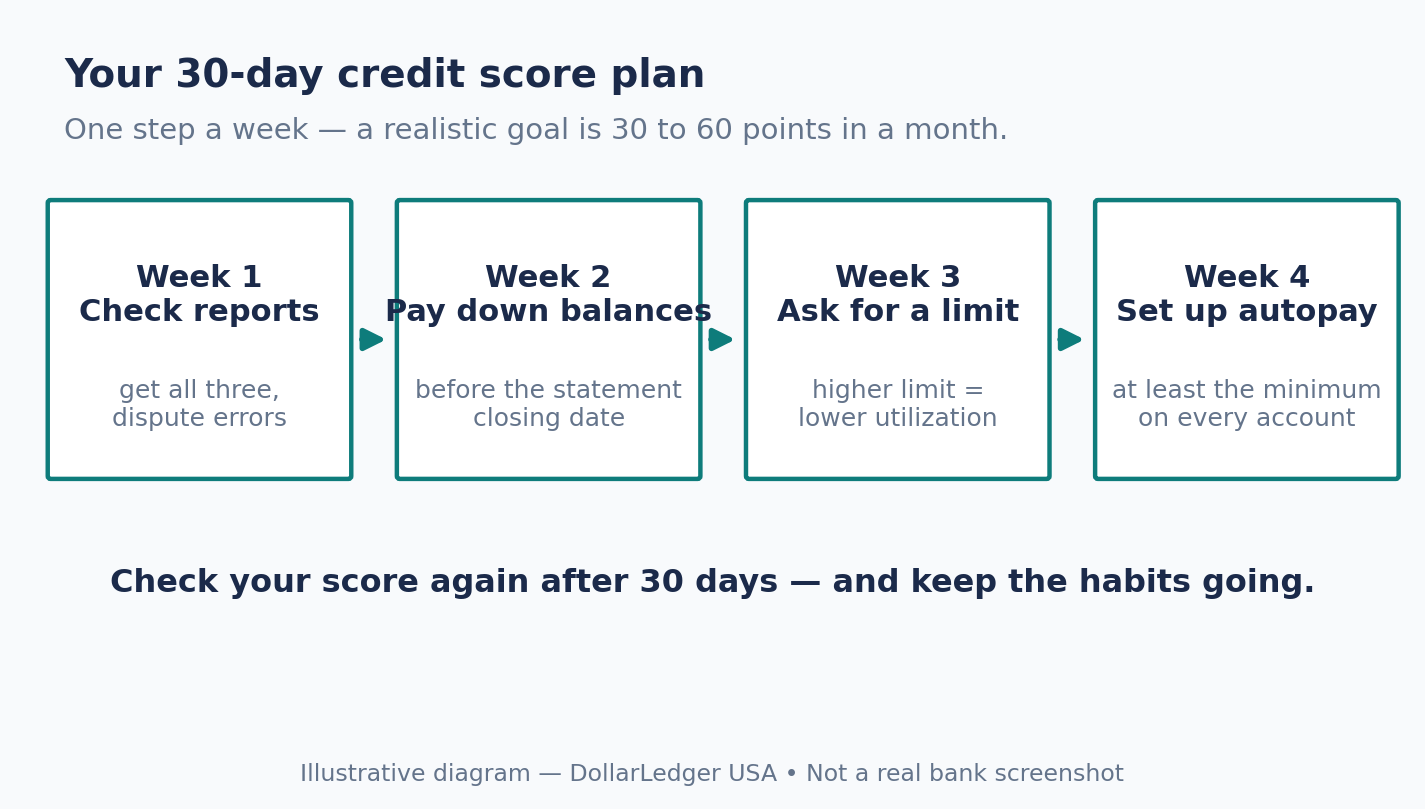
Illustrative diagram — Your 30-day credit score plan. NOT a real bank screenshot.
Checklist
- ☐ I know my FICO factors: payment history 35%, amounts owed 30%.
- ☐ My utilization is under 30% on each card — under 10% if I can.
- ☐ I pay before my statement closing dates.
- ☐ I checked all three reports at AnnualCreditReport.com.
- ☐ I disputed every error I found.
- ☐ I asked for a limit increase and kept my oldest card.
- ☐ Autopay is on for at least the minimum.
FAQ
How fast can I improve my credit score? Fixing utilization can show results within one billing cycle, and removing an error can lift your score within 30 to 45 days.
What is a good credit utilization rate? Under 30% is the rule of thumb, and under 10% is better. Keep it low on each card, and watch your overall utilization too — the bureaus look at both the per-card number and the total across all your cards.
Does paying my card in full help my credit score? Yes — but timing matters. Paying in full by the due date protects your payment history, but the bureaus see the balance on the statement closing date.
How long do late payments stay on my credit report? Late payments can stay on your reports for seven years, but their impact fades. Pay the account current as soon as possible.
Is AnnualCreditReport.com really free? Yes — it is the only site authorized by federal law for free credit reports from Equifax, Experian and TransUnion.
Sources
- NerdWallet, “9 Real Ways to Build Your Credit Fast” — updated Oct 7, 2026: https://www.nerdwallet.com/finance/learn/raise-credit-score-fast
- myFICO, “What’s in your credit score?” — FICO weights (35/30/15/10/10): https://www.myfico.com/credit-education/whats-in-your-credit-score
- Consumer Financial Protection Bureau, “Credit reports and scores” — check reports at least once a year for errors: https://www.consumerfinance.gov/consumer-tools/credit-reports-and-scores/
All facts checked November 3, 2026.
This article is for education only, not financial advice. Credit scoring rules change — confirm the current process with the bureau or your lender.