Showing Posts From
Investing

 DollarLedger Team
- 06 Nov, 2026
What Is Compound Interest? How Your Money Grows Over Time in 2026
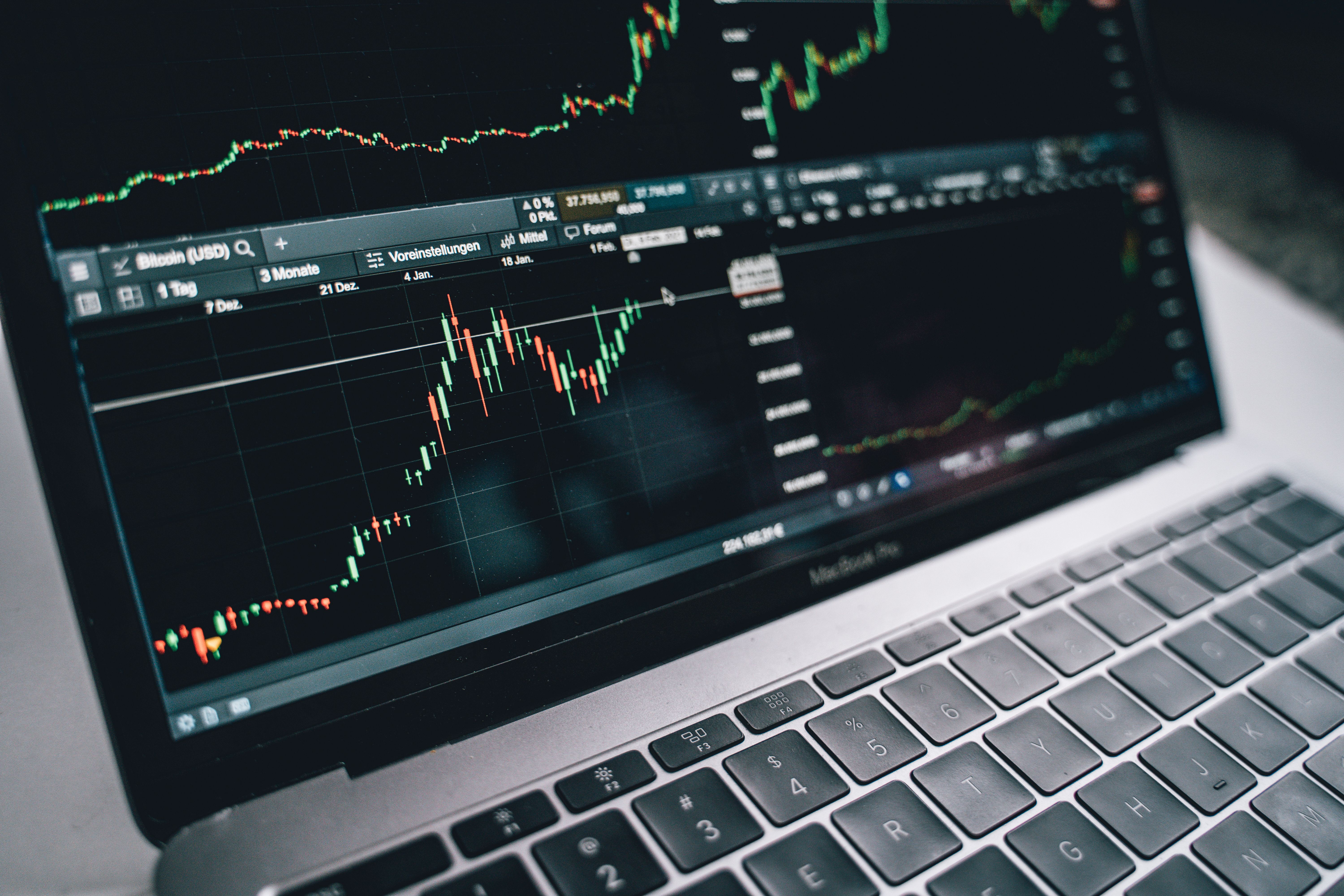
Put $10,000 in an account earning 7% a year, leave it alone for 30 years, and it grows to about $76,100 — without you adding another dollar. That is compound interest: your money earns returns, and then those returns earn returns of their own. It is the single most important idea in investing, and the reason credit card debt is so hard to escape.Photo: Like a plant, your money grows on what it has already grown. (Photo: Pexels) What You Will LearnWhat compound interest is, in one simple sentence How $10,000 grows at 7% — and why simple interest cannot keep up The Rule of 72: how to estimate doubling time in your head Why starting at 25 beats starting at 35, even with double the money The three levers that control your growth — and which one matters most How to use compounding — and how card debt turns it against youStep 1: Learn the definition — your returns earn returns What to do: Understand the one sentence: compound interest is interest earned on your original money and on past interest. How: Invest $1,000 at 7%. After year one you have $1,070. In year two the 7% applies to the whole $1,070, so you earn about $75; in year three, about $80 on $1,145. What you earn grows every year though the rate never changes. Simple interest pays only on your original deposit — $70 a year, forever. Example: Two friends invest $1,000 at 7%: Ana's account compounds, Ben's pays simple interest. After ten years Ana has about $1,967, Ben $1,700. After thirty years Ana has about $7,612, Ben $3,100. Common mistake: Thinking the rate matters most: a 7% account that compounds beats a 7% simple-interest account by more than double over 30 years. Always check that returns compound.Illustrative diagram — The six steps to put compound interest to work. NOT a real bank screenshot. Step 2: See it with real numbers — one $10,000 deposit What to do: Run the numbers on a single deposit. How: Invest $10,000 once at a steady hypothetical 7% a year, with no new contributions, before taxes and fees. After 10 years: about $19,700. After 20: about $38,700. After 30: about $76,100. Each decade roughly doubles your money — slow at first, then fast. With simple interest at the same 7%, the same $10,000 reaches only $31,000 after 30 years. The gap, about $45,000, is all returns earning returns. Example: Maya invests $10,000 once at 30. At a hypothetical steady 7%, she has about $19,700 at 40 and about $76,100 at 60. Her brother waits until 40 to invest the same $10,000; at 60 he has only about $38,700 — half as much. Common mistake: Expecting fast growth early: in the first five years your $10,000 grows to only about $14,000, and most people quit right before the curve bends.Illustrative diagram — Compound vs simple interest on one $10,000 deposit at 7%. NOT a real bank screenshot.Photo: Run your own numbers before you invest a dollar. (Photo: Pexels) Step 3: Use the Rule of 72 to estimate doubling time What to do: Learn the shortcut: divide 72 by your yearly return. How: The Rule of 72 estimates how many years it takes your money to double. At 7%, that is 72 divided by 7, or about 10 years. At 4%, 72 divided by 4, or 18 years. At 10%, 72 divided by 10, or about 7 years. The SEC's Investor.gov teaches the same shortcut, giving the example that at 9% your money doubles in about 8 years. The rule is an estimate — the true doubling time at 7% is about 10.2 years — but close enough for comparisons. Example: Sara's $5,000 at 4% doubles in about 18 years; at a hypothetical 7%, in about 10 years. Same $5,000, eight years faster. Common mistake: Using the rule on a rate that will not last — a 0% introductory card rate, a one-year CD rate, or one great year in the stock market.Illustrative diagram — The Rule of 72: divide 72 by your return to estimate doubling time. NOT a real bank screenshot. Step 4: Start early — time beats money What to do: Start now, even with a small amount — the years matter more than the dollars. How: Compare two savers investing at a hypothetical steady 7% a year with monthly compounding, until age 65. Ana starts at 25 and invests $100 a month. By 65 she has put in $48,000 and her balance is about $264,000. Ben starts at 35 and invests the same $100 a month. By 65 he has put in $36,000 for a balance of about $122,700 — less than half of Ana's. Give Ben double — $200 a month from 35 — and he puts in $72,000 yet still ends with about $245,400, behind Ana. Ten extra years beat doubling the monthly amount. Example: At 28, $50 a month is enough: at a hypothetical 7% it grows to about $105,000 by 65. Waiting until 38 to invest $100 a month reaches only about $96,000. The smaller, earlier habit wins. Common mistake: Waiting for a "real" amount. There is no minimum — $25 a month started today beats $100 a month started in ten years.Illustrative diagram — Starting at 25 beats starting at 35, even with double the money. NOT a real bank screenshot. Step 5: Pull the three levers — amount, return, time What to do: Control the three things that decide your balance: how much you put in, what it earns, and how long it compounds. How: First, the amount: every extra dollar each month compounds for decades, so $150 a month instead of $100 scales your ending balance the same way. Second, the return: a higher return doubles your money faster — 7% in about 10 years versus 18 at 4% — but no investment guarantees 7% every year. Third, time — the biggest lever, and the only one you cannot buy back: $100 a month at 7% grows to about $17,400 after 10 years but about $52,400 after 20. The balance grows by roughly $35,000 in the second decade, only $12,000 of it new money. Example: Priya invests $100 a month: after 10 years about $17,400 ($12,000 paid in, about $5,400 growth); after 20 years about $52,400 ($24,000 paid in, about $28,400 growth). In the second decade, growth added more than four times what it did in the first. Common mistake: Chasing a higher return while ignoring time: switching investments for an extra 1% is worth far less than starting five years earlier.Photo: Every dollar you add is a dollar that compounds for decades. (Photo: Pexels)Illustrative diagram — Amount, return and time: time is the lever you cannot buy back. NOT a real bank screenshot. Step 6: Automate it, reinvest it, and don't interrupt it What to do: Set up a monthly automatic investment, reinvest dividends and interest, and leave the account alone — while paying off card debt first. How: First, automate: move $50, $100 or $200 into your investment account on payday — a Roth IRA or 401(k) if you have one. Second, reinvest dividends and interest so they buy more shares instead of sitting as cash. Third, don't interrupt it: market drops are normal, and selling in a dip locks in the loss. Finally, clear the other side of the ledger — compounding works against you too: the Federal Reserve's G.19 release reports card accounts assessed interest averaged 22.36% in August 2026. A $1,000 balance left unpaid costs about $224 of interest in a year, and the unpaid interest earns interest too — so pay the card first. Example: Lena sets up $100 a month into a Roth IRA on payday with dividend reinvestment on. In a dip, her automatic $100 keeps buying shares at lower prices — shares that compound when the market recovers. Common mistake: Raiding your investment account: every withdrawal is not just the money you take out, it is twenty years of compounding that money would have done. Keep a separate emergency fund in a high-yield savings account.Illustrative diagram — Three mistakes that break compounding, including card debt at 22.36%. NOT a real bank screenshot. ChecklistI can explain compound interest: returns earn returns. I ran my own numbers on Investor.gov's calculator. I know my doubling time (Rule of 72). I started, even with $25 or $50 a month. My contributions are automatic on payday. Dividends and interest are set to reinvest. I pay off card debt before investing beyond a 401(k) match.FAQ What is compound interest in simple words? Interest earned on your original money, plus interest on the interest already earned. Your returns earn returns of their own, so your balance grows faster every year. How much will $10,000 grow to in 30 years? At a hypothetical steady 7% a year, about $76,100, with no new contributions and before taxes and fees. With simple interest, only about $31,000. Is 7% a realistic return? It is a common long-run planning assumption for a diversified stock portfolio, roughly the historical average stock market return after inflation. Real returns vary and no investment guarantees 7%. How does the Rule of 72 work? Divide 72 by your annual return to estimate doubling time: about 10 years at 7%, 18 at 4%, 7 at 10%. The SEC's Investor.gov uses the same shortcut; the exact doubling time at 7% is about 10.2 years. Can compound interest work against me? Yes — that is exactly how credit card debt grows. The Federal Reserve reports card accounts assessed interest averaged 22.36% in August 2026, and unpaid interest is added to your balance and charged interest itself. SourcesSEC Investor.gov — Compound Interest Calculator and the Rule of 72 Federal Reserve, G.19 Consumer Credit (release of Nov 6, 2026) — average card APR 22.36%, accounts assessed interest, Aug 2026 DollarLedger USA, "Best High-Yield Savings Accounts in the USA 2026" — where to keep your emergency fundAll figures checked November 6, 2026. Disclaimer: This article is for education only, not financial advice. All growth figures are hypothetical illustrations at an assumed steady 7% return, before taxes, fees and inflation.
- DollarLedger Team
- 06 Nov, 2026
Index Funds vs ETFs: Which Is Better for Beginners in 2026
Should you buy an index fund or an ETF? The two names sound like rival products. Here is the honest answer: for most beginners, either one works, because they are usually the same investment in a different wrapper. An index fund is a strategy — it tracks a market index. An ETF is a structure — a way of buying and selling that tracks on a stock exchange. This guide walks you through six steps to pick the right one — all figures checked November 6, 2026.Photo: Index funds let you own the whole market without watching charts all day. (Photo: Pexels) What You Will LearnThe real difference between an index fund and an ETF Which index to start with: the S&P 500 or the total US market How to compare expense ratios, and why 1% is so expensive How pricing works: once-a-day NAV vs trading all day Which wrapper fits a taxable account, an IRA or a 401(k) How to buy your first fund and automate itStep 1: Learn the difference — strategy vs wrapper What to do: Learn what each word means — they are not opposite choices. How: An index fund follows a market index — a list of companies, such as the S&P 500 — instead of letting a manager pick stocks. The SEC calls this a passive strategy: the fund seeks about the same return as its index. An ETF is a structure: a fund whose shares trade on a stock exchange like a stock. The two ideas overlap. VOO is both. VFIAX is an index fund but not an ETF: a mutual fund tracking the same S&P 500. So the question is never "index fund or ETF?" It is two questions: which index, and which wrapper? Example: Maya learns VOO and VFIAX both track the S&P 500, so she compares costs, not names. Common mistake: Buying a fund because "ETF" is in its name. Some ETFs are actively managed — check the prospectus.Illustrative diagram — The six steps to pick your first index fund in 2026. NOT a real brokerage screenshot. Step 2: Pick an index — S&P 500 or total US market What to do: Choose the index first. For most beginners, the choice is between the S&P 500 and the total US stock market. How: The S&P 500 holds about 500 of the largest US companies — Apple, Microsoft, Nvidia, Amazon and hundreds more. Vanguard's page for VOO lists 505 holdings as of September 30, 2026. The total US market goes wider: a fund like VTI or its mutual-fund twin VTSAX holds roughly 3,500 or more US stocks of every size. Over long periods the two have performed very similarly, because the S&P 500 already covers about 80% of the total US market by value. Example: James, 27, picks the S&P 500 because he can name its biggest companies. Common mistake: Picking a narrow sector or theme index as a first fund. A broad index is the beginner default.Illustrative diagram — Same holdings, two wrappers: VOO and VFIAX track the same index. NOT a real brokerage screenshot.Photo: Compare the expense ratio before you buy — it is the one cost you can control. (Photo: Pexels) Step 3: Compare the expense ratio — the cost you can control What to do: Compare the expense ratio — the yearly fee, as a percentage of your money — of the specific funds you are choosing between. How: The expense ratio is deducted from the fund's returns, so you never see a bill — but you pay it every year. For the big S&P 500 funds, the numbers checked in November 2026 are tiny: Fidelity's FXAIX 0.015% a year, Schwab's SWPPX 0.02%, Vanguard's VOO 0.03% (confirmed on Vanguard's fund page), and Vanguard's VFIAX 0.04%. On $10,000, that is $1.50 a year for FXAIX, $3 for VOO, $4 for VFIAX — and $100 a year for a fund charging 1%. The gap compounds: $10,000 at a steady 7% a year for 30 years reaches about $75,500 after a 0.03% fee, but only about $57,400 after a 1% fee. Example: Priya moves $10,000 from a 1% fund to VOO at 0.03% and saves about $97 a year. Common mistake: Paying 1% for a fund that holds almost the same stocks as the index. Check the fee before you buy.Illustrative diagram — What the expense ratio costs you on $10,000 a year. NOT a real brokerage screenshot. Step 4: Understand how pricing works What to do: Learn the one practical difference that confuses beginners most: when you find out the price you paid. How: A mutual fund prices once a day: the SEC explains you buy or sell at the net asset value (NAV), calculated at the end of the business day — usually 4 PM Eastern. You can order any time, but you learn the price only after the close. An ETF works the other way: you buy and sell on the exchange at the market price, all day, and you see the price before you trade. For a long-term investor this barely matters — you buy the same fund either way. One practical difference: a mutual fund takes a dollar amount, say $100; an ETF takes whole shares, or fractional shares if your broker offers them. One share of VOO cost about $674 at the November 5, 2026 close. Example: Alex orders $200 of a mutual fund at 10 AM and learns his price only after 4 PM. Common mistake: Watching an ETF's price move during the day and trading on it. Intraday pricing is for traders.Illustrative diagram — How pricing works: once a day vs all day. NOT a real brokerage screenshot.Photo: ETFs trade all day like stocks; mutual funds price once a day. Either way, you own the same companies. (Photo: Pexels) Step 5: Choose the wrapper for your account What to do: Match the wrapper — ETF or mutual fund — to where the money sits: a taxable brokerage account, an IRA, or a 401(k). How: Start with the account, not the fund. Inside a 401(k) or IRA, the SEC says there is no tax difference between an ETF and a mutual fund — pick whichever is cheaper or easier to automate. In a taxable account, the ETF usually wins on tax: the SEC explains ETFs typically have fewer capital gains distributions than mutual funds, because they trade securities in in-kind exchanges rather than for cash. A mutual fund can hand you a tax bill even in a year you sold nothing. Minimums: VFIAX asks for $3,000, as reported in October 2026, while FXAIX and SWPPX have a $0 minimum, and many brokers offer fractional ETF shares, so $10 is enough. On automation, mutual funds usually win: most brokers auto-invest a fixed amount every payday. Example: Lena uses her Roth IRA, so she picks the mutual fund version and automates $200 a month. Common mistake: Holding a mutual fund in a taxable account and getting a surprise year-end tax bill.Illustrative diagram — Which wrapper fits your situation? Follow the flowchart. NOT a real brokerage screenshot. Step 6: Buy it and automate — then leave it alone What to do: Buy the fund, automate it, and build a simple portfolio around it. How: Open a brokerage account if you do not have one — you need one to hold ETF shares, and most brokers now offer $0-commission trades. Buy your fund: one share (or a fractional share) of the ETF, or a dollar amount of the mutual fund. Then turn on automatic investing — $100 a month is a strong start. At a steady 7% a year, $100 a month for 30 years would be roughly $117,000 before fees. As a beginner default, use the three-fund portfolio: a total US market index fund, a total international index fund, and a total bond index fund. If your employer offers a 401(k) match, grab that first — free money beats any fund choice. Example: Sara auto-invests $150 a month into a total US market index fund. Common mistake: Selling in the first market drop. A 20% fall is normal — selling locks in the loss.Illustrative diagram — Three mistakes that cost new index investors. NOT a real brokerage screenshot. ChecklistI know the difference: index fund is the strategy, ETF is the wrapper. I picked an index — S&P 500 or total US market. I compared expense ratios of the two specific funds. I matched the wrapper to my account — ETF for taxable, either for an IRA or 401(k). I bought the fund and set up automatic monthly investing. I will check my balance once a year, not once a day.FAQ Is an ETF better than an index fund? Neither is better in general. An index fund tracks an index; an ETF is a wrapper that trades on an exchange. VOO is both. Compare expense ratios, and match the wrapper to your account. Can I lose money in an index fund? Yes. An index fund owns stocks, and stocks fall — the S&P 500 has dropped 20% or more before. How much money do I need to start? Very little. Many index mutual funds have a $0 minimum, and many brokers offer fractional ETF shares, so $10 or $50 is enough. VFIAX is an exception at $3,000. Are ETFs more tax-efficient than mutual funds? In a taxable account, usually yes — the SEC explains ETFs typically have fewer capital gains distributions. Inside an IRA or 401(k), there is no tax difference. What is the simplest portfolio for a beginner? The three-fund portfolio: a total US market index fund, a total international index fund, and a total bond index fund. SourcesSEC Investor.gov, "Characteristics of Mutual Funds and Exchange-Traded Funds (ETFs)" — Investor Bulletin on pricing, trading and tax differences. Vanguard, "VOO — Vanguard S&P 500 ETF" — 0.03% expense ratio, 505 holdings, S&P 500 tracking (checked November 6, 2026). DollarLedger USA, "Roth IRA Contribution Limits 2026" — why an IRA removes the ETF-vs-mutual-fund tax question.All figures checked November 6, 2026. This article is for education only, not financial advice. Expense ratios, minimums and prices change — confirm current figures on the fund's own page before investing.

- DollarLedger Team
- 06 Nov, 2026
How to Start Investing with $100 a Month in 2026 — A Beginner's Guide
You do not need $10,000 to start investing, and you do not need to pick winning stocks. What you need is $100 a month, the right order of steps, and patience. At a steady 7% average annual return — an illustration, not a promise — $100 a month grows to about $17,300 in 10 years, $52,100 in 20, and $122,000 in 30, from only $36,000 of your own money. The catch is the order: invest before clearing debt or building a cushion, and the first emergency ends the plan. This guide fixes that — all figures checked November 6, 2026.Photo: No trading desk needed — $100 a month in a low-cost fund is enough. (Photo: Pexels) What You Will LearnWhy order matters more than amount How a $1,000 starter fund protects your plan How to grab the full 401(k) match How to open a Roth IRA and pick a fund What $100 a month grows to in 10, 20 and 30 years How to automate it on paydayIllustrative diagram — The six steps, in this order. NOT a real bank screenshot. Step 1: Kill high-interest debt first What to do: Pay off credit card debt and any debt charging double-digit interest before investing a dollar. How: List every debt with its rate, then attack the highest first while paying the minimum on the rest. Many cards charge over 20% a year, some 24% or more, and no fund averaging 7% can outrun that. A mortgage at 6% can wait. High-interest debt is a guaranteed loss — clear it first. Example: An $800 card balance at 24% costs about $192 a year — more than a year of returns on $100 a month at 7%. Common mistake: Investing while carrying a card balance "because the market might go up." The market might — the card interest definitely will. Step 2: Build a $1,000 starter emergency fund What to do: Save $1,000 in a separate high-yield savings account first. How: Open a high-yield savings account, separate from checking, and fill it to $1,000 — $100 a month gets you there in 10. This money is for the car repair or the broken phone. Bankrate's 2026 Emergency Savings Report reports that only 47% of Americans have enough liquidity to cover a $1,000 emergency, so most people who invest without a cushion sell at the worst moment when life happens. Later, build it toward three to six months of expenses. Example: Sofia saves $100 a month for 10 months; when her car needs a $600 repair, she pays from the fund. Common mistake: Skipping the cushion because $1,000 "is not real investing." It is the wall that keeps emergencies away.Photo: Small and steady beats big and occasional. (Photo: Pexels) Step 3: Grab the full 401(k) match What to do: If your employer offers a 401(k) match, contribute enough to get all of it before opening a Roth IRA. How: Check your benefits portal for the match formula — a common one is 100% of the first 3% of pay, plus 50% of the next 2%. On $50,000, putting in 5% ($2,500 a year) gets $2,000 from your employer: an instant 80% return. The 2026 401(k) limit is $24,500 (IRS notice IR-2025-111) — but you only need the match percentage, usually 3% to 6% of pay. No 401(k) at your job? Skip to step 4. Example: James earns $60,000 and his employer matches 100% of the first 4%: he puts in $200 a month, his employer adds $200. Common mistake: Contributing 2% when the full match needs 5% — free money left on the table every payday.Illustrative diagram — Debt, cushion, match, then Roth IRA. NOT a real bank screenshot. Step 4: Open a Roth IRA and pick a broad low-cost index fund What to do: Open a Roth IRA at a low-cost broker and invest your $100 a month in one broad index fund. How: A Roth IRA is the best first investing account for most beginners. In 2026 you can contribute up to $7,500 a year if you are under 50, or $8,600 if you are 50 or older, according to IRS notice IR-2025-111, with tax-free growth and tax-free withdrawals in retirement. Open it online at Fidelity, Vanguard or Charles Schwab — all commonly reported to offer $0 commission trades, $0 minimums, and fractional shares from $1, so $100 buys a slice even when one share costs hundreds of dollars. Then choose one low-cost index fund, such as a total US market or S&P 500 fund. The cheap one wins: Fidelity's ZERO funds charge 0.00% and Vanguard's S&P 500 ETF charges 0.03% (reported, late 2026). A 1% fund looks small, but on $10,000 growing at 7% for 30 years it leaves about $57,400 instead of about $75,500 — roughly $18,000 gone to fees. Example: Lena opens a Roth IRA at Fidelity and puts her first $100 into a total market index fund charging 0.00% — thousands of companies in one click. Common mistake: Funding the account but never choosing an investment — until you buy the fund, your money sits as cash.Illustrative diagram — Fees alone cost about $18,000 over 30 years. NOT a real bank screenshot. Step 5: Automate $100 a month on payday What to do: Set up an automatic $100 transfer into your Roth IRA the day after payday, with auto-investing on. How: Set a recurring $100 transfer from checking for the day after payday, then turn on automatic investing so it buys your index fund on arrival. Do it on payday, not at month's end — money you never see is money you never miss. If $100 feels tight, start with $50 — $50 a month still grows to about $61,000 in 30 years at the same 7% illustration. If your pay is irregular, set the transfer for the 1st and treat it like a bill. Example: Maya's $100 leaves the day after payday and she never notices. After a year she has invested $1,200 without a single decision. Common mistake: Waiting until month's end to invest "whatever is left." What is left is usually nothing.Photo: Your phone can run the whole plan. (Photo: Pexels)Illustrative diagram — $100 a month at 7%: about $122,000 in 30 years. NOT a real bank screenshot. Step 6: Raise it over time and review once a year What to do: Raise your monthly amount with every raise, and check in once a year — not once a day. How: Every time your pay rises, raise your investing amount before the extra money becomes lifestyle. Set two reminders: every January, check the new IRS limit; on your birthday, check your expense ratio and balance. Do not check your balance daily: markets fall 10% or 20% in a normal year, and the losers are usually the sellers. Your $100 buys more shares when prices are low — that is the bargain. Example: When Carlos gets a $200-a-month raise, he lifts his investing from $100 to $150 the same week. Common mistake: Keeping it at $100 forever while your income doubles. The plan should grow with your pay.Illustrative diagram — Set it once on payday, then let it run. NOT a real bank screenshot.Illustrative diagram — Five mistakes that cost new investors. NOT a real bank screenshot. ChecklistHigh-interest card debt paid off. $1,000 starter emergency fund in a separate high-yield savings account. 401(k) contribution gets the full employer match (or no 401(k) at my job). Roth IRA opened, broad low-cost index fund chosen. Automatic $100 transfer the day after payday, with auto-investing on. January reminder for the new IRS limit; raise-day reminder to increase my amount.FAQ Is $100 a month really enough to start investing? Yes. At a steady 7% average annual return — an illustration, not a promise — $100 a month grows to about $17,300 in 10 years and about $122,000 in 30 years. Should I invest if I still have credit card debt? No. A card charging 24% costs far more than a 7% investment can make back. Clear the expensive debt, build the $1,000 cushion, then invest. Do I need a lot of money to buy an index fund? No. Major brokers are commonly reported to offer fractional shares from $1, so $100 buys a slice of a fund even when one share costs hundreds of dollars. Roth IRA or regular brokerage account — which first? A Roth IRA first: up to $7,500 a year in 2026 (or $8,600 at 50+), growing and coming out tax-free in retirement, per the IRS. Use a regular brokerage account only after the Roth IRA is full. What if the market crashes right after I start? A crash early on is good for a monthly investor: your $100 buys more shares at lower prices. Keep the transfer running and check your balance once a year. SourcesIRS, IR-2025-111 — 2026 IRA and 401(k) limits DollarLedger USA, Roth IRA Contribution Limits 2026 — limits and phase-outs DollarLedger USA, Best High-Yield Savings Accounts in the USA 2026 — where to keep the fundAll figures checked November 6, 2026. Disclaimer: This article is for education only, not financial advice. Returns are never guaranteed — confirm current figures with the IRS before contributing.