Showing Posts From
Index funds
 DollarLedger Team
- 06 Nov, 2026
Index Funds vs ETFs: Which Is Better for Beginners in 2026
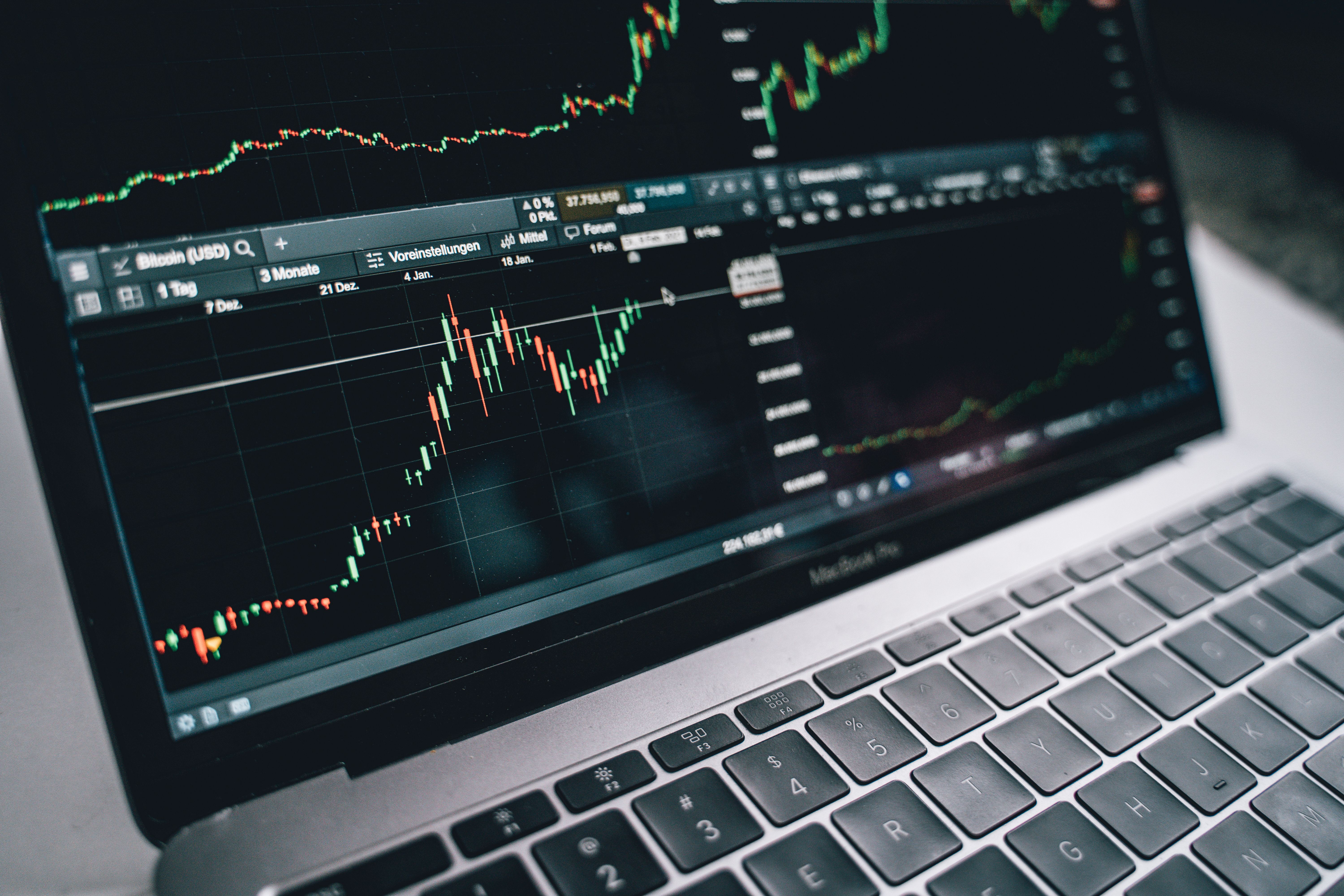
Should you buy an index fund or an ETF? The two names sound like rival products. Here is the honest answer: for most beginners, either one works, because they are usually the same investment in a different wrapper. An index fund is a strategy — it tracks a market index. An ETF is a structure — a way of buying and selling that tracks on a stock exchange. This guide walks you through six steps to pick the right one — all figures checked November 6, 2026.Photo: Index funds let you own the whole market without watching charts all day. (Photo: Pexels) What You Will LearnThe real difference between an index fund and an ETF Which index to start with: the S&P 500 or the total US market How to compare expense ratios, and why 1% is so expensive How pricing works: once-a-day NAV vs trading all day Which wrapper fits a taxable account, an IRA or a 401(k) How to buy your first fund and automate itStep 1: Learn the difference — strategy vs wrapper What to do: Learn what each word means — they are not opposite choices. How: An index fund follows a market index — a list of companies, such as the S&P 500 — instead of letting a manager pick stocks. The SEC calls this a passive strategy: the fund seeks about the same return as its index. An ETF is a structure: a fund whose shares trade on a stock exchange like a stock. The two ideas overlap. VOO is both. VFIAX is an index fund but not an ETF: a mutual fund tracking the same S&P 500. So the question is never "index fund or ETF?" It is two questions: which index, and which wrapper? Example: Maya learns VOO and VFIAX both track the S&P 500, so she compares costs, not names. Common mistake: Buying a fund because "ETF" is in its name. Some ETFs are actively managed — check the prospectus.Illustrative diagram — The six steps to pick your first index fund in 2026. NOT a real brokerage screenshot. Step 2: Pick an index — S&P 500 or total US market What to do: Choose the index first. For most beginners, the choice is between the S&P 500 and the total US stock market. How: The S&P 500 holds about 500 of the largest US companies — Apple, Microsoft, Nvidia, Amazon and hundreds more. Vanguard's page for VOO lists 505 holdings as of September 30, 2026. The total US market goes wider: a fund like VTI or its mutual-fund twin VTSAX holds roughly 3,500 or more US stocks of every size. Over long periods the two have performed very similarly, because the S&P 500 already covers about 80% of the total US market by value. Example: James, 27, picks the S&P 500 because he can name its biggest companies. Common mistake: Picking a narrow sector or theme index as a first fund. A broad index is the beginner default.Illustrative diagram — Same holdings, two wrappers: VOO and VFIAX track the same index. NOT a real brokerage screenshot.Photo: Compare the expense ratio before you buy — it is the one cost you can control. (Photo: Pexels) Step 3: Compare the expense ratio — the cost you can control What to do: Compare the expense ratio — the yearly fee, as a percentage of your money — of the specific funds you are choosing between. How: The expense ratio is deducted from the fund's returns, so you never see a bill — but you pay it every year. For the big S&P 500 funds, the numbers checked in November 2026 are tiny: Fidelity's FXAIX 0.015% a year, Schwab's SWPPX 0.02%, Vanguard's VOO 0.03% (confirmed on Vanguard's fund page), and Vanguard's VFIAX 0.04%. On $10,000, that is $1.50 a year for FXAIX, $3 for VOO, $4 for VFIAX — and $100 a year for a fund charging 1%. The gap compounds: $10,000 at a steady 7% a year for 30 years reaches about $75,500 after a 0.03% fee, but only about $57,400 after a 1% fee. Example: Priya moves $10,000 from a 1% fund to VOO at 0.03% and saves about $97 a year. Common mistake: Paying 1% for a fund that holds almost the same stocks as the index. Check the fee before you buy.Illustrative diagram — What the expense ratio costs you on $10,000 a year. NOT a real brokerage screenshot. Step 4: Understand how pricing works What to do: Learn the one practical difference that confuses beginners most: when you find out the price you paid. How: A mutual fund prices once a day: the SEC explains you buy or sell at the net asset value (NAV), calculated at the end of the business day — usually 4 PM Eastern. You can order any time, but you learn the price only after the close. An ETF works the other way: you buy and sell on the exchange at the market price, all day, and you see the price before you trade. For a long-term investor this barely matters — you buy the same fund either way. One practical difference: a mutual fund takes a dollar amount, say $100; an ETF takes whole shares, or fractional shares if your broker offers them. One share of VOO cost about $674 at the November 5, 2026 close. Example: Alex orders $200 of a mutual fund at 10 AM and learns his price only after 4 PM. Common mistake: Watching an ETF's price move during the day and trading on it. Intraday pricing is for traders.Illustrative diagram — How pricing works: once a day vs all day. NOT a real brokerage screenshot.Photo: ETFs trade all day like stocks; mutual funds price once a day. Either way, you own the same companies. (Photo: Pexels) Step 5: Choose the wrapper for your account What to do: Match the wrapper — ETF or mutual fund — to where the money sits: a taxable brokerage account, an IRA, or a 401(k). How: Start with the account, not the fund. Inside a 401(k) or IRA, the SEC says there is no tax difference between an ETF and a mutual fund — pick whichever is cheaper or easier to automate. In a taxable account, the ETF usually wins on tax: the SEC explains ETFs typically have fewer capital gains distributions than mutual funds, because they trade securities in in-kind exchanges rather than for cash. A mutual fund can hand you a tax bill even in a year you sold nothing. Minimums: VFIAX asks for $3,000, as reported in October 2026, while FXAIX and SWPPX have a $0 minimum, and many brokers offer fractional ETF shares, so $10 is enough. On automation, mutual funds usually win: most brokers auto-invest a fixed amount every payday. Example: Lena uses her Roth IRA, so she picks the mutual fund version and automates $200 a month. Common mistake: Holding a mutual fund in a taxable account and getting a surprise year-end tax bill.Illustrative diagram — Which wrapper fits your situation? Follow the flowchart. NOT a real brokerage screenshot. Step 6: Buy it and automate — then leave it alone What to do: Buy the fund, automate it, and build a simple portfolio around it. How: Open a brokerage account if you do not have one — you need one to hold ETF shares, and most brokers now offer $0-commission trades. Buy your fund: one share (or a fractional share) of the ETF, or a dollar amount of the mutual fund. Then turn on automatic investing — $100 a month is a strong start. At a steady 7% a year, $100 a month for 30 years would be roughly $117,000 before fees. As a beginner default, use the three-fund portfolio: a total US market index fund, a total international index fund, and a total bond index fund. If your employer offers a 401(k) match, grab that first — free money beats any fund choice. Example: Sara auto-invests $150 a month into a total US market index fund. Common mistake: Selling in the first market drop. A 20% fall is normal — selling locks in the loss.Illustrative diagram — Three mistakes that cost new index investors. NOT a real brokerage screenshot. ChecklistI know the difference: index fund is the strategy, ETF is the wrapper. I picked an index — S&P 500 or total US market. I compared expense ratios of the two specific funds. I matched the wrapper to my account — ETF for taxable, either for an IRA or 401(k). I bought the fund and set up automatic monthly investing. I will check my balance once a year, not once a day.FAQ Is an ETF better than an index fund? Neither is better in general. An index fund tracks an index; an ETF is a wrapper that trades on an exchange. VOO is both. Compare expense ratios, and match the wrapper to your account. Can I lose money in an index fund? Yes. An index fund owns stocks, and stocks fall — the S&P 500 has dropped 20% or more before. How much money do I need to start? Very little. Many index mutual funds have a $0 minimum, and many brokers offer fractional ETF shares, so $10 or $50 is enough. VFIAX is an exception at $3,000. Are ETFs more tax-efficient than mutual funds? In a taxable account, usually yes — the SEC explains ETFs typically have fewer capital gains distributions. Inside an IRA or 401(k), there is no tax difference. What is the simplest portfolio for a beginner? The three-fund portfolio: a total US market index fund, a total international index fund, and a total bond index fund. SourcesSEC Investor.gov, "Characteristics of Mutual Funds and Exchange-Traded Funds (ETFs)" — Investor Bulletin on pricing, trading and tax differences. Vanguard, "VOO — Vanguard S&P 500 ETF" — 0.03% expense ratio, 505 holdings, S&P 500 tracking (checked November 6, 2026). DollarLedger USA, "Roth IRA Contribution Limits 2026" — why an IRA removes the ETF-vs-mutual-fund tax question.All figures checked November 6, 2026. This article is for education only, not financial advice. Expense ratios, minimums and prices change — confirm current figures on the fund's own page before investing.