Showing Posts From
Compound interest
 DollarLedger Team
- 06 Nov, 2026
What Is Compound Interest? How Your Money Grows Over Time in 2026
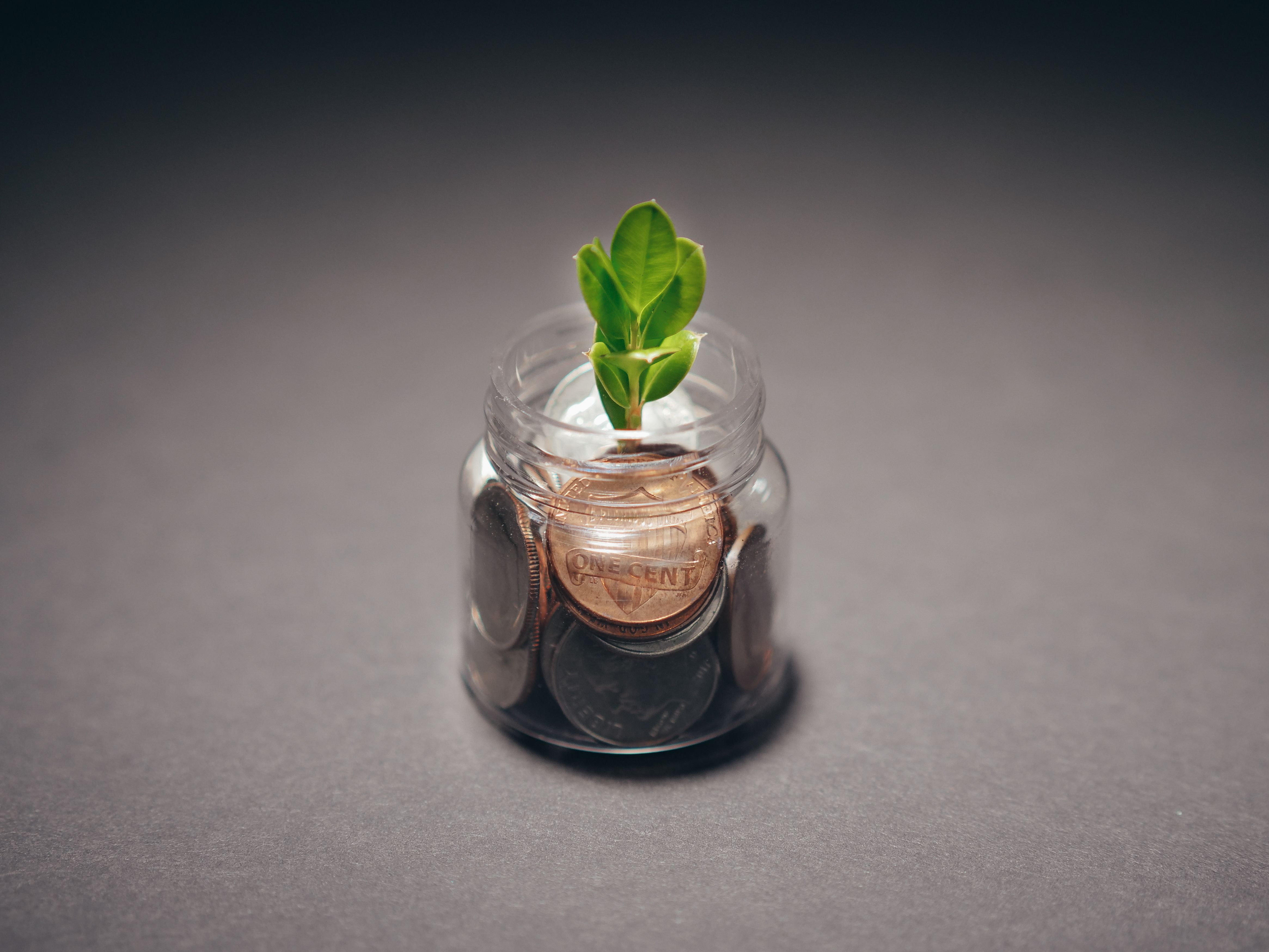
Put $10,000 in an account earning 7% a year, leave it alone for 30 years, and it grows to about $76,100 — without you adding another dollar. That is compound interest: your money earns returns, and then those returns earn returns of their own. It is the single most important idea in investing, and the reason credit card debt is so hard to escape.Photo: Like a plant, your money grows on what it has already grown. (Photo: Pexels) What You Will LearnWhat compound interest is, in one simple sentence How $10,000 grows at 7% — and why simple interest cannot keep up The Rule of 72: how to estimate doubling time in your head Why starting at 25 beats starting at 35, even with double the money The three levers that control your growth — and which one matters most How to use compounding — and how card debt turns it against youStep 1: Learn the definition — your returns earn returns What to do: Understand the one sentence: compound interest is interest earned on your original money and on past interest. How: Invest $1,000 at 7%. After year one you have $1,070. In year two the 7% applies to the whole $1,070, so you earn about $75; in year three, about $80 on $1,145. What you earn grows every year though the rate never changes. Simple interest pays only on your original deposit — $70 a year, forever. Example: Two friends invest $1,000 at 7%: Ana's account compounds, Ben's pays simple interest. After ten years Ana has about $1,967, Ben $1,700. After thirty years Ana has about $7,612, Ben $3,100. Common mistake: Thinking the rate matters most: a 7% account that compounds beats a 7% simple-interest account by more than double over 30 years. Always check that returns compound.Illustrative diagram — The six steps to put compound interest to work. NOT a real bank screenshot. Step 2: See it with real numbers — one $10,000 deposit What to do: Run the numbers on a single deposit. How: Invest $10,000 once at a steady hypothetical 7% a year, with no new contributions, before taxes and fees. After 10 years: about $19,700. After 20: about $38,700. After 30: about $76,100. Each decade roughly doubles your money — slow at first, then fast. With simple interest at the same 7%, the same $10,000 reaches only $31,000 after 30 years. The gap, about $45,000, is all returns earning returns. Example: Maya invests $10,000 once at 30. At a hypothetical steady 7%, she has about $19,700 at 40 and about $76,100 at 60. Her brother waits until 40 to invest the same $10,000; at 60 he has only about $38,700 — half as much. Common mistake: Expecting fast growth early: in the first five years your $10,000 grows to only about $14,000, and most people quit right before the curve bends.Illustrative diagram — Compound vs simple interest on one $10,000 deposit at 7%. NOT a real bank screenshot.Photo: Run your own numbers before you invest a dollar. (Photo: Pexels) Step 3: Use the Rule of 72 to estimate doubling time What to do: Learn the shortcut: divide 72 by your yearly return. How: The Rule of 72 estimates how many years it takes your money to double. At 7%, that is 72 divided by 7, or about 10 years. At 4%, 72 divided by 4, or 18 years. At 10%, 72 divided by 10, or about 7 years. The SEC's Investor.gov teaches the same shortcut, giving the example that at 9% your money doubles in about 8 years. The rule is an estimate — the true doubling time at 7% is about 10.2 years — but close enough for comparisons. Example: Sara's $5,000 at 4% doubles in about 18 years; at a hypothetical 7%, in about 10 years. Same $5,000, eight years faster. Common mistake: Using the rule on a rate that will not last — a 0% introductory card rate, a one-year CD rate, or one great year in the stock market.Illustrative diagram — The Rule of 72: divide 72 by your return to estimate doubling time. NOT a real bank screenshot. Step 4: Start early — time beats money What to do: Start now, even with a small amount — the years matter more than the dollars. How: Compare two savers investing at a hypothetical steady 7% a year with monthly compounding, until age 65. Ana starts at 25 and invests $100 a month. By 65 she has put in $48,000 and her balance is about $264,000. Ben starts at 35 and invests the same $100 a month. By 65 he has put in $36,000 for a balance of about $122,700 — less than half of Ana's. Give Ben double — $200 a month from 35 — and he puts in $72,000 yet still ends with about $245,400, behind Ana. Ten extra years beat doubling the monthly amount. Example: At 28, $50 a month is enough: at a hypothetical 7% it grows to about $105,000 by 65. Waiting until 38 to invest $100 a month reaches only about $96,000. The smaller, earlier habit wins. Common mistake: Waiting for a "real" amount. There is no minimum — $25 a month started today beats $100 a month started in ten years.Illustrative diagram — Starting at 25 beats starting at 35, even with double the money. NOT a real bank screenshot. Step 5: Pull the three levers — amount, return, time What to do: Control the three things that decide your balance: how much you put in, what it earns, and how long it compounds. How: First, the amount: every extra dollar each month compounds for decades, so $150 a month instead of $100 scales your ending balance the same way. Second, the return: a higher return doubles your money faster — 7% in about 10 years versus 18 at 4% — but no investment guarantees 7% every year. Third, time — the biggest lever, and the only one you cannot buy back: $100 a month at 7% grows to about $17,400 after 10 years but about $52,400 after 20. The balance grows by roughly $35,000 in the second decade, only $12,000 of it new money. Example: Priya invests $100 a month: after 10 years about $17,400 ($12,000 paid in, about $5,400 growth); after 20 years about $52,400 ($24,000 paid in, about $28,400 growth). In the second decade, growth added more than four times what it did in the first. Common mistake: Chasing a higher return while ignoring time: switching investments for an extra 1% is worth far less than starting five years earlier.Photo: Every dollar you add is a dollar that compounds for decades. (Photo: Pexels)Illustrative diagram — Amount, return and time: time is the lever you cannot buy back. NOT a real bank screenshot. Step 6: Automate it, reinvest it, and don't interrupt it What to do: Set up a monthly automatic investment, reinvest dividends and interest, and leave the account alone — while paying off card debt first. How: First, automate: move $50, $100 or $200 into your investment account on payday — a Roth IRA or 401(k) if you have one. Second, reinvest dividends and interest so they buy more shares instead of sitting as cash. Third, don't interrupt it: market drops are normal, and selling in a dip locks in the loss. Finally, clear the other side of the ledger — compounding works against you too: the Federal Reserve's G.19 release reports card accounts assessed interest averaged 22.36% in August 2026. A $1,000 balance left unpaid costs about $224 of interest in a year, and the unpaid interest earns interest too — so pay the card first. Example: Lena sets up $100 a month into a Roth IRA on payday with dividend reinvestment on. In a dip, her automatic $100 keeps buying shares at lower prices — shares that compound when the market recovers. Common mistake: Raiding your investment account: every withdrawal is not just the money you take out, it is twenty years of compounding that money would have done. Keep a separate emergency fund in a high-yield savings account.Illustrative diagram — Three mistakes that break compounding, including card debt at 22.36%. NOT a real bank screenshot. ChecklistI can explain compound interest: returns earn returns. I ran my own numbers on Investor.gov's calculator. I know my doubling time (Rule of 72). I started, even with $25 or $50 a month. My contributions are automatic on payday. Dividends and interest are set to reinvest. I pay off card debt before investing beyond a 401(k) match.FAQ What is compound interest in simple words? Interest earned on your original money, plus interest on the interest already earned. Your returns earn returns of their own, so your balance grows faster every year. How much will $10,000 grow to in 30 years? At a hypothetical steady 7% a year, about $76,100, with no new contributions and before taxes and fees. With simple interest, only about $31,000. Is 7% a realistic return? It is a common long-run planning assumption for a diversified stock portfolio, roughly the historical average stock market return after inflation. Real returns vary and no investment guarantees 7%. How does the Rule of 72 work? Divide 72 by your annual return to estimate doubling time: about 10 years at 7%, 18 at 4%, 7 at 10%. The SEC's Investor.gov uses the same shortcut; the exact doubling time at 7% is about 10.2 years. Can compound interest work against me? Yes — that is exactly how credit card debt grows. The Federal Reserve reports card accounts assessed interest averaged 22.36% in August 2026, and unpaid interest is added to your balance and charged interest itself. SourcesSEC Investor.gov — Compound Interest Calculator and the Rule of 72 Federal Reserve, G.19 Consumer Credit (release of Nov 6, 2026) — average card APR 22.36%, accounts assessed interest, Aug 2026 DollarLedger USA, "Best High-Yield Savings Accounts in the USA 2026" — where to keep your emergency fundAll figures checked November 6, 2026. Disclaimer: This article is for education only, not financial advice. All growth figures are hypothetical illustrations at an assumed steady 7% return, before taxes, fees and inflation.