Showing Posts From
Mortgage

 DollarLedger Team
- 10 Nov, 2026
How Much Down Payment Do You Need to Buy a House in 2026? The 20% Myth, in Dollars
Ask a first-time buyer how much they need to buy a house and most will say 20% down. On a $400,000 home that is $80,000 in cash. The 20% figure is real, but it is not a minimum. It is the point where private mortgage insurance drops off a conventional loan. You can buy in 2026 with 3% down conventional, 3.5% down FHA, or 0% down VA or USDA if you qualify. This guide turns each percent into dollars, prices the monthly cost, and adds closing costs. All figures were checked on November 10, 2026.Photo: The keys are the finish line - the number to save is the down payment plus closing costs. (Photo: Pexels) What You Will LearnMinimum down payment by loan type, in dollars What 3%, 10% and 20% down cost on a $400,000 home Closing costs, and the real cash-to-close number PMI and FHA insurance costs, and when they end Down payment assistance in your state A savings target you can reachStep 1: Pick your loan type first What to do: Find out which loan type fits you before you pick a down payment number. How: There is no single minimum. The CFPB says most buyers need at least 3% down, and many loans need 5% or more. Fannie Mae HomeReady and Freddie Mac Home Possible allow 3% down with a 620+ score and income at or below 80% of the area median income. A repeat buyer on a standard conventional loan usually starts at 5%. An FHA loan needs 3.5% down with a 580+ score, or 10% with a 500-579 score; HUD states the FHA minimum is 3.5% in most cases. VA loans need 0% down for eligible service members, veterans and some surviving spouses. USDA loans need 0% down for eligible rural or suburban homes, with income limits. Example: Maya has a 640 score and earns below 80% of her area median income, so HomeReady lets her buy with 3% down. Common mistake: Assuming every loan needs 20% down.Illustrative diagram - The six steps to your down payment number. NOT a real CFPB screenshot. Step 2: Turn the percent into dollars What to do: Multiply each down payment percent by the home price you are shopping for. How: On a $400,000 home, 3% down is $12,000, 3.5% is $14,000, 5% is $20,000, 10% is $40,000, and 20% is $80,000. The gap between the lowest conventional down payment and 20% is $68,000 in cash. NAR's 2025 Profile of Home Buyers and Sellers puts the first-time median at 10% - the highest since 1989 - repeat buyers at 23%, and all buyers at 19%. It covers buyers who purchased between July 2024 and June 2025. The first-time median was 6% in 2020 (reported), so 10% is a 2025 number, not a timeless rule. Example: At the 2025 first-time median of 10%, a buyer needs $40,000 on a $400,000 home. With a 3% HomeReady loan she needs $12,000. Common mistake: Comparing percents, not dollars: 3% sounds small until you see $12,000.Illustrative diagram - Minimum down payment by loan type on a $400,000 home. NOT a real CFPB screenshot.Photo: On a $400,000 home, the down payment ranges from $12,000 to $80,000 depending on the loan. (Photo: Pexels) Step 3: Add closing costs What to do: Add closing costs to your down payment before you set your savings target. How: Closing costs are lender fees, appraisal, title services and prepaid taxes and insurance. The CFPB says they typically run 2% to 5% of the purchase price, not including the down payment. On a $400,000 home that is $8,000 to $20,000. Cash to close is the down payment plus closing costs: with 3% down, $12,000 plus $8,000 to $20,000 is $20,000 to $32,000 in cash. Cash to close is often 50% to 100% more than the down payment alone. Your Loan Estimate, due within three business days of applying, shows your exact closing costs. To check what your income can support, see our guide to how much house you can afford in the USA in 2026. Example: Sara saves $12,000 for a 3% down payment. Her Loan Estimate shows $12,000 in closing costs, so she needs $24,000 in cash to close. Common mistake: Saving only the down payment, then finding the cash needed is nearly double.Illustrative diagram - What the percent means in dollars on a $400,000 home. NOT a real CFPB screenshot.Illustrative diagram - Cash to close with 3% down on a $400,000 home. NOT a real CFPB screenshot. Step 4: Price the mortgage insurance What to do: Work out what mortgage insurance adds to your monthly payment. How: Below 20% down on a conventional loan, you usually pay private mortgage insurance, or PMI. PMI protects the lender and typically costs 0.5% to 1% of the loan per year (reported). On a $388,000 loan - a $400,000 home with 3% down - that is about $162 to $323 a month. PMI ends: ask for cancellation at 80% of the original value, and it must end automatically at 78% if payments are current. FHA mortgage insurance, or MIP, has an upfront premium of 1.75% - $6,755 on a $386,000 loan - plus 0.55% a year, about $177 a month. With under 10% down, FHA MIP usually lasts the life of the loan (reported); at 10% or more it generally ends after 11 years (reported). Freddie Mac's survey put the average 30-year fixed rate at 7.18% for the week ending November 5, 2026, down from 7.24%. At 7.18% over 30 years, principal and interest on a $388,000 loan is $2,628 a month, so with PMI the payment is about $2,790 to $2,951 a month. On a $320,000 loan with 20% down it is $2,168 a month with no PMI. Example: Two buyers buy the same $400,000 home at 7.18%: 3% down pays $2,790 to $2,951 a month, 20% down pays $2,168. The first needs $68,000 less cash but pays $620 to $780 more a month until PMI ends. Common mistake: Choosing the smallest down payment without pricing PMI.Photo: Buying sooner with less down means a higher monthly payment - price it before you choose. (Photo: Pexels)Illustrative diagram - Monthly cost at 7.18% on a 30-year fixed loan. NOT a real Freddie Mac screenshot. Step 5: Check state assistance What to do: Look up your state housing finance agency before assuming you must save it all yourself. How: Most states run down payment assistance through their housing finance agency, and amounts and rules differ in every state. New Jersey is one example: its agency offers up to $15,000 toward down payment and closing costs in higher-cost counties, $10,000 elsewhere, as a 0% interest, no-monthly-payment loan, forgivable after five years (reported). A qualifying first-generation buyer can add $7,000, for up to $22,000 in total (reported). Other states offer grants, forgivable loans or low-interest second mortgages. Most require first-time-buyer status, income and price limits, a primary residence, and an approved lender. Example: A first-generation buyer in Bergen County, New Jersey, gets $15,000 plus $7,000 - $22,000 she does not repay if she stays five years (reported). Common mistake: Assuming your state matches New Jersey's $15,000, or that assistance is a grant, not a loan. Step 6: Set your target and save What to do: Pick a down payment you can reach, add closing costs, and save that total separately. How: Work out cash to close from your loan type: down payment plus 2% to 5% for closing costs. Keep the CFPB's recommended cushion - three to six months of expenses - as a separate emergency fund. If 20% is years away, compare waiting with PMI: two more years of rent may cost more than $162 to $323 a month of PMI. Already own a home? See whether you should refinance your mortgage in 2026. Get preapproved with two or three lenders, compare Loan Estimates, and ask what your payment looks like at 3%, 10% and 20% down. Example: A buyer with a 3% HomeReady loan saves $32,000 and keeps $15,000 in a separate emergency fund. Common mistake: Putting every dollar into the down payment, then facing a job loss with no cash left.Illustrative diagram - Six mistakes that cost first-time buyers money. NOT a real CFPB screenshot. Checklist☐ My loan type and its minimum down payment. ☐ Cash to close, including closing costs. ☐ PMI or MIP priced, and when it ends. ☐ State assistance checked. ☐ Emergency fund of three to six months kept separate. ☐ Loan Estimates compared from two or three lenders.FAQ Do I really need 20% down to buy a house in 2026? No. 20% is where PMI drops off a conventional loan, not the minimum. Conventional loans go as low as 3% down, FHA 3.5%, and VA and USDA 0% for eligible borrowers. How much is 3% down on a $400,000 house? $12,000. With closing costs of 2% to 5%, cash to close is $20,000 to $32,000. On the same home, 10% down is $40,000 and 20% down is $80,000. When does PMI go away? Ask for cancellation at 80% of the home's original value; it must end automatically at 78% if payments are current. FHA MIP usually lasts the life of the loan with less than 10% down (reported). What is the 30-year mortgage rate right now? Freddie Mac's survey put the average 30-year fixed rate at 7.18% for the week ending November 5, 2026. It is a national average, not a quote. Can down payment assistance cover my whole down payment? Sometimes. New Jersey offers up to $15,000 plus a $7,000 first-generation add-on (reported). Check your own state agency - amounts and rules differ everywhere. SourcesConsumer Financial Protection Bureau, Determine your down payment (opened live November 10, 2026): https://www.consumerfinance.gov/owning-a-home/prepare/determine-your-down-payment/ Fannie Mae, HomeReady Low Down Payment Mortgage (opened live November 10, 2026): https://yourhome.fanniemae.com/buy/homeready Freddie Mac, Primary Mortgage Market Survey (opened live November 10, 2026): https://www.freddiemac.com/pmmsAll figures checked November 10, 2026, against the CFPB, Fannie Mae, Freddie Mac, HUD and NAR. Disclaimer: For education only, not mortgage, tax or investment advice. Loan programs, rates and assistance rules change and vary by state and lender.
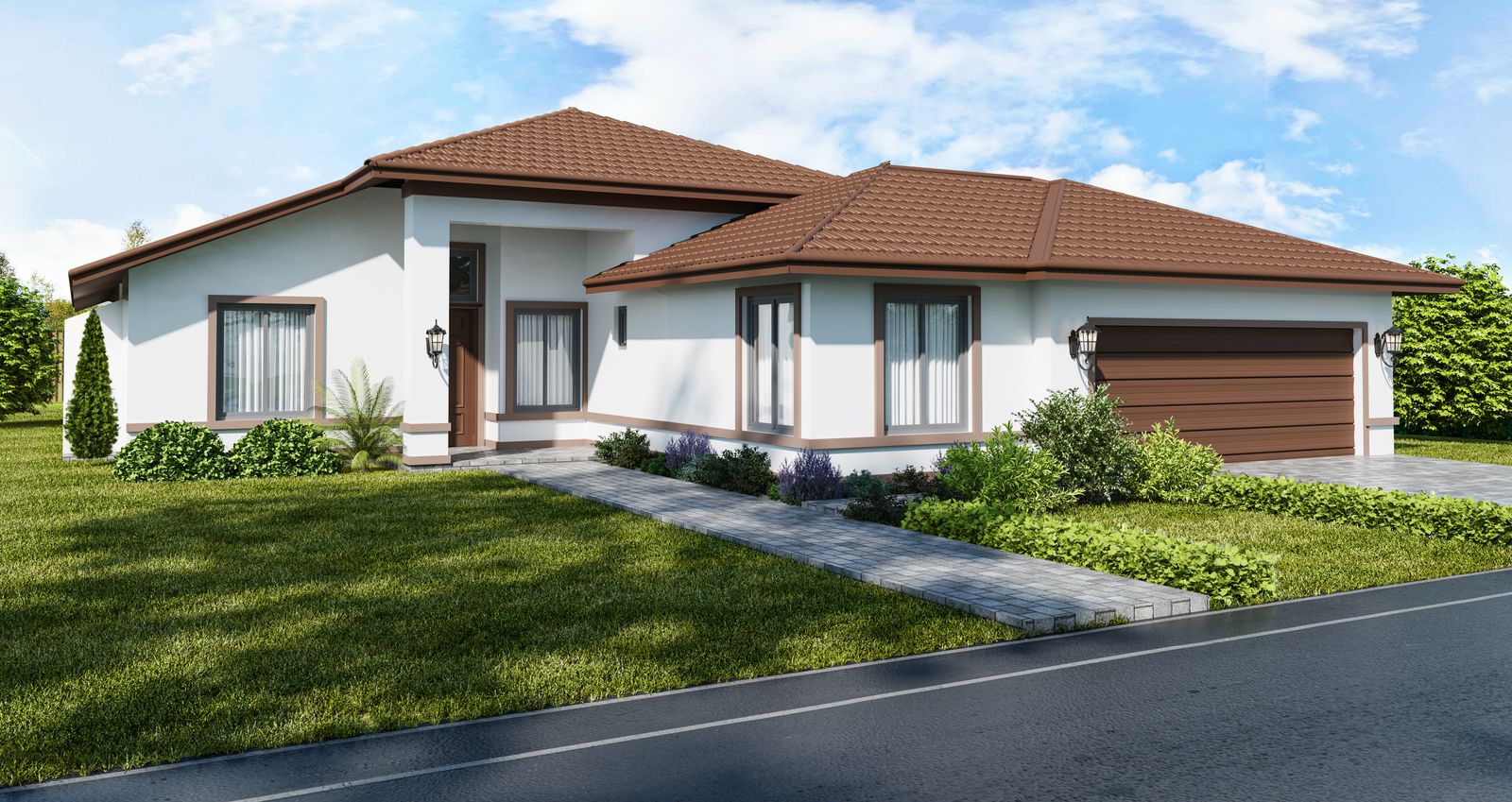
- DollarLedger Team
- 09 Nov, 2026
How Much House Can I Afford in USA 2026? The 28/36 Rule, Worked Out
A lender will approve you for more house than you can comfortably afford. That is the trap in this question: the biggest number on your pre-approval letter is not your budget. The comfortable number is the 28/36 rule - keep total housing costs at or under 28% of your gross monthly income, and all monthly debts, housing included, at or under 36%. The rate used here is 7.18% for a 30-year fixed loan, the Freddie Mac Primary Mortgage Market Survey average for the week ending November 5, 2026. The national median existing-home price is $417,500, the National Association of Realtors figure for September 2026.Photo: The lender's maximum is not your budget - run the 28/36 rule first. (Photo: Pexels) What You Will LearnThe 28/36 rule, and why it is stricter than a lender's limit Your two caps: housing, and all debts together A worked example: what $100,000 a year buys at 7.18% The forgotten costs: taxes, insurance, PMI, HOA, maintenance What income the $417,500 median home needsStep 1: Learn the 28/36 rule What to do: Use two percentages of your gross monthly income as your ceiling. How: Gross monthly income is your pay before taxes and deductions, divided by 12. The 28% front-end rule caps your total monthly housing cost at 28% of it: principal and interest, property taxes, homeowners insurance, mortgage insurance (PMI) if you pay it, and HOA dues. The 36% back-end rule caps your housing cost plus every other monthly debt - car loan, student loan, minimum credit card payments, personal loan - at 36% of the same income. The CFPB calls this the debt-to-income ratio, or DTI. Its Your Money, Your Goals worksheet uses the same 28% and 36% guidelines (reported). It is a planning guideline, not a law. Example: On $100,000 a year, gross monthly income is $8,333 - a $2,333 housing cap and a $3,000 total-debt cap. Common mistake: Treating the lender's approval as a budget. A lender checks debts on your credit report, not your real life.Illustrative diagram - The six steps to how much house you can afford in 2026. NOT a real Freddie Mac screenshot. Step 2: Work out your two caps What to do: Turn your annual income into two monthly caps, then find which one binds. How: Divide your gross annual income by 12. Multiply by 0.28 for the housing cap and by 0.36 for the total-debt cap. Then subtract your other monthly debt payments from the total-debt cap. The lower of the two is your real housing budget. Example: On $100,000 a year, the caps are $2,333 for housing and $3,000 for all debt. With no other debts, your budget is $2,333. With $900 a month of car and student loan payments, the back-end cap leaves $2,100 for housing - lower than $2,333, so it binds. Common mistake: Using take-home pay. The rule is built on gross income.Illustrative diagram - The 28/36 rule: two caps on the same income. NOT a real Freddie Mac screenshot.Photo: Before you sign anything, run the two caps on your own income - not the lender's maximum. (Photo: Pexels) Step 3: Turn the housing cap into a home price What to do: Turn your monthly housing budget into the most expensive home it can carry. How: A monthly housing payment has four parts: principal and interest, property taxes, homeowners insurance, and PMI or HOA if they apply. At 7.18% on a 30-year loan, each $1,000 of loan costs about $6.77 a month in principal and interest. This worked example assumes 20% down, a property tax rate of 1.1% of the home price a year, and $1,800 a year of homeowners insurance. Those last two are assumptions - use local quotes. The same method gives a rough price for any income - see the chart in Diagram 3. Example: On $100,000 a year, the housing cap is $2,333 a month. A $344,000 home with 20% down ($68,800) leaves a $275,200 loan. Principal and interest come to $1,864 a month, property tax to $315, and insurance to $150. The total is $2,329 a month, just under the $2,333 cap. Common mistake: Pricing from the loan payment alone. Taxes and insurance add roughly $465 a month here.Illustrative diagram - What home price fits your income under the 28/36 rule. NOT a real Freddie Mac screenshot. Step 4: Add the forgotten costs What to do: Add the five costs outside principal and interest before you decide a price is safe. How: First, property tax: about 1.1% of the price a year here. Second, homeowners insurance: $1,800 a year here. Third, PMI: with less than 20% down, lenders usually require private mortgage insurance, roughly 0.3% to 1% of the loan a year (reported). On a $344,000 home with 10% down, a $309,600 loan at 0.5% a year adds about $129 a month, inside the 28%. Fourth, HOA dues: say $250 a month in this example, also inside the 28%. Fifth, maintenance: the common rule of thumb is 1% of home value a year (reported), about $287 a month here. Maintenance sits outside the 28% rule - that slack pays for the roof and the furnace. Example: Take the $344,000 home from Step 3 with 10% down instead of 20%. PMI adds about $129 a month, so the payment rises to about $2,458, above the $2,333 cap. The same house is no longer inside the rule. Common mistake: Budgeting for the mortgage and forgetting the house. These five costs together can exceed $800 a month.Illustrative diagram - The worked example: $100,000 income buys about a $344,000 home. NOT a real Freddie Mac screenshot.Photo: Taxes, insurance, PMI, HOA and maintenance are part of the real monthly cost - add them before you offer. (Photo: Pexels) Step 5: Check the median home against your income What to do: Compare your number with the national median, then your region's median. How: The National Association of Realtors reported a median existing-home price of $417,500 for September 2026, up 1.3% from a year earlier. At 7.18% with 20% down, that home costs about $2,796 a month: $2,263 of principal and interest, $383 of tax at 1.1%, and $150 of insurance. To keep that inside the 28% rule you need about $120,000 a year of gross income. Regional medians in September 2026: Northeast $523,600, Midwest $329,600, South $361,000, West $613,600. Example: A household earning $90,000 has a housing cap of $2,100 a month and an affordable price near $308,000 - about $110,000 below the national median. Shop below the median, look at smaller markets, or raise the down payment. Common mistake: Treating the national median as the entry price. It is the middle of what sold, not the cheapest home in your town.Illustrative diagram - The lender's ceiling is not your target. NOT a real Freddie Mac screenshot. Step 6: Shop below your max and get pre-approval What to do: Set your search ceiling below the 28/36 number, then get pre-approved. How: Fannie Mae's Selling Guide sets a maximum total DTI of 36% for manually underwritten loans, rising to 45% when the borrower meets its credit-score and reserve requirements, and 50% for loans approved through its Desktop Underwriter system (reported). On $100,000 a year, 50% DTI allows a housing payment of $4,167 a month, which at 7.18% buys about a $634,000 home - nearly double the $344,000 the 28/36 rule supports. Get pre-approved anyway: sellers take pre-approved offers seriously. Treat the pre-approval as the lender's ceiling and your 28/36 number as your budget. If you already own and rates fall later, refinancing is a separate decision - see our guide. Example: Two buyers both earn $100,000. One buys the $344,000 home and keeps $1,834 a month of slack. The other buys at the ceiling and has none when the furnace fails in year two. Common mistake: Shopping at the pre-approval amount. Search $20,000 to $50,000 below your 28/36 price.Illustrative diagram - The forgotten costs, and six mistakes to avoid. NOT a real Freddie Mac screenshot. ChecklistI worked out my 28% housing cap and 36% total-debt cap from my gross income. I subtracted my other debts from the 36% cap and took the lower cap as my budget. I turned the housing budget into a home price at the current 30-year rate. I added PMI, HOA and maintenance on top of principal and interest. I compared my number with my region's median price. I will shop below my 28/36 price and get pre-approved before I offer.FAQ How much house can I afford on $100,000 a year in 2026?About a $344,000 home with 20% down at 7.18% on a 30-year loan, keeping housing at $2,333 a month. With $900 a month of other debts, about $308,000. What is the 28/36 rule?Keep housing costs - principal, interest, taxes, insurance, PMI and HOA - at or under 28% of gross monthly income, and all monthly debts at or under 36%. The CFPB's Your Money, Your Goals worksheet uses the same guidelines (reported). What income do I need to buy the median home in 2026?About $120,000 a year. The median was $417,500 in September 2026, costing about $2,796 a month at 7.18% with 20% down. Will a lender approve me for more than the 28/36 rule allows?Yes. Fannie Mae allows up to 50% total DTI through Desktop Underwriter (reported). On $100,000 a year that approves about a $634,000 home, but the payment leaves no room for saving. What is the 30-year mortgage rate right now?Freddie Mac's Primary Mortgage Market Survey averaged 7.18% for the week ending November 5, 2026, down from 7.24% the week before. Check the latest survey before you lock. SourcesConsumer Financial Protection Bureau, "What is a debt-to-income ratio?" Freddie Mac, "Mortgage Rates - Primary Mortgage Market Survey" (30-year fixed 7.18%, week ending November 5, 2026) National Association of Realtors, "Existing-Home Sales Increased 1.5% in September" (median $417,500, September 2026)All figures checked November 9, 2026, against the Freddie Mac PMMS page, the CFPB debt-to-income page and the NAR September 2026 release. The 28/36 guideline, Fannie Mae DTI limits, PMI range and 1% maintenance rule are reported claims. Home prices are the author's calculations from the stated assumptions. Disclaimer: For education only, not mortgage advice. Get a written quote and a pre-approval before you make an offer.