Showing Posts From
Portfolio
 DollarLedger Team
- 06 Nov, 2026
How to Build a Diversified Portfolio in 2026 — A Beginner's Guide
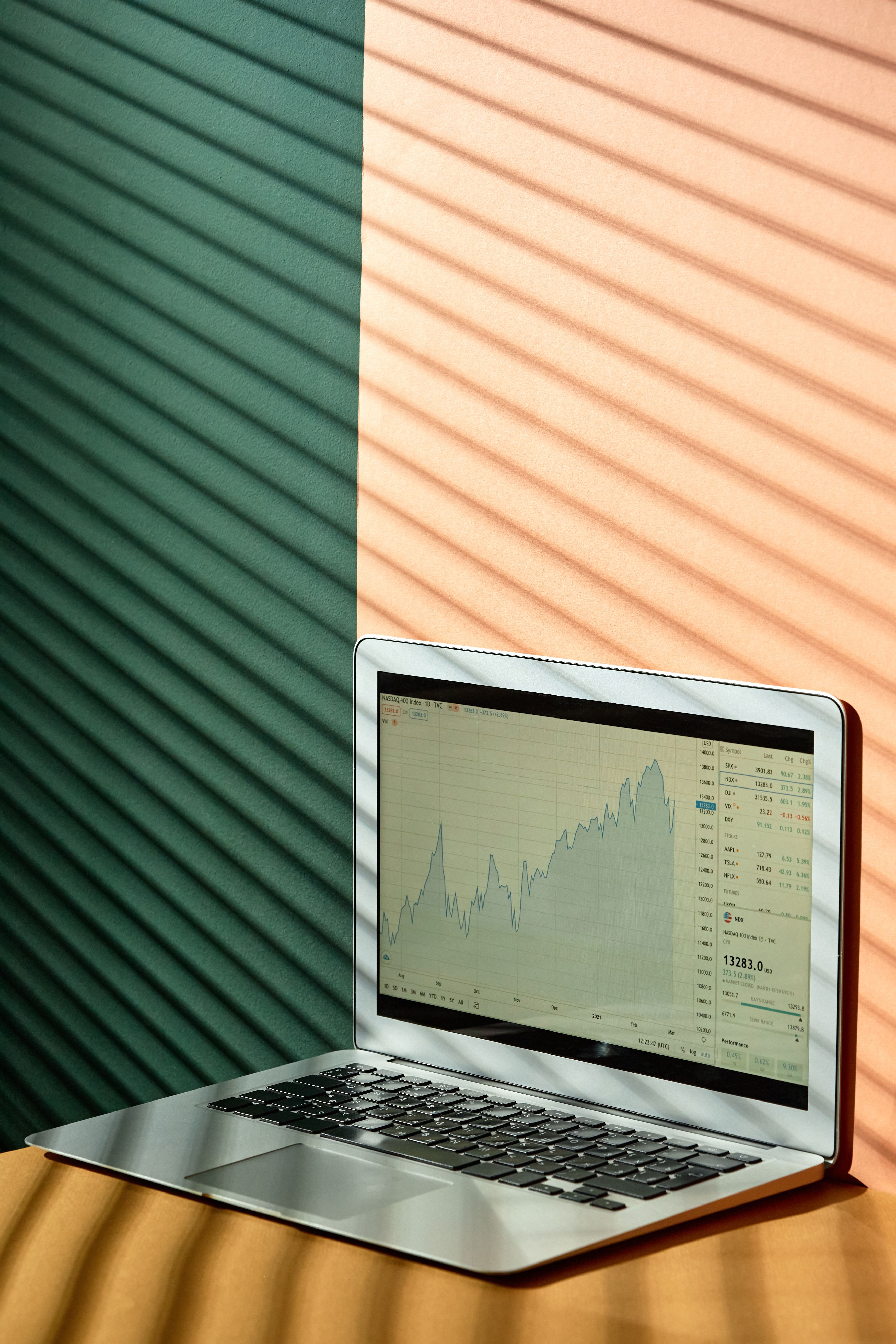
A diversified portfolio is not a pile of random stocks — it is a simple plan that spreads your money so no single company or sector can sink you. The SEC puts it plainly: diversification means spreading your money among various investments in the hope that if one loses money, the others will more than make up for those losses. You do not need a dozen stocks or a finance degree — three low-cost index funds can give you thousands of companies and bonds for stability, in one afternoon — all figures checked November 6, 2026.Photo: You do not need to watch charts all day — a diversified portfolio is built once, then checked once a year. (Photo: Pexels) What You Will LearnWhat diversification really means — and what it does not The four building blocks: US stocks, international stocks, bonds, and cash How to pick your stocks-vs-bonds mix by age How to build it with three low-cost index funds How to rebalance once a year Six mistakes that wreck a diversified portfolioStep 1: Set your goal and time horizon What to do: Before you buy anything, write down what the money is for and when you need it. How: Investor.gov says the right mix depends on two things: your time horizon and your risk tolerance. Your time horizon is how many years until you need the money. Money for retirement in 30 years can ride out swings — you have decades to recover. Money for a house deposit in two years cannot; a crash right before you need it would be a disaster. If a 20% fall lasting two years would make you panic, you need more bonds. Example: Daniel, 28, invests for retirement at 65 — a 37-year horizon — so he can accept big swings. His sister, 30, saves for a house deposit in three years, so her money stays in a high-yield savings account. Common mistake: Copying someone else's portfolio. A 60-year-old near retirement and a 25-year-old just starting out need opposite mixes.Illustrative diagram — The six steps to a diversified portfolio in 2026. NOT a real brokerage screenshot. Step 2: Pick your stocks-vs-bonds mix What to do: Decide what percentage goes in stocks (growth) and in bonds (stability). How: Stocks have historically had the greatest risk and the highest returns of the major asset categories, according to Investor.gov — large company stocks have lost money on average about one year in three. Bonds are generally less volatile but offer more modest returns; cash is safest but pays the least. A widely reported rule of thumb: "110 minus your age in stocks" — 85/15 at 25, 70/30 at 40, 45/55 at 65. If market drops keep you awake at night, shift 10% toward bonds. Example: Maya, 35, gets 75/25 from the rule of thumb, but she is nervous about crashes, so she moves to 70/30 — a mix she will not abandon in a crash. Common mistake: Going 100% stocks because someone online called bonds "dead money." Bonds are not there to make you rich — they are there so you have something steady to sell when stocks fall.Illustrative diagram — A common beginner mix: 70% US stocks, 20% international stocks, 10% bonds. NOT a real brokerage screenshot.Photo: Your mix is a simple calculation — age, goal, and how much risk you can actually live with. (Photo: Pexels) Step 3: Build it with three low-cost index funds What to do: Buy one fund per slice: US stocks, international stocks, and bonds. How: This is the Bogleheads three-fund portfolio: a US total market fund, a total international fund, a total US bond fund. A total US market fund owns thousands of companies — Vanguard's VTI, for example, is commonly reported to track an index of roughly 3,900 companies — and a total international fund can cover around 8,000 companies in more than 50 countries. Keep costs low: these index funds are commonly reported to charge roughly 0.03% to 0.10% a year, against roughly 0.5% to 1.0% for many actively managed funds — on $10,000, about $3 to $10 versus $50 to $100. Example: Alex, 30, has $6,000 and a 90/10 target: $4,200 into a US total market fund, $1,200 international, $600 bonds. Three funds, one afternoon, done. Common mistake: Buying two funds that track the same index — VOO and FXAIX both follow the S&P 500. That is not diversification; it is the same portfolio twice.Illustrative diagram — Stocks vs bonds by age, using the "110 minus your age" rule of thumb. NOT a real brokerage screenshot. Step 4: Put it in the right account and fund it monthly What to do: Hold your three funds in a tax-advantaged account first, and add money every month automatically. How: Where you hold the portfolio matters as much as what is in it. For most beginners the order is: first, a 401(k) up to the full employer match — free money. Second, a Roth IRA, where money grows and comes out tax-free. For 2026 the Roth IRA limit is $7,500 under 50 ($8,600 at 50+) and the 401(k) limit is $24,500 — see our Roth IRA and 401(k) limits guides. Third, a taxable brokerage account for the rest. Keep three to six months of expenses in savings first. Example: Priya earns $60,000 and her employer matches 4% of pay. She contributes 4% to her 401(k) for the match, then puts $200 a month into a Roth IRA split 70/20/10 — $2,400 a year in each, plus $2,400 from her employer. Common mistake: Building the perfect portfolio in a taxable account while ignoring the 401(k) match. A 100% return on your match beats any fund choice.Illustrative diagram — One bad company cannot sink a 500-stock fund. Equal-weight illustration, not real returns. NOT a real brokerage screenshot. Step 5: Rebalance once a year What to do: Once a year, bring your portfolio back to the percentages from Step 2. How: Your mix drifts on its own. After a strong year for US stocks, 70/20/10 can quietly become 78/15/7 — riskier than you planned. Rebalancing means selling a little of what grew and buying a little of what lagged, back to your target. Pick one date a year. Inside a 401(k) or IRA, direct new contributions to whichever fund is underweight — you rebalance without selling anything. Investor.gov notes investors may rebalance every six or twelve months — once a year is enough for most beginners. Example: After a strong year, Maya's portfolio drifts to 78% US stocks. She directs her next three contributions to bonds and international funds until she is back at 70/20/10. No selling, no tax bill. Common mistake: Rebalancing every week, or never. Weekly rebalancing adds trading and taxes; never rebalancing lets your risk quietly grow until a crash hurts far more.Photo: Rebalancing is a once-a-year job — not a daily one. (Photo: Pexels)Illustrative diagram — Rebalance once a year back to your target mix. NOT a real brokerage screenshot. Step 6: Leave it alone — and avoid the six traps What to do: Once your portfolio is built and automated, stop tinkering — and watch for the traps. How: The hardest part is doing nothing. Markets fall about one year in three — and every fall brings headlines telling you to sell. Selling in a crash locks in the loss; the winners kept buying through it. Watch fees, too: $10,000 at 7% a year becomes about $76,100 after 30 years, but at 6% — the same return minus a 1% fee — about $57,400. That fee quietly eats roughly a quarter of your final balance. Keeping it simple works: SPIVA is reported to show 92.9% of actively managed large-cap funds trailed the S&P 500 over 20 years to December 31, 2025. Example: In a market drop, Alex's $6,000 portfolio falls to $4,800. He does nothing — his automatic $200 keeps buying. A year later the market recovers, and the cheap shares he bought are worth more than the ones bought at the top. Common mistake: Chasing last year's hottest sector. By the time a sector makes headlines, most of the gains are gone — and you are buying high.Illustrative diagram — Six mistakes that wreck a diversified portfolio. NOT a real brokerage screenshot. ChecklistI wrote down my goal and time horizon. I picked my mix (110 minus my age). I bought three funds: US stocks, international stocks, bonds. I checked that no two funds track the same index. I hold them in a 401(k) or Roth IRA first. I set up automatic investing and a yearly rebalance reminder.FAQ How many funds do I really need to be diversified? Three is enough: a US total market fund, a total international fund, and a total bond fund — together thousands of companies and bonds. More funds usually add overlap and fees, not safety. Is the S &P 500 diversified enough on its own? It is a good start — about 500 of the largest US companies, roughly 80% of the US market — but US-only and stocks-only. International stocks and bonds spread your risk across countries and asset classes. How much money do I need to start? Many brokerages let you start with $0 minimums and buy fractional shares, so even $50 or $100 a month builds a portfolio. Consistency matters more than the amount. What if I only have a 401(k) with limited fund choices? Pick the closest match: a US stock index fund, an international fund if offered, and a bond fund. Without an international option, a target-date fund works as a one-fund answer. Does diversification guarantee I will not lose money? No. It reduces the risk from any single company or sector, but it cannot remove market risk — in a broad crash, nearly everything falls together. It keeps one bad bet from wiping you out. SourcesSEC, Investor.gov — Beginners' Guide to Asset Allocation, Diversification, and Rebalancing DollarLedger USA — Roth IRA Contribution Limits 2026 DollarLedger USA — 401(k) Contribution Limits 2026All figures checked November 6, 2026. Disclaimer: This article is for education only, not financial advice. Limits, tax rules, and fund details change — confirm current figures with the IRS and your provider before investing.