Showing Posts From
Medical bills
 DollarLedger Team
- 11 Nov, 2026
How to Negotiate Medical Bills in 2026 — Cut What You Owe Before You Pay a Dollar
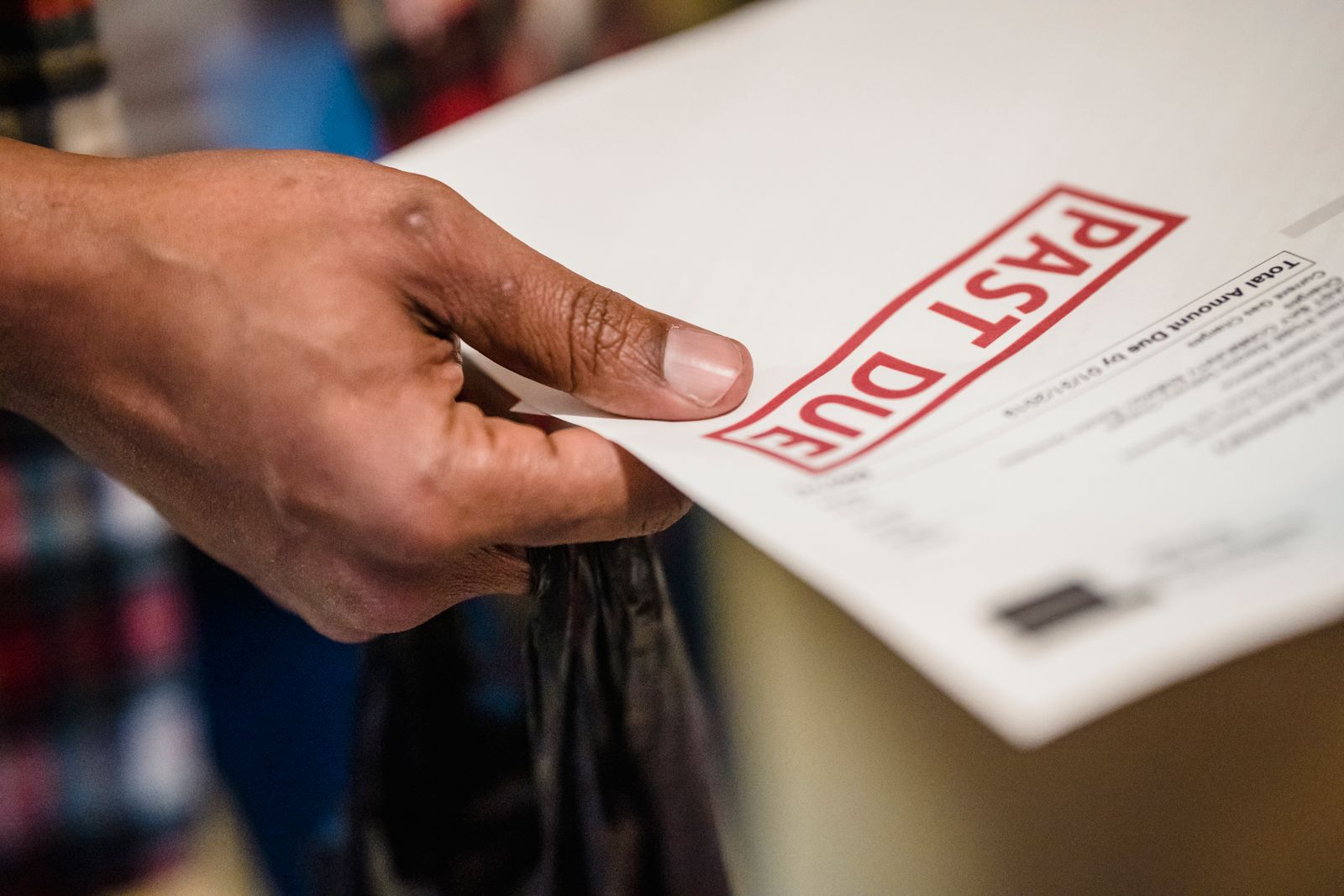
A $4,800 emergency room bill lands in the mailbox, and the first instinct is to pay it fast or ignore it. Neither is a good plan. The number on a hospital bill is a starting price, not a final price. Hospitals set listed charges from an internal price list called a chargemaster, and a Health Affairs study found the typical hospital charged 3.4 times what Medicare allows. KFF estimates Americans owed at least $220 billion in medical debt in 2024. Yet most people who push back get somewhere: a LendingTree survey found 93% of negotiators got at least a partial reduction. The order matters: check the bill, ask for charity care, then negotiate. All figures were checked on November 11, 2026.Photo: A bill stamped "past due" is not the end of the story - the number on it is a starting price. (Photo: Pexels) What You Will LearnWhy the first bill is a starting price How to check an itemized bill for errors Charity care, and who qualifies Cash prices and prompt-pay discounts The $400 Good Faith Estimate dispute Payment plans and protecting your creditStep 1: Get the itemized bill and check every line What to do: Before you pay a dollar, ask the billing office for a fully itemized bill and go through it line by line. How: The first statement most hospitals send is a summary: a few categories and a total. You cannot check a total. Call the billing number and ask for the itemized version: every charge with its date, description, billing code, quantity, and amount. If you used insurance, compare it with your Explanation of Benefits (EOB). Look for the usual errors: a charge listed twice, a service on a day you were not there, or a drug you never received. When you find a wrong line, call billing, name the line and code, and ask for a written correction. Example: Maria's $4,800 bill listed the same $450 lab test twice. Billing removed it, and the balance fell to $4,350. Common mistake: Paying the summary total without ever seeing the itemized bill.Illustrative diagram - The six steps to negotiate a medical bill, in the order that saves the most. NOT a real hospital screenshot. Step 2: Ask for charity care before you negotiate What to do: Ask for the hospital's financial assistance application — charity care — before you haggle. How: Nonprofit hospitals — most US hospitals — must have a financial assistance policy under IRS Section 501(r), with income limits tied to the Federal Poverty Level (FPL). Many offer free care at or below 200% of the FPL and sliding-scale discounts up to 400% or more. For 2026, the FPL for one person in the 48 contiguous states and DC is $15,960: 200% is $31,920, 400% is $63,840. A family of four: $33,000, so $66,000 at 200% and $132,000 at 400%. You have at least 240 days from the first post-discharge bill to apply, and no extraordinary collections for 120 days. If you qualify, you pay no more than insured patients. Ask for the application even if you are unsure you qualify. Example: Maria earns $45,000 and lives alone — between 200% and 400% of the FPL — so her hospital's sliding scale cut her $4,350 balance in half, to $2,175. Common mistake: Assuming charity care is only for people with no income.Illustrative diagram - The listed charge is a starting price: the typical hospital charged 3.4 times the Medicare-allowable cost. NOT a real CMS screenshot.Photo: Work from the itemized bill, not the summary total - and keep every corrected statement. (Photo: Pexels)Illustrative diagram - 2026 charity care income cutoffs, from the HHS poverty guidelines. NOT a real IRS screenshot. Step 3: Ask for the cash price and compare it with Medicare What to do: Ask billing for the self-pay or cash price, then check it against Medicare's rate. How: Hospitals keep a separate, lower rate for cash patients, often reported at 40% to 70% below the listed charge. Ask: "What is the cash-pay rate for this bill?" Then look up the Medicare rate for the same procedure — search the procedure name plus "Medicare rate," or check the free FAIR Health Consumer tool. If your bill is several times the Medicare rate, that gap is your negotiating leverage. A cash price usually does not count toward your deductible or out-of-pocket maximum, so compare both routes first if you expect to meet your deductible this year. Example: Maria's $4,800 bill carried about $1,400 in Medicare-allowable cost at the typical 3.4-times markup — proof the charge was negotiable. Common mistake: Accepting the listed charge as the real price.Illustrative diagram - Maria's bill: $4,800 down to $1,740 in three steps. NOT a real hospital screenshot. Step 4: Negotiate the balance and ask for a prompt-pay discount What to do: Call billing with your corrected balance, name a lower number, and ask for a prompt-pay discount. How: Billing departments negotiate every day, and they would rather collect something now than sell the debt for cents on the dollar. Start by asking for 25% to 30% off the corrected balance, leaving room to settle lower. Then ask: "If I pay the full balance today, what discount can you offer?" Prompt-pay discounts are typically reported at 10% to 30% off for paying in full, often within 30 days. If you cannot pay in full, offer a lump sum you can afford. Get the deal in writing: the new balance, the discount, and that the account is settled in full. Example: Maria's balance after charity care was $2,175. Paying in full earned a 20% prompt-pay discount, taking it to $1,740 — $3,060 saved from $4,800, about 64%. Common mistake: Negotiating from the original billed total instead of the corrected balance.Photo: Name a number, ask for the prompt-pay discount, and get the deal in writing before you pay. (Photo: Pexels)Illustrative diagram - The federal dispute process for a bill $400 or more above your Good Faith Estimate. NOT a real CMS screenshot. Step 5: If you paid cash and the bill beat the estimate, dispute it What to do: If you paid cash and your final bill came in $400 or more above the written Good Faith Estimate, start the federal dispute process. How: Under the No Surprises Act, providers must give uninsured and self-pay patients a Good Faith Estimate before scheduled, non-emergency care. If one provider's final bill is $400 or more above that estimate, you can file a patient-provider dispute for a $25 fee. You have 120 calendar days from the bill date, and an independent arbitrator decides what you owe. While the dispute is pending, the provider cannot send the bill to collections or charge late fees. This is only for uninsured or self-pay patients — an insurance denial goes through an appeal. Example: A self-pay patient gets a $2,000 estimate for a scan and a $2,600 bill — $600 over, so the $400 rule is met and a dispute can be filed within 120 days for $25. Common mistake: Missing the 120-day window, or using this process for an insurance denial. Step 6: Set up a payment plan and protect your credit What to do: If you cannot pay the reduced balance in full, set up a written payment plan and keep the bill off your credit report. How: Hospital payment plans are usually interest-free, but some carry an acceleration clause: miss a payment and the whole balance falls due at once. Ask the monthly amount, the length, and the missed-payment rule — and get it in writing. Do not ignore the bill: at a nonprofit hospital, extraordinary collections cannot start for at least 120 days, but other providers can move faster, commonly in 30 to 90 days (reported). The three bureaus' own policies still apply in 2026: a medical collection cannot appear until 12 months after collections, paid collections are removed, and balances under $500 are excluded. These are voluntary bureau policies, not a federal ban: the CFPB rule banning all medical debt from reports was vacated in July 2025. Check your reports at AnnualCreditReport.com. Example: Maria took a 12-month, interest-free plan at $145 a month, in writing, with no acceleration clause. Common mistake: Paying by credit card, or ignoring the bill until collections.Illustrative diagram - Six mistakes that cost patients money. NOT a real CMS screenshot. ChecklistItemized bill requested, every line checked. Wrong charges corrected in writing before I pay. Financial assistance application requested, even if unsure I qualify. Cash price asked for, checked against the Medicare rate. Prompt-pay discount asked for, deal confirmed in writing. Payment plan in writing, interest-free. Credit reports checked at AnnualCreditReport.com.FAQ Can you really negotiate a medical bill?Yes. A LendingTree survey found 93% of negotiators got at least a partial reduction, and 38% of challengers in a Commonwealth Fund survey had their bill reduced or eliminated. What is charity care, and who qualifies?Charity care is financial assistance nonprofit hospitals must offer under IRS Section 501(r). Many offer free care at or below 200% of the Federal Poverty Level ($31,920 for one person in 2026) and discounts up to 400% ($63,840) — always ask for the application. What if my bill beats my Good Faith Estimate?If you were uninsured or self-pay and one provider's bill is $400 or more above the written estimate, you can start the federal dispute within 120 days for $25, and an independent arbitrator sets what you owe. How long before a medical bill hurts my credit?Under the bureaus' own policies, a medical collection cannot appear until 12 months after collections, paid collections are removed, and balances under $500 are excluded. I am retired on Social Security — does that change anything?A fixed income often puts you inside a hospital's charity care limits — ask for the application. See how Social Security benefits work in 2026. SourcesCMS, No Surprise Billing (opened live November 11, 2026): https://www.cms.gov/nosurprises IRS, Billing and Collections — Section 501(r)(6) (opened live November 11, 2026): https://www.irs.gov/charities-non-profits/billing-and-collections-section-501r6 HHS, Poverty Guidelines (opened live November 11, 2026): https://aspe.hhs.gov/topics/poverty-economic-mobility/poverty-guidelinesAll figures checked November 11, 2026, against CMS, the IRS, HHS, KFF, the Commonwealth Fund and LendingTree. Disclaimer: For education only, not medical, legal or financial advice. Policies and rules vary by provider and state.